
Penicillium rot
Penicillium viridicatum
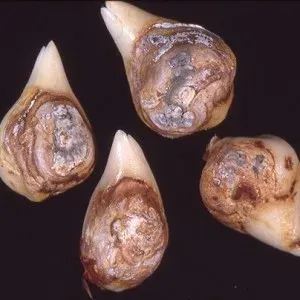
Description
Symptoms
Initial symptoms include a fine white web-like mycelium that develops on the surface of seeds, roots, or fruits, later turning into a dusty, blue-green mass.
Infected plant tissues undergo rapid decay, becoming soft and mushy as the fungus secretes enzymes that break down cell walls.
Seed germination is severely inhibited, and young seedlings often fail to emerge, showing signs of pre-emergence damping-off caused by fungal colonization.
In stored vegetables, the rot appears as depressed, discolored lesions that eventually spread to cover the entire product, often accompanied by a musty odor.
The structure of the infected tissue collapses, leading to a total loss of commercial viability and shelf life for the affected crop.
Pathogen
The disease is caused by the microscopic mold fungus Penicillium viridicatum, a member of the Aspergillaceae family. It is a common soil-borne saprophyte found worldwide.
The fungus is notorious for producing harmful mycotoxins, particularly ochratoxin A, which poses significant health risks to both humans and livestock if ingested.
It forms a characteristic blue-green or olive-colored powdery mycelium on the surface of infected plant tissues during its active reproductive phase.
Dissemination occurs primarily via wind-borne conidia, which can travel long distances, or through contaminated soil and farm equipment.
The pathogen is highly resilient, able to survive in dormant states for extended periods until environmental conditions become favorable for growth.
Conditions for development
High relative humidity, typically above 75–80%, is the primary environmental driver for the development and spread of Penicillium viridicatum.
While the fungus thrives in temperatures between 15°C and 25°C, its spores are cold-tolerant, allowing for infection even in refrigerated or cool storage facilities.
Poor ventilation in warehouses creates moisture pockets that facilitate rapid fungal growth, often resulting in widespread outbreaks within a single storage pile.
Mechanical injuries sustained during harvesting, cleaning, or transportation provide easy access points for the fungal spores to enter the plant tissue.
Overcrowding or damp conditions during the storage period are critical factors that accelerate the transition from a single infected unit to an entire loss.
Why it matters
The economic impact of Penicillium rot is felt most acutely during the post-harvest period, where it can destroy large volumes of stored crops.
Seeds infected with the fungus exhibit poor vigor and low germination rates, leading to uneven crop stands and significant yield reduction in the field.
Contamination with mycotoxins renders the harvest unsuitable for feed or food processing, leading to total economic losses for the producer.
The pathogen's ability to spread rapidly through contact means that one infected fruit or seed can jeopardize the health of an entire storage lot.
Weakened plant seedlings are also more susceptible to secondary pathogens, further complicating the overall phytosanitary management of the farm.
Protection
The most effective strategy is the maintenance of proper storage conditions, including moisture control, consistent temperature monitoring, and active ventilation.
Seeds must be treated with appropriate fungicides before planting to prevent soil-borne infection and ensure successful germination.
Harvesters should ensure that crops are gathered with minimal mechanical damage to protect the integrity of the plant skin.
Sanitation is crucial; all storage bins, equipment, and warehouses should be regularly disinfected to eliminate spore accumulation.
- Implementing crop rotation to reduce soil-borne pathogen populations.
- Drying crops to safe moisture levels before long-term storage.
- Constant monitoring of stored produce to identify and remove early infection spots.
Discussion
No discussions yet — be the first.