
Penicillium rot
Penicillium velutinum
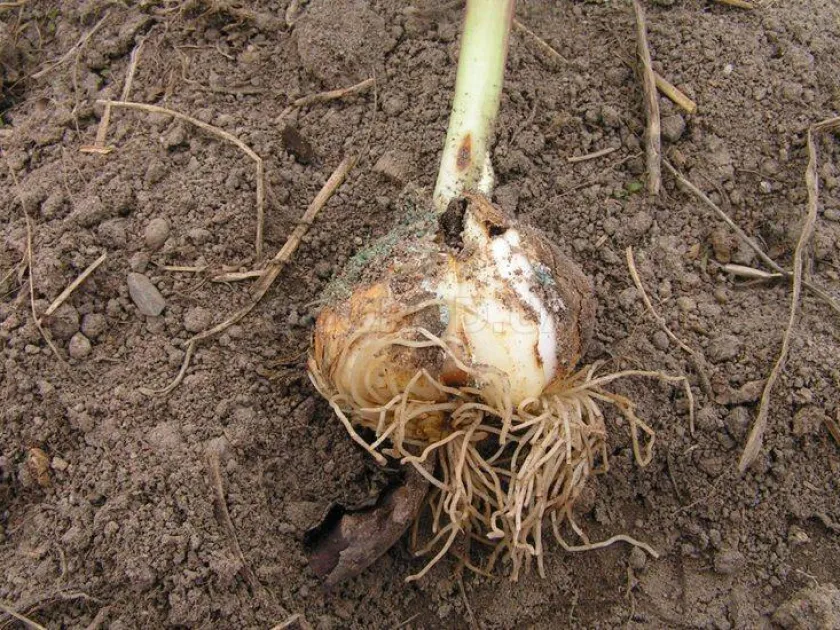
Description
Symptoms
The first symptoms of infection are small, water-soaked lesions on the surface of the fruit or vegetables. These spots expand rapidly, leading to the softening of the underlying tissue and the appearance of a distinct, fuzzy, and powdery growth.
The color of this fungal mass typically ranges from white to grayish-green or light blue, which is characteristic of the genus. This dusty, colorful layer consists of dense spore production, which easily releases into the air when the infected fruit is disturbed.
Internal tissue becomes pulpy, discolored, and develops a characteristic musty, moldy odor. The decay spreads inward, eventually consuming the entire fruit and leaving behind a disintegrated mass that is highly infectious to neighboring produce.
In bulbous crops, the rot often begins at the base or through wounded scales, causing the vegetable to become watery and soft. Over time, the internal structures of the bulb collapse completely, leading to total loss of the product.
Early-stage infection may be internal and invisible to the naked eye. However, in high-humidity storage conditions, the decay progresses extremely quickly, leading to massive post-harvest losses if not detected and managed promptly.
Pathogen
The causal agent of this disease is the microscopic fungus Penicillium velutinum, a member of the genus Penicillium. This fungus is a common pathogen known for its high enzymatic activity and ability to decompose various types of organic matter.
While often functioning as a saprotroph, Penicillium velutinum can act as an opportunistic parasite on harvested crops. It produces a massive quantity of conidia, which are easily dispersed by air currents, landing on various plant tissues and initiating decay upon favorable conditions.
The fungus is biologically adapted to survive in diverse environments, largely due to its resilient spores. It can withstand significant temperature fluctuations and periods of low humidity, ensuring its presence in almost any agricultural landscape or storage facility.
The mycelium colonizes plant tissues through mechanical wounds or sites already stressed by other pathogens. Once inside, it secretes mycotoxins that rapidly break down cell walls, softening the tissue and turning it into a nutrient-rich medium for further fungal growth.
It is important to note that this fungus is a major concern for the produce industry. Because of its wide distribution, it is nearly impossible to eliminate the pathogen from the environment entirely, making preventive measures the primary focus of crop management.
Conditions for development
High relative humidity, typically exceeding 80-85%, is the primary factor favoring the development of Penicillium rot. Moist environments facilitate the germination of spores and the rapid colonization of host tissues by the fungus.
The optimal temperature for the growth of Penicillium velutinum is between 15 and 25 degrees Celsius. Although it can remain dormant or slowly grow at lower temperatures, the metabolic activity of the pathogen increases significantly within this warm range.
Mechanical injuries are the most critical entry point for the fungus. Because it cannot easily penetrate healthy, intact surfaces, any damage during harvesting, sorting, or transport significantly increases the risk of a major outbreak.
Poor ventilation in storage facilities is another major catalyst for the disease. Inadequate airflow allows for moisture condensation on surfaces, which provides the necessary hydration for the fungus to establish itself and spread from infected fruit to healthy ones.
Contaminated equipment, storage crates, and walls serve as reservoirs for the pathogen. Spores can persist in small crevices of wooden containers or storage walls for long periods, acting as a source of primary infection for subsequent harvests.
Why it matters
Penicillium rot causes substantial economic losses annually, primarily through the degradation and total loss of post-harvest produce. It is a major limiting factor for the duration of storage and the marketability of fruits and vegetables.
The decay is not just a loss of volume but also a loss of quality. The presence of mycotoxins in decayed tissue renders the produce unsafe for both human consumption and livestock feed, creating potential public health risks.
Due to the high infectivity rate, once the rot starts, it can quickly spread throughout an entire storage batch, necessitating labor-intensive sorting processes. This increases operational costs and reduces the profitability of the entire production cycle.
In addition to economic and agricultural damage, the presence of airborne spores in storage facilities poses a health risk to workers. Prolonged exposure to high concentrations of Penicillium spores can lead to allergic reactions and chronic respiratory issues.
Market reputation is also at stake, as even a small amount of Penicillium-affected produce can lead to shipment rejection, lowered grading, and loss of trust from retailers and consumers, ultimately affecting the producer’s long-term business viability.
Protection
The foundation of effective control is the minimization of mechanical injuries during harvesting. Proper handling and sorting are essential to ensure that only intact, healthy produce is moved into long-term storage.
Strict environmental management is required within storage facilities. Maintaining temperatures near 0-2 degrees Celsius and keeping relative humidity between 70-75% is the most effective way to inhibit fungal growth and prolong shelf life.
Regular sanitation of storage areas, containers, and tools before the new harvest arrives is mandatory. Using disinfectants or appropriate fumigants helps to reduce the initial inoculum load and prevents the carry-over of spores from previous seasons.
Pre-harvest fungicide applications can provide a crucial layer of protection, especially in years with high rainfall or high disease pressure. It is important to adhere to label instructions regarding active ingredients and pre-harvest intervals.
Continuous monitoring of the stored product is essential for early detection. Any identified spots of rot must be removed immediately, and the surrounding produce should be carefully inspected to contain the outbreak and prevent further spread of spores.
Discussion
No discussions yet — be the first.