
Penicillium mold
Penicillium variabile
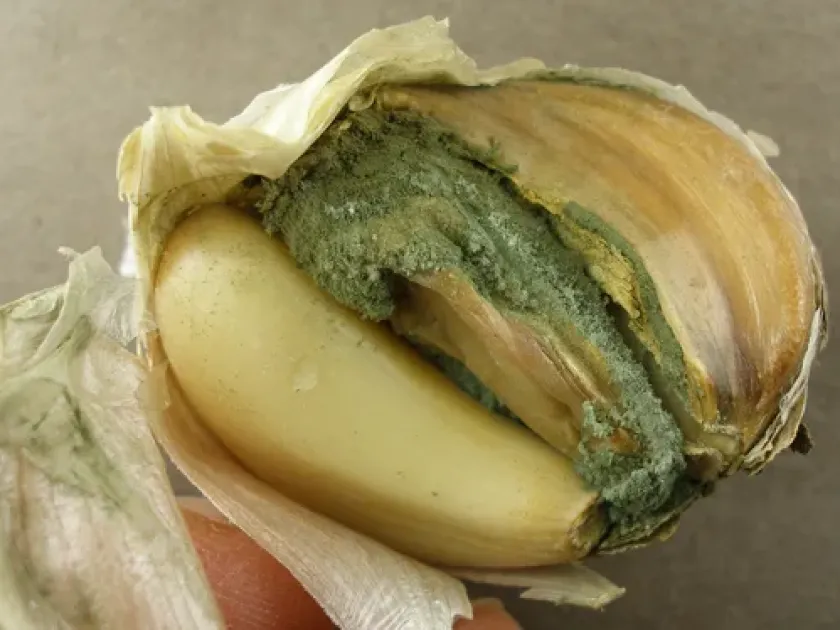
Description
Symptoms
The primary symptom is the appearance of a powdery, fuzzy mold growth on the surface of seeds, fruits, or grains. Initially white, the mold turns vibrant blue-green or yellow as conidia mature.
When seeds are infected, the embryo often discolors and dies. If the seeds are planted, this leads to damping-off, where the young seedling fails to emerge or dies shortly after germination due to root necrosis.
In stored fruits and vegetables, the infection manifests as soft, sunken lesions. As the fungus consumes the tissue, the area becomes mushy and eventually collapses, often covered by the characteristic sporulating mold.
A distinct musty or earthy odor is a common indicator of a Penicillium infestation. This smell is often noticeable even before visual symptoms become widespread in a storage bin or container.
- Powdery blue-green or yellow mold surface.
- Sunken soft rot spots on fruits.
- Darkening and decay of the seed embryo.
- Reduced germination rates and seedling death.
- Musty, unpleasant smell in stored grain.
Pathogen
The causative agent of the disease is the microscopic fungus Penicillium variabile, a member of the Penicillium genus. It is a cosmopolitan fungus characterized by its ability to decompose various organic substrates rapidly.
The pathogen reproduces through abundant production of conidia, which are usually blue-green, olive, or yellowish in color. These conidia are easily dispersed by air currents, facilitating wide spread across fields and storage facilities.
This fungus acts as a facultative parasite and saprotroph, meaning it can survive on dead plant material and debris, making it a persistent threat in agricultural environments. It thrives by secreting extracellular enzymes that degrade plant tissues.
A significant aspect of its biology is its ability to produce secondary metabolites, specifically mycotoxins. These toxic compounds are harmful to both plant health during germination and animal/human health if ingested.
The fungus is remarkably hardy and can withstand varying environmental conditions, allowing it to persist in the soil or within storage structures for extended periods of time.
Conditions for development
High relative humidity, typically exceeding 75%, is the primary driver for the development and proliferation of Penicillium variabile. Moisture provides the necessary environment for conidia to germinate.
Temperatures ranging from 20°C to 28°C are optimal for the growth of this fungus. While it can survive in a broader temperature range, these levels promote the most rapid spread of the mycelium.
Poor ventilation is a critical risk factor in agricultural settings. Stagnant, humid air creates localized pockets of moisture, which are ideal environments for the fungus to establish and spread rapidly.
Physical injuries to the plant surface, caused by insects, rodents, or improper handling during harvest, create entry points for the fungus, significantly increasing the probability of an infection taking hold.
Lack of sanitation in storage facilities, including the presence of old debris and dust, provides the inoculum source that leads to the infection of fresh, incoming harvests.
Why it matters
The most significant damage is the reduction in seed quality and viability. Infected seeds lose their ability to germinate, leading to poor crop stands and significant yield losses in the field.
Penicillium contamination ruins the market value of grains and produce. The mold growth renders the product unsightly and triggers rapid decay, often causing the entire batch to be discarded.
The accumulation of mycotoxins in affected grain creates a serious health hazard. Contaminated produce can lead to severe toxicosis in livestock if used in feed, causing economic losses for farmers.
In bulk storage, the fungus contributes to the heating of grain piles, which creates a positive feedback loop for further microbial degradation and potential complete loss of the stored commodity.
Increased operational costs arise from the need for advanced drying systems, chemical disinfectants, and labor-intensive sorting processes to manage the mold outbreak.
Protection
Effective management begins with strict environmental control in storage. Maintaining low relative humidity and adequate airflow is essential to prevent fungal growth.
Sanitation of storage bins and equipment is crucial. Removing crop residues and treating surfaces with appropriate disinfectants minimizes the presence of spores before the new harvest is loaded.
Seed treatment with systemic fungicides before planting is a standard practice to protect emerging seedlings from soil-borne Penicillium species and ensure better crop uniformity.
Harvesting should occur under dry conditions to minimize the initial moisture content of the crop. Handling produce with care to avoid skin abrasions further reduces the risk of post-harvest infection.
Regular monitoring of stored goods, including temperature and moisture checks, allows for early intervention if signs of mold are detected, preventing small outbreaks from spreading.
Discussion
No discussions yet — be the first.