
Penicillium rot
Penicillium purpurogenum
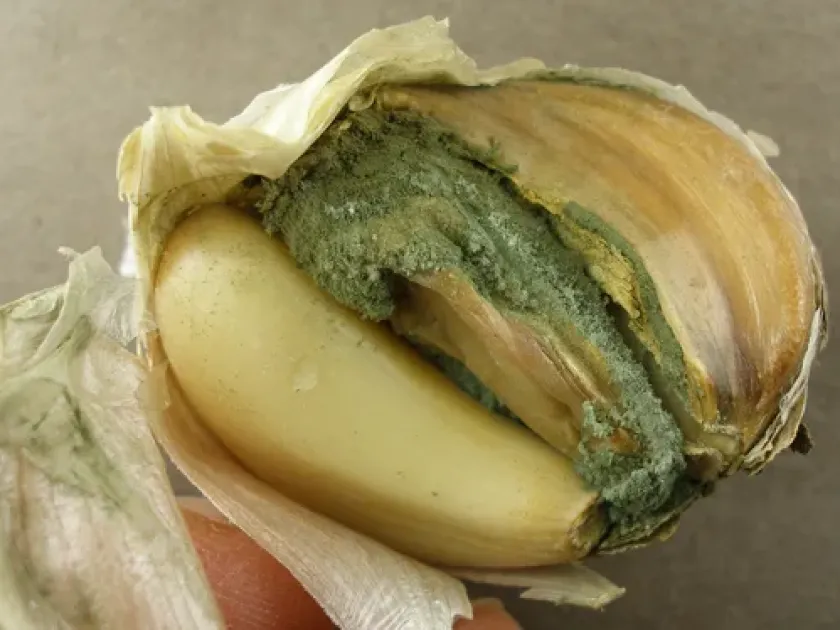
Description
Symptoms
The disease typically begins with the appearance of water-soaked, sunken lesions on the surface of the fruit or vegetable.
As the infection progresses, a thick, dusty mat of spores develops over the surface of the decayed tissue, often showing a characteristic blue-green color.
Internal tissues usually soften rapidly, turning into a watery mass that emits a distinct, often pungent, moldy smell.
In many cases, the infection remains dormant until the crop is harvested, at which point the physical stress triggers rapid fungal development.
As the lesion expands, it often develops concentric zones or rings of growth, which are typical indicators of the pathogen's rapid spread under high humidity.
Pathogen
The causative agent of this disease is the fungus Penicillium purpurogenum, which is a widespread soil-borne pathogen known for its ability to cause post-harvest decay.
This fungus is characterized by its high saprophytic ability, allowing it to survive on dead organic matter, crop residues, and within soil particles for extended periods.
The pathogen reproduces through an abundance of conidia, which are easily dispersed by air currents, water splashes, and physical contact with contaminated tools.
The biological cycle of the fungus is accelerated in environments where moisture is high and temperature conditions are favorable for fungal metabolism.
Penicillium purpurogenum is also capable of producing significant amounts of secondary metabolites, which often affect the quality and safety of stored agricultural products.
Conditions for development
The development of the fungus is highly dependent on environmental conditions, with high relative humidity (above 85%) being the primary trigger.
Optimal temperatures for the growth of Penicillium purpurogenum range from 15 to 25 degrees Celsius, which is standard for many storage facilities.
Poor ventilation within storage rooms leads to the formation of surface condensation, creating ideal conditions for spore germination and infection.
Physical injuries, such as cuts, bruises, and cracks sustained during the harvesting or transport processes, serve as primary entry points for the pathogen.
High levels of existing inoculum in storage facilities, often resulting from poorly cleaned containers, facilitate the rapid spread of the rot.
Why it matters
The primary damage caused by Penicillium rot is the total loss of marketable fruit, leading to significant economic losses for producers and retailers.
The production of mycotoxins by the fungus makes the affected produce dangerous for human and animal consumption, necessitating complete disposal.
The rapid spread of the disease through physical contact between healthy and infected produce can destroy entire stored lots in a matter of days.
Increased labor costs are incurred due to the need for rigorous sorting, inspection, and the cleaning of contaminated storage facilities.
The decay reduces the shelf life of the remaining produce, limiting market access and disrupting the supply chain for perishable goods.
Protection
Preventative measures must focus on careful handling during harvesting to minimize physical wounding of the crop surface.
Maintaining optimal storage conditions, including proper aeration and temperature control, is essential to prevent moisture buildup.
Regular sanitation of storage facilities, including the use of approved fungicides for equipment and crates, helps reduce the fungal spore load.
Strict culling of damaged or symptomatic produce before long-term storage is vital to prevent the secondary spread of the infection.
Applying appropriate fungicides during the growing season can help reduce the overall disease pressure and the initial contamination of the fruit.
Discussion
No discussions yet — be the first.