
Penicillium rot
Penicillium pinophilum
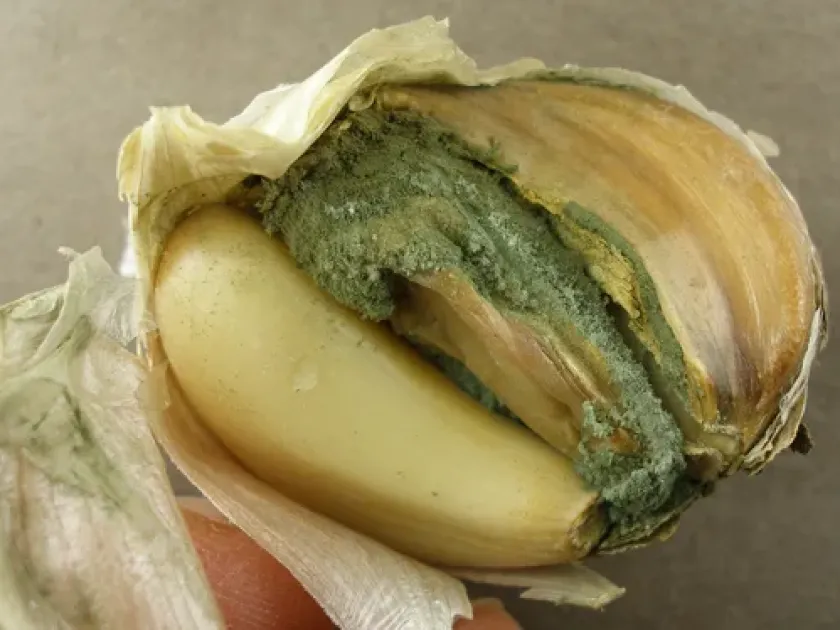
Description
Symptoms
The most distinctive sign of infection is the development of a dense, powdery mold on the surface of plant parts. The color typically transitions from white to a characteristic blue-green as conidiation occurs.
Seeds infected by this fungus show poor germination rates and low vigor. In many cases, the embryo is killed before emergence, leading to missing plants in the field and significant stand gaps.
In stored fruits and vegetables, the disease manifests as soft, watery rot lesions. These areas eventually become sunken, and the affected tissue is rapidly replaced by a dusty mass of fungal spores.
A persistent, musty odor is a hallmark of Penicillium rot. This odor quickly permeates storage rooms, signaling the presence of an active fungal outbreak among the harvested crop.
When the pathogen affects the roots of young plants, symptoms include overall stunting, chlorosis of the foliage, and eventual wilting, as the destroyed root system fails to transport water and nutrients.
Pathogen
The causative agent of the disease is the microscopic fungus Penicillium pinophilum, a species within the Penicillium genus. It is a common soil saprotroph that can act as an opportunistic pathogen when environmental conditions become favorable.
The fungus spreads primarily through conidia—asexual spores that are easily dispersed by air currents, water splashes, and insects. These spores are highly resilient and can remain viable in soil for extended periods.
Penicillium pinophilum secretes a complex suite of extracellular enzymes, including cellulases and pectinases, which degrade plant cell walls. This enzymatic activity leads to the rapid softening and decomposition of plant tissue.
During its growth, the pathogen may produce secondary metabolites known as mycotoxins. These compounds can contaminate agricultural products, reducing their nutritional value and safety for human and animal consumption.
The life cycle is tightly coupled with the presence of organic debris, which serves as a wintering substrate for the pathogen. In greenhouse settings, the fungus can maintain a continuous presence as long as host tissues are available.
Conditions for development
High relative humidity, typically above 75–80%, is the primary factor driving the development of Penicillium pinophilum. Excess moisture on plant surfaces is a prerequisite for successful infection.
The fungus thrives within a temperature range of +15°C to +25°C. However, it remains metabolically active even at lower temperatures, making it a persistent threat in cold storage environments.
Poor ventilation within storage facilities leads to the accumulation of condensation. This thin film of surface water provides an ideal substrate for the rapid germination of fungal spores.
Mechanical injury is a critical vulnerability. Any physical damage sustained during harvest, transport, or grading acts as an entry point for the fungus to penetrate deep into the plant tissue.
The presence of prior-year crop residues or high levels of soil-borne inoculum significantly increases the pressure of the disease, making the field environment more prone to infection outbreaks.
Why it matters
The primary economic impact is the total spoilage of stored commodities. Infected produce loses all market value and becomes unusable for processing, leading to significant financial losses.
Poor seed quality caused by the fungus necessitates higher seeding rates or expensive replanting efforts, which disrupts the planting schedule and increases production costs.
The accumulation of mycotoxins in affected crops renders them unsuitable for feed or food, posing a serious regulatory and health risk for producers and consumers alike.
The pathogen exacerbates secondary infections. Tissues compromised by Penicillium rot become highly susceptible to opportunistic bacterial decay and other fungal agents, further accelerating product waste.
On a commercial scale, an outbreak in a warehouse can destroy a large percentage of inventory in a matter of weeks, highlighting the importance of strict environmental control measures.
Protection
Maintaining optimal storage conditions is paramount. This includes strict regulation of relative humidity, adequate airflow to prevent moisture buildup, and consistent temperature management.
Rigorous sorting and sanitation procedures prior to storage are essential. Removing damaged or infected units prevents the formation of "nests" of infection that could spread throughout the batch.
Regular sanitation of containers, tools, and storage facility surfaces using appropriate fungicides is necessary to eliminate residual spore populations and minimize carry-over contamination.
Seed treatments with systemic or contact fungicides are highly effective in protecting emerging crops against soil-borne Penicillium species, ensuring uniform stand establishment.
Implementing crop rotation and the thorough incorporation or removal of harvest residues helps reduce the overall fungal inoculum density in the field, mitigating the risk of future infections.
Discussion
No discussions yet — be the first.