
Penicillium rot of rice
Penicillium islandicum
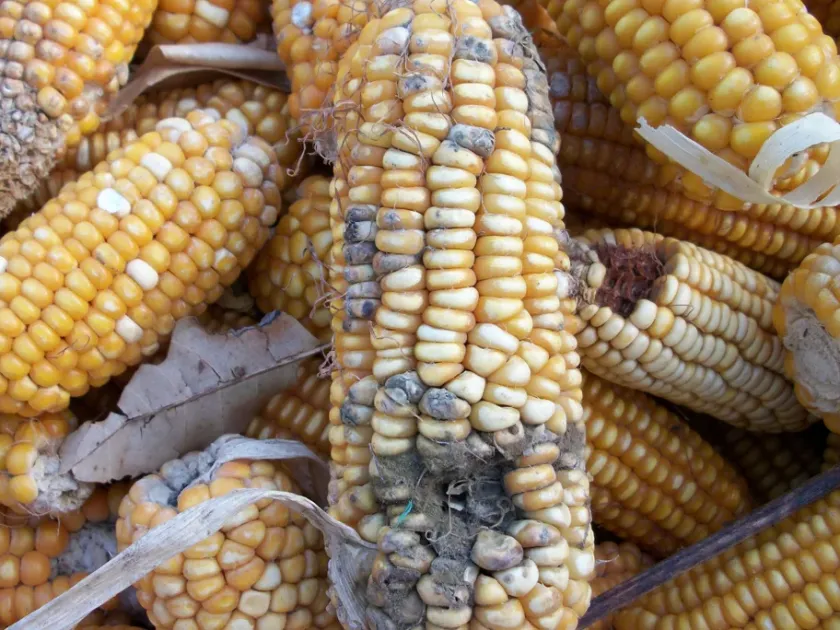
Description
Symptoms
The primary symptom of infection is the development of a moldy growth on the surface of rice grains, which transitions from white to a distinct yellow-orange color.
Infected grains lose their natural luster and begin to emit a musty, off-putting odor, which is an early warning sign of fungal activity.
The endosperm of the rice grain gradually deteriorates as the fungus secretes enzymes to break down the starch and proteins within the grain structure.
Grains become brittle and friable, easily breaking apart, which significantly reduces the quality of the harvested rice crop.
In advanced stages, the fungus causes grains to clump together, forming patches of contaminated material within the storage bin.
Pathogen
The causal agent of this disease is the mold fungus Penicillium islandicum, a common saprophytic organism that can turn into a pathogen under favorable conditions.
This fungus is widely distributed and survives on crop debris, in soil, and within storage facilities, waiting for the right moisture levels to start colonization.
Penicillium islandicum is notorious for its ability to produce secondary metabolites, specifically toxic compounds that contaminate the grain and make it hazardous.
The mycelium often displays characteristic yellow-to-orange pigmentation, which serves as a diagnostic feature when examining infected grain batches.
The pathogen is highly resilient, producing abundant spores that allow it to persist through harsh environmental conditions for extended periods.
Conditions for development
High relative humidity and grain moisture content above 14% are the most critical factors driving the rapid development of Penicillium islandicum.
Inadequate ventilation in silos creates stagnant air pockets, allowing moisture and temperature to build up, which perfectly suits fungal proliferation.
Temperature spikes, often resulting from grain respiration or poor cooling, trigger the growth of mold colonies across the stored mass.
Mechanical damage to the rice husks during harvest or transport provides easy entry points for fungal spores to invade the inner grain tissues.
The presence of impurities, broken grains, and dust in the bulk storage acts as a starter medium, accelerating the spread of the infection to healthy grain.
Why it matters
The most severe impact is the production of mycotoxins like luteoskyrin and cyclochlorotine, which are toxic and render the grain unsafe for human and animal consumption.
Heavy economic losses occur due to grain weight reduction and the significant drop in commercial quality grading of the rice.
Seed vigor and germination rates are severely compromised, making contaminated rice unfit for use as planting material for the next season.
The foul smell and taste caused by fungal infection destroy the organoleptic properties of the rice, making it unmarketable.
Once established in a storage facility, the infection spreads rapidly, capable of destroying entire grain silos if not managed properly.
Protection
Drying rice to a safe moisture content (typically below 13%) is the most effective way to inhibit fungal growth during storage.
Maintaining strict climate control in warehouses, including consistent monitoring of temperature and aeration systems, is essential.
Pre-storage cleaning to remove broken grains, dust, and foreign matter is crucial to limit the nutrient availability for the fungus.
- Routine disinfection of storage facilities and handling equipment.
- Application of seed treatment fungicides to protect against early field infection.
- Regular inspection and laboratory testing of stored grains for mold activity.
Effective post-harvest management and maintaining the physical integrity of the grain husk are key components of a robust prevention strategy.
Discussion
No discussions yet — be the first.