
Penicillium mould of barley
Penicillium hordei
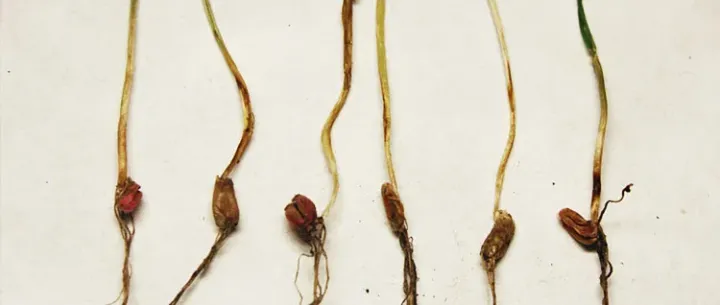
Description
Symptoms
The most prominent sign of the disease is the appearance of a dusty, loose mould coating on the surface of the grains. This growth ranges in color from grey-green to a distinct blue-green hue.
Affected grains often lose their natural luster, appearing dull and brittle. A characteristic musty, earthy odor typically develops, which is a clear indicator of a mould outbreak in the grain mass.
The seed embryo is often killed by the fungal invasion, leading to a significant drop in seed viability. Germination tests of infected barley will show a failure to sprout and the presence of fungal mycelium covering the seed.
In early stages, the fungus may manifest as tiny, dense tufts of mould beneath the seed coat, which later erupt through the surface as the infection progresses.
As the disease advances, the grain interior may become decayed, turning into a powdery or matted mass of mycelium, rendering the seed completely useless for malting or feeding purposes.
Pathogen
The disease is caused by the fungus Penicillium hordei, a member of the Penicillium genus. It is a common saprophytic mould that can become pathogenic to barley seeds, especially when storage conditions are inadequate.
This fungus produces an abundance of conidia, which are asexual spores that allow it to spread rapidly throughout grain storage facilities via air currents and contaminated handling equipment.
A major biological risk associated with Penicillium hordei is the production of mycotoxins, which can contaminate the grain and make it toxic for both humans and livestock consumption.
The fungus persists in soil, on crop residues, and within storage facilities. It is highly resilient, surviving on walls, floors, and grain handling machinery for extended periods.
While field infections are less frequent than storage outbreaks, the fungus can infect the grain during prolonged wet weather before harvest, leading to pre-harvest contamination of the barley ears.
Conditions for development
High seed moisture content is the primary driver of Penicillium hordei development. Grain stored with a moisture level above 14–15% is extremely susceptible to rapid colonisation by the mould.
Optimal temperatures for fungal growth range from +18°C to +25°C. However, the fungus can remain active at lower temperatures, particularly if the grain pile is poorly ventilated and experiences localized heating.
Lack of airflow in storage bins leads to moisture accumulation and "hot spots," which provide the ideal microclimate for the rapid expansion of fungal colonies from a few infected grains to the entire batch.
Physical damage to the barley grain coat, caused by aggressive harvesting or cleaning machinery, significantly increases the likelihood of infection by providing easy access for fungal spores to enter the seed tissues.
The presence of impurities such as broken grains, chaff, or weed seeds increases the moisture holding capacity of the grain bulk, thereby accelerating the growth of mould.
Why it matters
The primary economic impact is the severe loss of seed viability and germination vigor, which can render entire batches of valuable seed barley unfit for planting.
The production of mycotoxins poses a significant health risk to livestock. Consuming mould-contaminated barley can cause digestive disorders, reduced weight gain, and even fatal poisoning in farm animals.
Large-scale contamination in storage can lead to the total loss of the commercial value of a harvest, as the grain becomes unsuitable for food, malting, or feed processing.
Field establishment is often poor when using lightly infected seeds, leading to uneven crop stands, reduced plant density, and ultimately, lower yields at the end of the season.
Beyond the quantitative loss, the degradation of grain quality leads to significant downgrading during commercial grain inspection, resulting in lower prices and lost market opportunities.
Protection
The most effective strategy is to ensure all barley is dried to a safe moisture level (typically below 13%) immediately after harvest to inhibit fungal metabolism.
Rigorous cleaning of the grain to remove broken seeds, dust, and plant debris is essential to eliminate the primary sources of moisture and fungal growth substrate.
Applying systemic or contact fungicides as a seed treatment before sowing protects the vulnerable germinating seeds from soil-borne and seed-borne Penicillium spores.
Maintaining strict sanitation in storage areas, including disinfecting equipment and improving ventilation systems, is critical to preventing the spread of spores between batches.
- Monitor grain moisture content during storage.
- Use professional seed treatment fungicides.
- Ensure adequate ventilation and aeration in grain bins.
- Perform timely harvest to avoid over-maturation and moisture exposure.
Discussion
No discussions yet — be the first.