
Penicillium rot
Penicillium glabrum
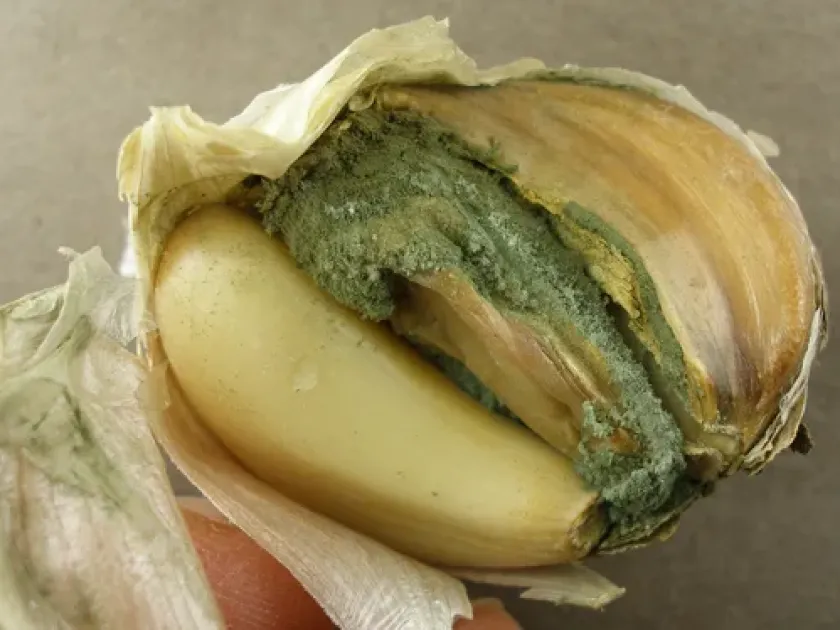
Description
Symptoms
The initial sign of infection is a small, water-soaked, soft lesion on the surface of the fruit or vegetable. This spot grows rapidly under favorable conditions, becoming mushy to the touch.
Within a few days, a characteristic velvety mold growth appears on the lesion. The color is typically bluish-green or olive-green, depending on the stage of sporulation of the fungus.
The internal tissue of the affected fruit becomes softened, discolored, and often emits a strong, musty, moldy odor. The decay spreads deep into the core, eventually destroying the entire structure.
In seeds, the infection manifests as a coating of green mold, leading to poor germination and weak seedling development. Infected seeds often rot before emerging from the soil.
In advanced stages, affected fruits may lose moisture and become mummified. These shriveled remains act as persistent sources of inoculum for subsequent seasons or neighboring stored produce.
Pathogen
The causative agent of this disease is the fungus Penicillium glabrum, a ubiquitous filamentous mold. It is known for its high reproductive capacity and widespread presence in nature.
This pathogen acts primarily as a saprotroph, decomposing organic matter, but it can easily become a wound parasite. It survives effectively in soil, plant debris, and on the surfaces of agricultural storage facilities.
Dissemination occurs via airborne conidia, which are produced in vast quantities. These spores can travel long distances, settling on healthy produce or entering storage areas through ventilation systems.
The fungus penetrates host tissues through mechanical wounds, insect punctures, or natural openings. Once inside, it colonizes the tissue by secreting enzymes that break down cell walls.
A significant biological characteristic of Penicillium glabrum is its ability to produce secondary metabolites, including mycotoxins, which can contaminate the product and render it unsafe for consumption.
Conditions for development
High relative humidity, typically exceeding 85%, is the primary factor favoring the rapid development of Penicillium glabrum. Moisture availability is essential for spore germination.
The fungus thrives in moderate temperature ranges, between +15°C and +25°C. However, it can remain metabolically active at lower temperatures, which is a major concern for cold storage units.
Poor ventilation in storage facilities promotes the accumulation of moisture and gases, which accelerates the decay process significantly. Proper airflow is critical to maintain the health of stored crops.
Mechanical damage caused during harvesting, handling, and transport provides entry points for the fungus. Even microscopic cracks are sufficient for the pathogen to establish an infection.
Condensation caused by fluctuating temperatures in storage creates ideal conditions for the fungus to bloom. Minimizing these fluctuations is vital for long-term successful storage.
Why it matters
The economic impact of Penicillium rot is primarily seen in the post-harvest phase. It is a leading cause of loss in stored fruits, vegetables, and grain, leading to severe financial losses.
The pathogen is highly contagious within storage environments, moving quickly from decaying items to healthy ones through physical contact or airborne spores, potentially ruining entire batches.
Health risks are substantial due to the presence of mycotoxins produced by the fungus. These substances are heat-stable and cannot be destroyed by standard cooking or cleaning processes.
The marketability of produce is destroyed as it becomes visually unappealing and structurally weak. This forces producers to discard large amounts of product, increasing food waste.
Reduced seed quality leads to poor crop stands, necessitating replanting and increasing production costs. This creates a cycle of reduced efficiency for agricultural businesses.
Protection
Effective control starts with field sanitation, including the removal of crop residues that harbor fungal spores. Crop rotation is also essential to reduce soil inoculum levels.
Careful handling during harvest is crucial to avoid bruising or wounding, which are the main entry points for the infection. Protective packaging and careful transportation help significantly.
Ensuring proper drying and curing of produce before storage is a fundamental practice. Maintaining a cool, dry, and well-ventilated storage environment prevents the onset of rot.
Regular sanitation of storage facilities, including the use of approved disinfectants on crates and surfaces, is necessary to eliminate resident fungal populations.
Using certified, fungicide-treated seeds helps protect crops from early-season soil-borne infection, ensuring better germination and seedling vigor.
Discussion
No discussions yet — be the first.