
Penicillium rot
Penicillium funiculosum
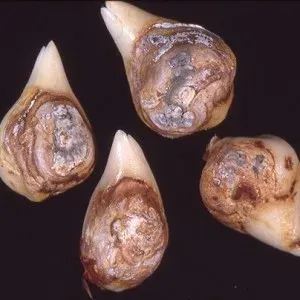
Description
Symptoms
Symptoms typically begin as small, soft, discolored spots on the skin of fruits or the surface of seeds. These spots expand rapidly under favorable conditions.
A characteristic sign is the development of a dense, felt-like mold covering the lesion. Initially white, the mold turns bluish-green as it begins to produce millions of spores.
Infected seeds become shriveled, lose their natural luster, and may develop a distinct musty odor. Seedlings from infected seeds often show signs of necrosis and damping-off.
Deep tissue decay is common; the internal part of the fruit becomes a mushy, watery mess. In advanced stages, the fruit may collapse completely or become mummified.
In storage crates, the infection spreads radially, affecting neighboring fruits through direct contact or spore deposition, resulting in "nests" of rot.
Pathogen
The disease is caused by the microscopic fungus Penicillium funiculosum, which is widely distributed in the environment. It acts primarily as a saprophyte, surviving on dead organic matter.
The fungus produces masses of conidia (spores) that are easily spread through wind, water splashing, and handling. These spores are highly resilient and can remain viable for several years.
Penicillium funiculosum is opportunistic, meaning it exploits damaged plant tissues to initiate infection. It secretes various hydrolytic enzymes that break down cell walls, leading to soft rot.
The fungal mycelium penetrates deep into the substrate, absorbing nutrients and releasing toxins that inhibit the defense mechanisms of the host plant.
The biological cycle of this pathogen allows it to reproduce rapidly under suitable conditions, creating chains of conidia that serve as the primary source of secondary infection in storage facilities.
Conditions for development
High relative humidity, typically above 85%, is the primary factor favoring the germination of spores and the spread of Penicillium funiculosum.
Temperatures ranging from 20°C to 25°C are optimal for the fungus. While it can persist at cooler temperatures, its metabolic rate slows significantly.
Mechanical damage is the most common gateway for the pathogen. Bruises, cuts, and insect stings on the surface of crops provide easy entry points for the fungal spores.
Inadequate ventilation in warehouses causes moisture accumulation and condensation, which creates an ideal microclimate for the rapid colonization of fruits by the fungus.
High density of organic debris in fields or storage areas increases the inoculum pressure, making it much harder to manage the disease effectively.
Why it matters
The economic impact of Penicillium rot is devastating, particularly in the post-harvest industry, where it can cause significant losses of stored commodities.
It reduces the quality of seed lots, leading to poor germination rates and stunted plant growth, which forces farmers to spend more on replanting efforts.
Some strains of Penicillium produce mycotoxins that are harmful to human and animal health, rendering the infected produce unsafe for consumption.
The cosmetic degradation of fruits reduces their market value significantly, making them ineligible for commercial sale or processing.
Increased labor costs associated with sorting and discarding infected produce during the storage period add a heavy financial burden on agricultural producers.
Protection
Pre-harvest and post-harvest handling must be done with extreme care to avoid mechanical injuries. Using proper packing materials and machinery is essential.
Sanitation of storage facilities is critical. Cleaning and disinfecting crates, walls, and equipment before the season starts helps to eliminate overwintering spores.
- Application of appropriate seed dressings/fungicides before planting.
- Strict control of storage temperature and humidity levels.
- Regular inspection and removal of infected items to stop spread.
- Proper crop rotation to reduce soil-borne pathogen populations.
- Use of biological control agents like Bacillus species to suppress fungal growth.
Implementing a "first-in, first-out" inventory strategy for produce helps in reducing the duration of storage, thereby minimizing the exposure window for the fungus.
Using controlled atmosphere storage (CAS) can effectively suppress the growth of Penicillium funiculosum, extending the shelf life of the produce significantly.
Discussion
No discussions yet — be the first.