
Penicillium rot
Penicillium decumbens
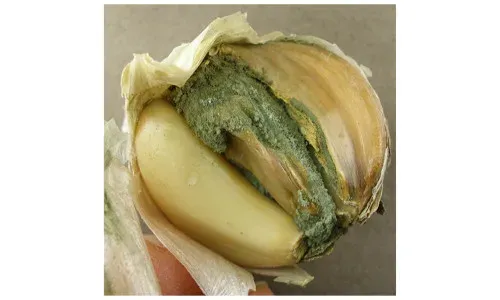
Description
Symptoms
The primary symptom is the appearance of a loose, powdery mold that eventually turns a distinct blue-green color. The plant tissues underneath this mold become soft, water-soaked, and lose their integrity.
In seeds, the infection causes a significant reduction in germination energy. A greyish mold often develops on the seed surface, effectively destroying the embryo before the seedling can emerge.
In fruits and vegetables, the disease presents as "blue mold rot," spreading rapidly across the surface. Infected produce releases a characteristic musty odor and becomes mushy to the touch.
In seedlings, the fungus causes dampening-off, where tissues at the crown become limp and darkened. Infected areas quickly produce millions of spores that contaminate surrounding healthy plants.
A key sign is the easy release of spore powder when the surface is touched. This indicates a high level of sporulation and an active, dangerous phase of the infection.
Pathogen
The causal agent of Penicillium rot is the microscopic fungus Penicillium decumbens, which belongs to the Penicillium genus. It is an imperfect fungus that propagates extensively through conidia.
This fungus acts primarily as a saprotroph but can easily transition to a parasitic lifestyle when plants are weakened. It possesses high enzymatic activity, allowing it to rapidly degrade plant cell walls and tissues.
The mycelium of the fungus is light-colored, but upon sporulation, it forms a characteristic greenish-blue or greyish powdery mold. Penicillium decumbens is known for its high environmental resilience.
A significant biological feature is the fungus's ability to produce harmful mycotoxins. These metabolites accumulate in infected produce, posing serious risks to food safety and animal health.
The fungus survives in the soil, on crop residues, and on the surface of seeds. Its spores are easily dispersed by air currents, water splashes, and farm equipment across large distances.
Conditions for development
Favorable conditions for Penicillium decumbens include high relative humidity (above 75%) and temperatures ranging from +15 to +25 degrees Celsius. These conditions are commonly found in storage facilities.
Poor ventilation in storage creates stagnant, humid air, which is the perfect environment for rapid conidia germination. Once established, the fungus can destroy entire batches of produce.
Injuries to the plant skin, such as bruises or cuts, are critical factors for infection. Micro-wounds provide direct pathways for the fungus to penetrate and colonize plant tissues.
Poor soil aeration and excessive moisture during the seedling stage promote the development of the pathogen. Weakened plants have little resistance to fungal invasion.
Proximity to decaying organic matter acts as a reservoir for spores. High inoculum density in the storage environment inevitably leads to cross-contamination of healthy produce.
Why it matters
The primary damage is the complete loss of marketability and nutritional value. Fruits and vegetables infected with Penicillium decumbens are unfit for consumption or processing.
In seed production, the rot leads to poor stand establishment. Infected seeds often fail to germinate, causing significant yield losses and reducing the overall productivity of the crop.
In storage, the disease spreads explosively. A few infected items can lead to the decay of the entire stockpile within a short timeframe, complicating long-term produce storage.
Mycotoxins produced by the fungus make grain and fruits unsuitable for feed or food markets, leading to strict regulatory rejections and financial losses for producers.
The need for constant disinfection of storage facilities and chemical seed treatment increases operational costs, thereby reducing the profitability of agricultural enterprises.
Protection
The foundation of effective management is good agricultural practice. Harvesting crops in dry weather and ensuring rapid, thorough drying before storage are critical steps.
Using high-quality fungicidal seed treatments is essential to protect seeds from soil-borne and seed-borne inoculum. This creates a protective barrier for young, vulnerable plants.
Storage facilities must have active systems for humidity and temperature control. Regular ventilation is the most effective method for suppressing mold growth.
Conducting systematic sanitation of storage areas, containers, and tools significantly reduces the risk of re-infection. It is vital to remove any source of fungal inoculum from the storage environment.
- Implementing crop rotation to break the pathogen's life cycle.
- Minimizing produce damage during harvesting and transport.
- Selecting disease-resistant plant varieties or hybrids.
- Optimizing mineral nutrition to strengthen plant health.
- Isolating infected produce immediately upon detection.
Discussion
No discussions yet — be the first.