
Penicillium rot
Penicillium chrysogenum
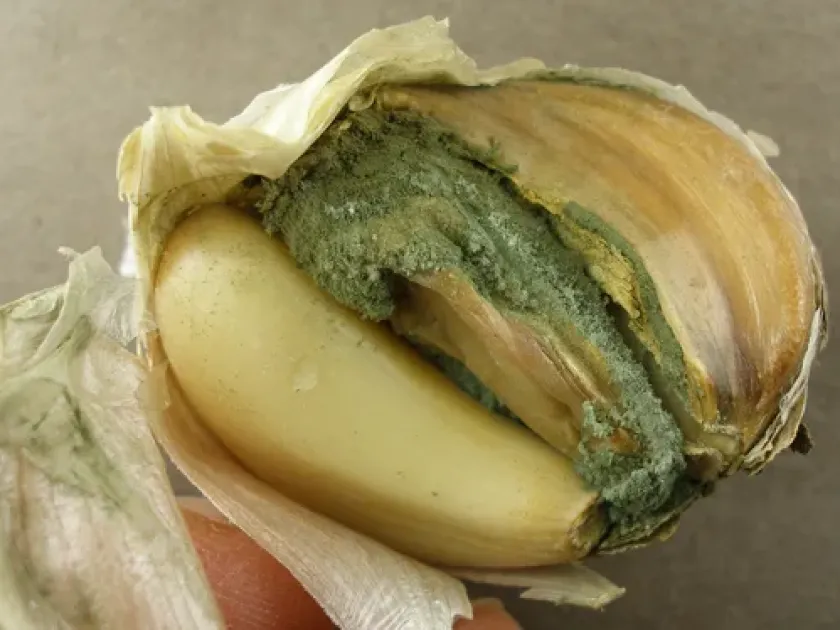
Description
Symptoms
The hallmark of Penicillium rot is the development of a powdery, fuzzy growth on the surface of seeds, fruits, or bulbs. The color typically ranges from dusty grey-green to vivid blue-green or olive, corresponding to sporulation.
In infected seeds, the mold typically targets the embryo region. The seed coat becomes discolored, often turning brownish or appearing dull, and may lose its viability within a short period of colonization.
When fruits are affected, the tissue beneath the moldy patches softens and turns into a watery, mushy rot. A characteristic musty or earthy odor is frequently associated with the infection.
Seedlings infected by the fungus exhibit yellowing cotyledons, stunting, and damping-off. The root system may show signs of browning and necrosis, which hinders the plant’s ability to take up nutrients and water.
Microscopic examination of the affected areas reveals characteristic branched conidiophores with chains of spores. These structures create the distinctive blue-green appearance visible to the naked eye.
Pathogen
The causative agent of this disease is the mold fungus Penicillium chrysogenum, which belongs to the Penicillium genus. It is a cosmopolitan fungus, ubiquitous in soil, air, and organic debris, acting primarily as a saprotroph.
The fungus produces extensive mycelium and abundant conidia, which are asexual spores that spread easily through wind, water, and human activities. Its rapid growth rate allows it to quickly colonize available nutrient sources.
P. chrysogenum possesses a high enzymatic capacity, secreting various extracellular enzymes that break down plant cell walls. This biological activity is the key factor in its ability to degrade plant tissues during storage.
The fungus is known for its ability to produce secondary metabolites, including antibiotics and mycotoxins. These substances often help the fungus outcompete other microorganisms in the environment.
While often considered a secondary pathogen, it readily exploits tissues stressed by adverse environmental conditions, physical injury, or primary infections by other pathogens.
Conditions for development
The primary driver for the development of Penicillium rot is high humidity. The fungus thrives when relative humidity exceeds 80% and grain moisture content is higher than 15-16%.
The optimum temperature for P. chrysogenum growth is between 20°C and 25°C, although the fungus remains metabolically active at lower temperatures, making it a persistent threat in cool storage environments.
Poor ventilation in warehouses and storage bins facilitates the accumulation of moisture and spores. Stagnant air pockets serve as epicenters for rapid disease spread throughout the stored commodity.
Mechanical injuries, such as bruises, cuts, or punctures sustained during harvesting and transport, are the main entry points for the fungus. Leaking cell sap at the site of injury provides the perfect medium for germination.
Contamination of the crop during the harvesting phase, especially under wet conditions, significantly increases the risk of mold outbreaks during the subsequent storage period.
Why it matters
The economic impact of Penicillium rot is significant, particularly in the post-harvest sector. It causes severe losses in fruit and vegetable quality, often resulting in complete spoilage of entire shipments.
In field crops, the disease reduces seed vigor and germination percentages. Poor stand establishment due to seed decay is a frequent consequence of using contaminated or improperly stored seed material.
The production of mycotoxins by the fungus poses health risks. Contaminated commodities are often unsuitable for animal feed or human consumption, leading to financial loss and disposal challenges.
In bulk grain storage, the heat generated by fungal metabolic activity leads to localized heating or "hot spots." This not only destroys the immediate batch but can also trigger systemic spoilage in the entire storage unit.
The disease weakens plants, making them more susceptible to attack by other opportunistic pathogens, thereby complicating crop management and reducing overall yields.
Protection
Effective management begins with proper post-harvest handling. Drying produce to safe moisture levels is the most critical step in preventing fungal development and ensuring long-term storage stability.
Sanitation is paramount. Regularly cleaning storage facilities, equipment, and shipping containers helps eliminate spore reservoirs that could lead to re-infection of new harvest batches.
Seed treatment with broad-spectrum fungicides provides protection against soil-borne and seed-borne Penicillium species, ensuring healthy germination and early root development.
Minimizing mechanical damage during harvest and grading reduces the number of infection sites on fruits and vegetables, effectively limiting the chances for the fungus to establish itself.
- Monitor storage environments for moisture and temperature.
- Ensure proper airflow through stored produce piles.
- Remove any damaged or decaying material immediately.
- Practice crop rotation to maintain soil health.
Discussion
No discussions yet — be the first.