
Penicillium rot
Penicillium chermesinum
Description
Symptoms
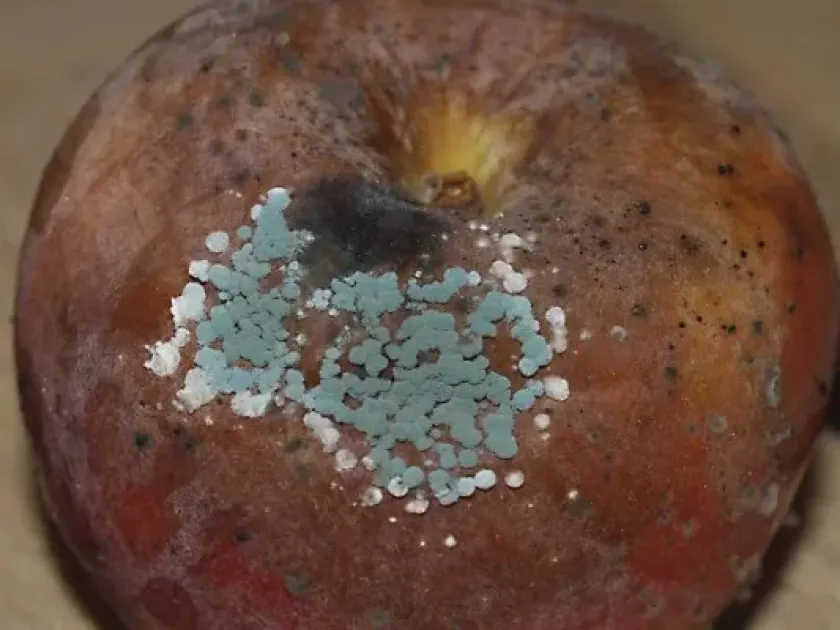
The primary symptom is the appearance of a characteristic moldy growth on the surface of fruits, vegetables, or seeds, ranging in color from white to vibrant pink or red.
Infected tissues soften and eventually lose their structural integrity, turning into a mushy mass. This is often accompanied by a distinct musty odor typical of mold infections.
When seeds are infected, there is a significant reduction in germination rates. Seedlings emerging from infected seeds often die before reaching the soil surface or appear stunted.
In storage facilities, rot spots on produce expand rapidly, covering large surface areas. Infected spots often become sunken and depressed into the fruit.
Under high humidity, velvety cushions of conidial sporulation appear on the surface of the lesions, which are easily dispersed by physical contact or airflow.
Pathogen
The causal agent of this disease is the imperfect fungus Penicillium chermesinum, which belongs to the Penicillium genus. It is a microscopic organism widely distributed in soil and plant residues.
The fungus spreads via conidia, which are easily transported by air currents, water, or through contaminated equipment. The infection persists in seeds, soil, and storage containers.
The life cycle of the fungus involves the formation of abundant mycelium and conidial sporulation, allowing it to rapidly colonize various substrates.
This pathogen produces secondary metabolites known as mycotoxins, which accumulate in infected tissues, rendering the crops unsuitable for consumption or animal feed.
The biological characteristics of Penicillium chermesinum allow it to adapt to a wide range of temperatures, making it a persistent threat in agricultural ecosystems.
Conditions for development
The disease development is heavily dependent on high relative humidity, typically exceeding 80–85%, which provides the necessary moisture for spore germination.
Moderate temperatures in greenhouses and storage facilities create optimal conditions for the fungus to grow and propagate effectively.
Poor ventilation and the formation of condensation on stored products are primary catalysts for the rapid spread of the infection in warehouses.
The presence of physical injuries—such as cuts, bruises, or insect punctures—drastically increases the susceptibility of crops, as these wounds provide entry points for the pathogen.
Weakened plant immunity due to nutrient deficiencies or environmental stress further facilitates the progression of the rot.
Why it matters
The main impact of Penicillium rot is significant crop loss during storage, resulting in substantial economic damage for agricultural producers.
Infection of seeds leads to poor crop establishment and reduced overall yields, as the pathogen persists and affects subsequent plant generations.
The contamination of produce with mycotoxins makes it impossible to market or process the affected harvest, leading to direct financial losses.
This disease affects a wide range of vegetable, fruit, and grain crops, posing a threat to diverse agricultural sectors.
The high capacity for spore production and dispersal makes it difficult to contain outbreaks, especially in high-density storage environments.
Protection
A key preventive strategy is the strict maintenance of proper storage conditions, including controlled humidity and efficient ventilation.
Regular sanitation of warehouses, containers, and tools is essential to minimize the initial inoculum load and prevent cross-contamination.
Pre-sowing seed treatment with appropriate fungicides is vital to protect against early-stage infections and ensure uniform seedling emergence.
Agricultural practices should emphasize gentle handling during harvest to prevent mechanical injuries that facilitate fungal entry.
- Implementing crop rotation to break the infection cycle.
- Prompt removal and destruction of infected plant debris.
- Selecting and planting crop varieties with higher resistance to rots.
- Regular monitoring and inspection of stored produce for early signs of decay.
Discussion
No discussions yet — be the first.