
Paraperonospora
Paraperonospora
Description
Symptoms
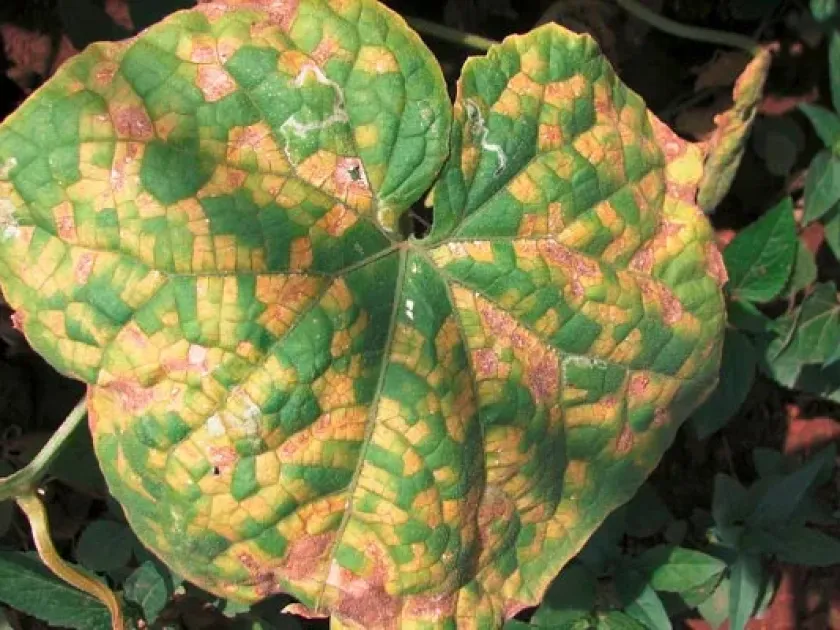
Initial symptoms are characterized by chlorotic or yellowish spots on the upper surface of leaves, often bounded by leaf veins.
A distinctive feature is the presence of fuzzy or downy growth on the underside of these spots, particularly under high humidity levels.
As the infection progresses, these areas turn necrotic, changing color to brown, which eventually leads to tissue death and leaf wilting.
Younger shoots and stems may show signs of deformity or stunting as the plant struggles to allocate energy due to the infection.
Severe infestation can lead to premature leaf drop, which significantly reduces the photosynthetic efficiency of the entire plant.
Pathogen
The disease is caused by an oomycete belonging to the Paraperonospora genus, a group of organisms often referred to as water molds.
These pathogens function as obligate parasites, meaning they require living host tissue to complete their reproductive cycle effectively.
The life cycle involves the production of zoospores that rely on thin films of water to move and infect healthy plant cells.
Upon colonization, the pathogen develops specialized structures known as sporangiophores, which emerge through the stomata to release spores.
The pathogen can persist in crop residues and soil, allowing it to survive off-season and initiate new infections when favorable conditions return.
Conditions for development
High relative humidity and the presence of leaf surface moisture are the primary triggers for the spread and germination of the pathogen.
Temperatures ranging between 15 and 22 degrees Celsius create an optimal environment for the rapid reproduction of the spores.
Densely planted crops that lack adequate airflow are particularly prone to outbreaks because they trap moisture near the canopy.
Frequent rainfall and persistent morning dew facilitate the dispersal of spores across fields via wind or water splashes.
Low light intensity combined with poor ventilation exacerbates the spread, as plants become weaker and more susceptible to infection.
Why it matters
The primary economic impact of Paraperonospora is the loss of leaf area, which severely restricts the plant's photosynthetic capacity.
Reduced nutrient accumulation leads to poor fruit development, affecting both the yield volume and the overall quality of the final harvest.
The disease can cause significant economic losses in commercial production by lowering the market grade of the produce due to aesthetic damage.
Stunted growth and premature senescence decrease the overall plant vigor, making it vulnerable to secondary infections or environmental stress.
In cases of epidemic outbreaks, entire patches of crops may fail to produce viable yields, necessitating large-scale remediation efforts.
Protection
Integrated pest management is essential, focusing on cultural practices to minimize the conditions that favor pathogen development.
Proper sanitation, including the removal and destruction of infected plant debris, is vital to reduce the initial inoculum load in the field.
The use of certified seeds and resistant cultivars serves as a foundation for preventing the establishment of the disease in the first place.
Chemical control involving timely application of appropriate fungicides can effectively suppress the disease, especially during periods of high humidity.
- Crop rotation with non-host species;
- Optimal spacing to ensure good aeration;
- Use of copper-based protective sprays;
- Drip irrigation to avoid wetting foliage;
- Frequent scouting to detect early infection.
Discussion
No discussions yet — be the first.