
Paramycosphaerella marksii
Paramycosphaerella marksii
Description
Symptoms
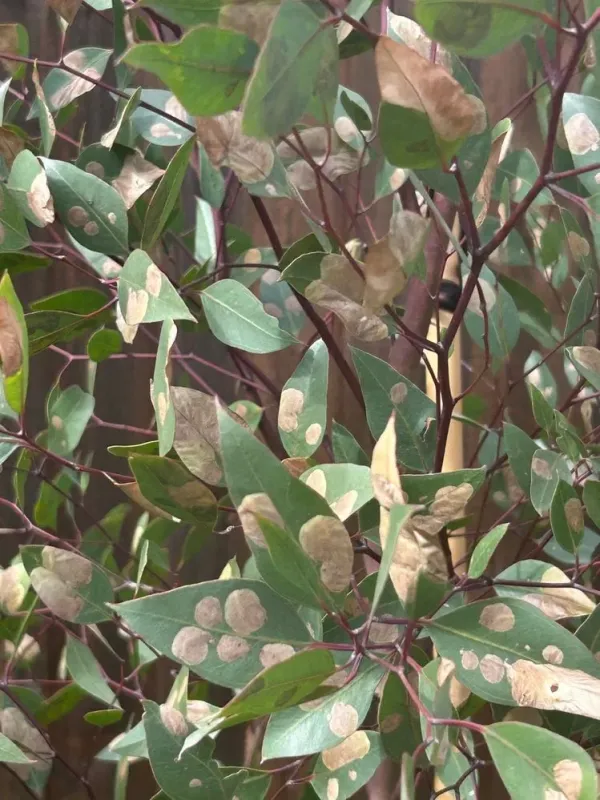
The primary symptom of this disease is the appearance of distinct spots on eucalyptus leaves. Initially, these appear as small chlorotic or necrotic spots that gradually expand in size as the infection progresses.
As the necrosis develops, the affected tissue turns brown or grayish, becoming brittle and dry. A characteristic dark margin often develops around the central necrotic lesion, indicating the presence of active fungal growth.
Under favorable environmental conditions, small fruiting bodies of the fungus may appear on the underside of the leaf or within the spots. These structures manifest as tiny black dots that can be observed with a magnifying glass.
Heavy infestation leads to premature yellowing and leaf drop, which significantly impacts the aesthetic appeal and overall productivity of the tree. In severe cases, deformation of the leaf blade and tip dieback can occur.
Symptom expression may vary depending on the host species and the age of the tree, but a general decline in tree vigor is a consistent indicator of the pathogen's presence within a stand.
Pathogen
The causal agent of this disease is the microscopic ascomycete fungus Paramycosphaerella marksii. This pathogen belongs to a group of fungi known for causing leaf spot diseases in various tree species, particularly within the Myrtaceae family.
The fungus acts as a hemibiotroph, initially infecting living leaf tissue before shifting to a necrotrophic feeding strategy. This transition allows the fungus to rapidly colonize large areas of the foliage.
Reproduction involves the formation of spore-producing structures that are efficiently dispersed into the environment. The life cycle of the pathogen is closely tied to climatic conditions, enabling it to survive on fallen leaf litter between seasons.
The pathogen remains viable in plant debris, which serves as a primary source of inoculum at the beginning of the next growing season. Its high host specificity makes it particularly threatening to eucalyptus monocultures.
Identification of the pathogen often requires laboratory analysis, including microscopy or culturing, as symptoms can be morphologically similar to those caused by other related species of Mycosphaerellaceae.
Conditions for development
Disease development is most active under conditions of high humidity and moderate temperatures. Rainfall is a critical factor, as it facilitates the dispersal of fungal spores onto healthy plant tissues via water splash.
Prolonged periods of fog or dew create an ideal microclimate on the leaf surface, which is necessary for conidial germination and subsequent host penetration.
Poor silvicultural practices, such as excessive stand density, restrict air circulation and slow the drying of foliage after rain, thereby creating a favorable environment for rapid disease buildup.
Stressed trees, particularly those suffering from poor soil nutrition or water deficit, show higher susceptibility to infection. Healthy, vigorous plants are better able to mount effective immune responses.
The seasonal activity of the disease generally coincides with the phases of active host growth, when young tissues are most susceptible to primary infection by fungal spores.
Why it matters
The main impact of this pathogen is the significant reduction in the functional leaf area available for photosynthesis. Affected tissues lose metabolic function, leading to a noticeable slowdown in tree growth and biomass accumulation.
Extensive defoliation caused by the infection depletes the tree's energy reserves. This makes the trees more susceptible to secondary infections and pest attacks, further compromising their survival.
In nursery settings, this disease can lead to the rejection of large batches of planting stock, resulting in significant economic losses for commercial forestry and propagation facilities.
Chronic infestation can substantially reduce the annual growth increment of wood, negatively affecting the quality of timber and the overall productivity of eucalyptus plantations.
Repeated infection over several growing seasons can lead to the overall decline of forest stands, rendering them economically unviable and ecologically degraded.
Protection
Effective management begins with silvicultural practices, such as the regular removal and destruction of fallen leaves and infected debris that serve as reservoirs for fungal spores.
Maintaining optimal planting density ensures adequate airflow within the canopy, which minimizes the microenvironmental conditions favorable for disease outbreaks.
Fungicide application is recommended in specialized nurseries during the early stages of symptom development. Copper-based compounds or systemic fungicides can effectively suppress pathogen activity.
- Utilizing disease-resistant eucalyptus clones and varieties.
- Conducting regular phytosanitary monitoring of forest stands.
- Ensuring balanced mineral nutrition to support tree health.
- Pruning and removing severely infected branches to reduce inoculum.
In large-scale forest stands, the primary focus remains on maintaining high tree vigor and roguing out highly susceptible individuals to limit the spread of the pathogen.
Discussion
No discussions yet — be the first.