
Paramecium bursaria
Paramecium bursaria
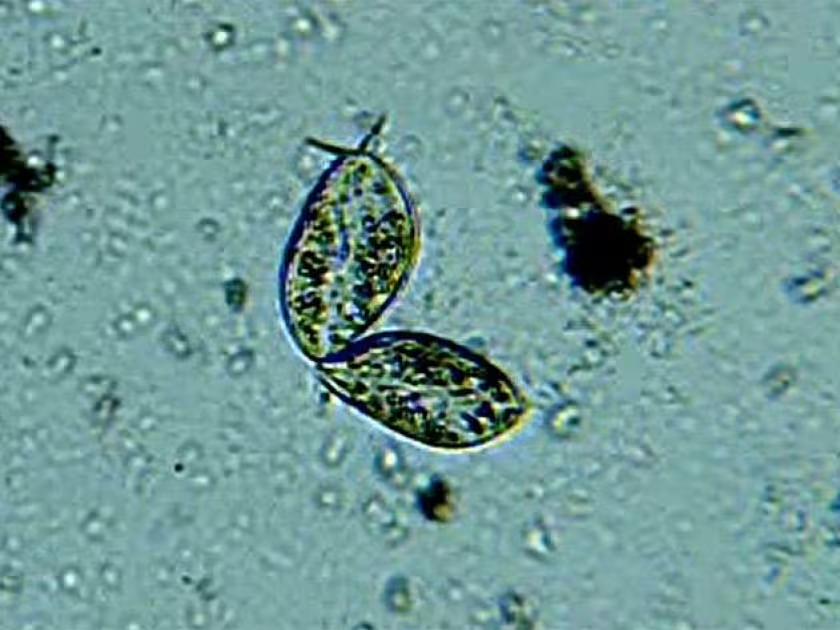
Description
Pathogen
Paramecium bursaria is a single-celled eukaryotic organism belonging to the Ciliates. It is important to clarify that this organism is not a plant pathogen and does not cause any diseases in crops.
The organism is scientifically renowned for its endosymbiotic relationship with green algae of the genus Chlorella. These algae reside within the cytoplasm of the protozoan and provide it with glucose produced via photosynthesis.
In agricultural settings, especially hydroponics, these organisms may appear in water reservoirs. They are free-living organisms that feed on bacteria and detritus rather than attacking plant tissues.
Unlike parasitic fungi or bacteria, Paramecium bursaria lacks the mechanisms required to invade or damage plant cell walls.
Therefore, classifying it as a "plant disease" is biologically inaccurate and reflects a misunderstanding of aquatic microbial ecology.
Conditions for development
The development of Paramecium bursaria populations is largely dependent on light exposure, which supports the symbiotic algae within the protozoan.
Temperatures ranging from 18 to 25 degrees Celsius create favorable conditions for their metabolism and reproductive cycles in an aquatic environment.
Organic matter concentration in water is a key driver of population growth, as it facilitates the increase of bacterial biomass, the primary food source for the ciliates.
Dissolved oxygen levels are crucial. A well-aerated environment maintains healthy microbial balance and prevents the overgrowth of specific protozoan groups.
In hydroponic setups, a surge in the Paramecium population often serves as a bio-indicator of poor hygiene or stagnant water conditions.
Why it matters
Paramecium bursaria poses no direct threat to plants. It does not possess any phytotoxic substances or tissue-degrading enzymes.
The only indirect concern in agricultural water systems is the potential for mass proliferation to interfere with the clarity or balance of the nutrient solution.
When present in extremely high densities, their metabolic byproducts may accumulate, necessitating a refresh of the growing medium or nutrient solution.
While the organism itself is harmless, its abundance should be treated as a signal to check the filtration system and water quality.
Neglecting such warnings may lead to the development of other, truly pathogenic microorganisms that thrive in dirty water conditions.
Protection
No chemical pesticides or fungicides are needed for Paramecium bursaria, as it is not a parasite and does not cause economic damage.
The most effective management strategy is routine maintenance and sanitation of all water-contacting equipment.
Periodic replacement of the nutrient solution and mechanical cleaning of filters are sufficient to keep protozoan numbers at negligible levels.
Maintaining stable water quality and proper aeration prevents the conditions that favor excessive microbial development.
- Regular cleaning of hydroponic reservoirs.
- Water quality monitoring and filtration.
- Proper disposal of stagnant water.
- Maintaining optimal lighting for the culture system.
Discussion
No discussions yet — be the first.