
Paraleptosphaeria orobanches
Paraleptosphaeria orobanches
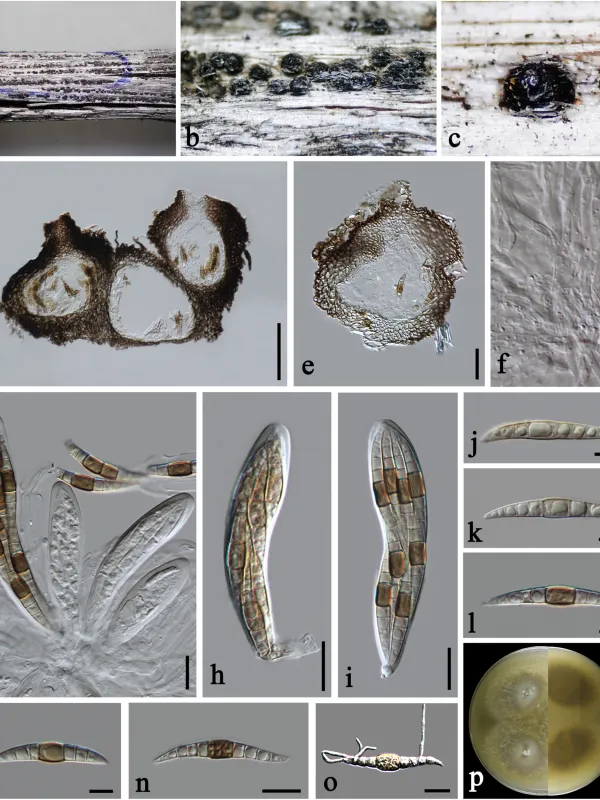
Description
Symptoms
The primary symptom of the disease is the appearance of necrotic lesions on the broomrape stem. These lesions often start as small, discolored spots that rapidly expand, leading to the collapse of the plant structure.
As the infection progresses, the stems of the broomrape become brittle and may break, preventing the plant from completing its life cycle or producing seeds. The presence of tiny, dark fruiting bodies on the dead stems is a clear indicator of the fungal activity.
In cases of high humidity, a greyish fungal mat may develop over the affected areas. This indicates that the pathogen is actively colonizing the tissues and producing secondary spores to infect surrounding broomrape individuals.
Plants affected by the pathogen show signs of stunted growth, chlorosis, and general systemic decay. Unlike healthy broomrape, diseased individuals fail to emerge vigorously from the soil or wither shortly after emergence.
Mass infestations of the fungus on a site lead to visible patches of necrotic or dried-out broomrape, significantly reducing the pressure of this parasitic weed on the associated crop.
Pathogen
The causal agent of this disease is the ascomycete fungus Paraleptosphaeria orobanches. It is a highly specialized fungal pathogen that has evolved to target parasitic plants within the Orobanche genus, commonly known as broomrape.
The fungus is characterized by its significant host specificity, focusing its physiological activities on colonizing and destroying the tissues of the parasite. This specialization makes it a subject of extensive research for sustainable weed management.
The life cycle of the pathogen involves the production of pseudothecia, which serve as the primary source of inoculum. These structures release spores that can be dispersed by wind or water, facilitating the spread of the infection within a broomrape population.
As a pathogen, Paraleptosphaeria orobanches invades the stem and vascular tissues of the host plant, effectively cutting off the nutrient supply from the host culture to the parasite, leading to the latter's decline.
Laboratory studies have confirmed that the fungus can be cultured on artificial substrates, which is a fundamental requirement for the potential commercial development of bioherbicides targeted at controlling broomrape infestations in agriculture.
Conditions for development
The development of Paraleptosphaeria orobanches is highly dependent on environmental conditions, specifically high humidity and moderate temperatures. Rainy periods are often the triggers for severe outbreaks of the disease.
Optimal growth temperatures for the fungus generally range from 18°C to 25°C. Prolonged exposure to extreme heat or drought may slow down the pathogen’s activity, as it relies on moisture for spore germination and mycelial spread.
The density of the broomrape population is a critical factor for the spread of the pathogen. Close proximity between host plants allows the fungus to move efficiently from one infected plant to another via contact.
Soil moisture levels also play a role in the long-term survival of the fungal spores. Soils with good organic content and favorable moisture levels help maintain a stable reservoir of the pathogen, which is crucial for natural biocontrol.
Management practices that influence the microclimate of the field can directly impact the success of the pathogen. For example, irrigation methods like overhead sprinkling can facilitate the movement of spores compared to drip irrigation.
Why it matters
The primary beneficial effect of this fungus is its ability to reduce the population of broomrape, a devastating parasite that causes major yield losses in crops such as sunflowers, tomatoes, and tobacco.
There is no evidence of the fungus harming the primary crop plants, as its host range is strictly limited to Orobanche species. This safety profile makes it an ideal candidate for biological pest control in various agricultural systems.
By preventing broomrape from reaching its reproductive stage, the fungus reduces the accumulation of weed seeds in the soil. Given that one broomrape plant can produce thousands of seeds, this prevention is vital for long-term farm productivity.
Implementing biological control agents like Paraleptosphaeria orobanches helps reduce the overall reliance on chemical herbicides, promoting a more balanced and environmentally friendly approach to farming.
The overall reduction in parasitic weed pressure significantly improves the vigor and yield of the primary crops, leading to better economic outcomes for farmers dealing with heavy broomrape infestations.
Protection
Current control strategies focus on protecting and fostering the natural presence of the fungus in agricultural soils. Avoiding excessive tillage or harsh chemical treatments can help preserve the beneficial microbial community, including Paraleptosphaeria orobanches.
Integrating biological control with sound agronomic practices, such as crop rotation and the use of resistant crop varieties, creates a synergistic effect that minimizes the impact of broomrape.
Ongoing research is exploring the inoculation of fields with cultivated strains of the fungus to trigger faster and more widespread control of the weed in heavily infested areas.
- Monitoring fields for early signs of broomrape infection.
- Using crop rotations that include trap crops.
- Preserving soil health to support beneficial fungi.
- Potential application of bio-preparations during the weed's growth phase.
Future agricultural strategies will likely place greater emphasis on utilizing Paraleptosphaeria orobanches as part of an Integrated Pest Management (IPM) plan to secure yields against parasitic threats.
Discussion
No discussions yet — be the first.