
Paraleptosphaeria leaf spot
Paraleptosphaeria macrospora
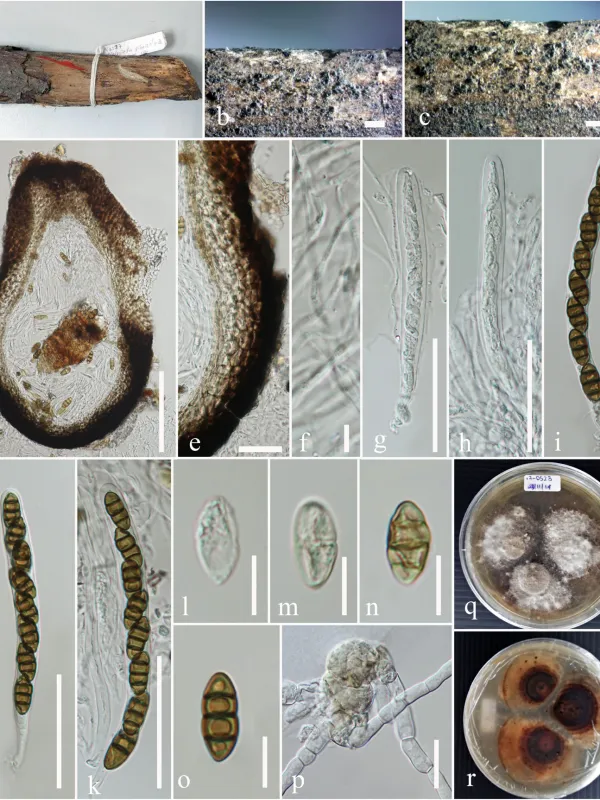
Description
Symptoms
Initial symptoms manifest as small chlorotic spots that gradually enlarge over time. These spots often display an oval or elongated shape, frequently delimited by leaf veins, giving them a characteristic angular appearance typical of the disease.
The central part of the lesions typically turns pale, straw-colored, or grayish, surrounded by a dark, brown border. On the necrotic areas, small black dots representing the fungal fruiting bodies often become visible to the naked eye.
Under favorable environmental conditions, these spots coalesce, causing extensive necrosis of the leaf blade. The leaves begin to yellow and wither prematurely, starting from the lower canopy, which significantly reduces the photosynthetic surface area.
In cases of severe infection, the disease spreads to leaf sheaths and stems. Brown stripes may appear on the stems, weakening the straw's structural integrity and potentially leading to lodging of the crop towards the end of the season.
Visual diagnosis can be challenging due to the similarity of symptoms with other leaf spot diseases like septoria or tan spot. Laboratory analysis of plant samples is often required to confirm the presence of Paraleptosphaeria macrospora.
Pathogen
The causal agent of this disease is the fungus Paraleptosphaeria macrospora, belonging to the Dothideomycetes class. Previously, this pathogen was often categorized within the Stagonospora complex, which complicated diagnostic efforts. It is a specialized parasite primarily affecting the vegetative parts of cereal crops.
The infection persists in the soil and on crop debris as perithecia or pycnidia. Throughout the life cycle, the fungus produces ascospores and conidia, which are responsible for both primary and secondary infections in the fields during the growing season.
The pathogen demonstrates significant adaptability to various climatic conditions, allowing it to survive in plant residues even during adverse weather. The fungal mycelium can penetrate deep into the host plant tissues, disrupting vital physiological processes.
Conidia are primarily dispersed through rain splash, moving from lower leaves to the upper canopy. Meanwhile, ascospores can be carried by wind currents over long distances, facilitating the spread of the disease on a regional scale.
Ongoing genetic evolution of this species poses challenges for developing completely resistant varieties, making continuous monitoring of the pathogen population essential for effective disease management in modern agriculture.
Conditions for development
Disease development is favored by warm and humid weather during the growing season. Frequent rainfall and the presence of leaf surface wetness are critical factors for spore germination and successful fungal penetration into plant tissues.
Optimal temperatures for the pathogen range from +15°C to +22°C. Within this range, the incubation period is significantly shortened, leading to rapid disease spread and potential outbreaks within the field.
Dense crop stands, where air circulation is restricted, create a specific microclimate with high humidity. Such conditions are ideal for the accumulation and spread of the infection, often leading to localized disease hotspots.
Poor crop rotation practices, specifically planting cereals after cereals, allow for the accumulation of a high inoculum load in the soil. Retaining significant crop residues on the soil surface provides an overwintering site for the fungus.
Excessive nitrogen fertilization can also contribute to disease severity by making plant tissues softer and more susceptible to fungal penetration, allowing the mycelium to spread more rapidly through the leaves.
Why it matters
The impact of the disease primarily involves the premature senescence of the foliage, resulting in a loss of biomass and decreased overall yield. Plants are unable to achieve optimal grain filling due to the impaired photosynthetic capacity.
A reduction in thousand-grain weight is a direct consequence of damage to the flag leaf, which is the most critical for yield formation. In years with severe disease pressure, yield losses can range from 20% to 30% or more.
Beyond quantity, the quality of the harvested grain is significantly compromised. Reductions in protein and gluten content, along with lower test weights, directly diminish the commercial value of the crop in the marketplace.
Plants weakened by the disease become more vulnerable to other biotic and abiotic stresses, such as drought or frost, further exacerbating the decline in productivity and overall crop health.
The use of infected seeds without proper fungicide treatment can lead to the transmission of the disease to the following season, establishing an early infection source in the new crop.
Protection
The primary prophylactic measure is strict adherence to crop rotation, ensuring that cereal crops are not planted on the same field more frequently than every two to three years. This effectively reduces the pathogen load in the soil.
Effective agricultural practices include deep plowing to bury crop residues. This accelerates the decomposition of plant debris where the fungus overwinters, thereby eliminating the primary inoculum source.
The use of resistant or tolerant cultivars remains the most effective and sustainable strategy for disease management. Modern breeding programs are focused on developing varieties that can resist or withstand infection by Paraleptosphaeria macrospora.
Chemical control involving the timely application of fungicides is necessary during years of high disease pressure. Triazoles and strobilurins are widely used to provide reliable protective and curative effects.
Field monitoring from the tillering stage onwards is vital for informed decision-making. Strategic fungicide application targeting the flag leaf protects the crop's yield potential and ensures high grain quality at harvest.
Discussion
No discussions yet — be the first.