
Paraleptosphaeria dryadis
Paraleptosphaeria dryadis
Description
Symptoms
The initial signs of infection are the appearance of small necrotic spots on the leaves. These spots are typically brownish, often surrounded by a darker, more defined margin as the infection progresses.
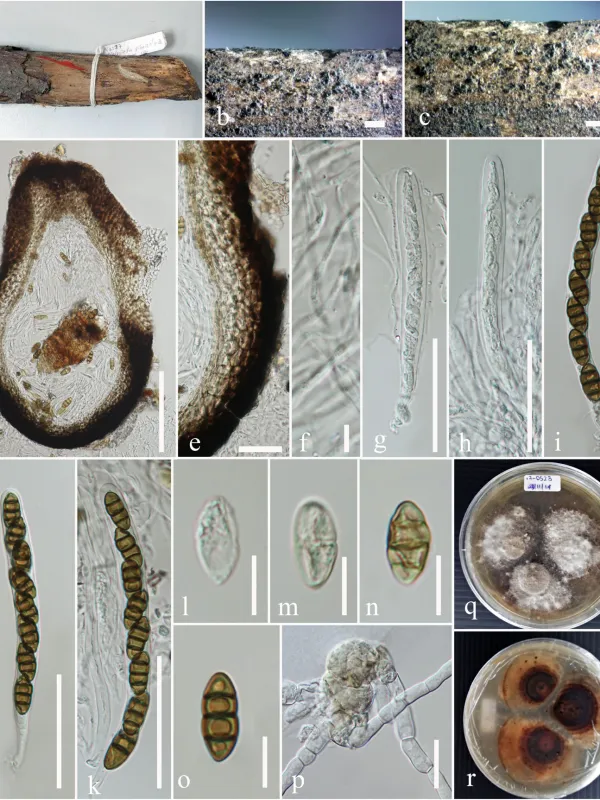
Small black, pimple-like structures, which are the pseudothecia of the fungus, can be observed within the necrotic lesions using a hand lens. This is the most reliable diagnostic characteristic for this specific disease.
As the infection spreads, the lesions grow and merge, leading to the yellowing, wilting, and eventually the death of the leaf blade. Severely affected leaves often curl and drop prematurely.
The disease usually progresses from the base of the plant upward. The dense, mat-forming nature of Dryas species can trap moisture, providing ideal conditions for the fungus to spread within the interior of the foliage mat.
Apart from leaves, the fungus can occasionally cause lesions on the petioles and stems, which weakens the overall structural integrity of the plant.
Pathogen
The causative agent of this disease is the fungus Paraleptosphaeria dryadis, an ascomycete belonging to the order Pleosporales. It is a highly specialized parasite that primarily colonizes plants of the genus Dryas.
The fungus survives by producing pseudothecia, which are small fruiting bodies that contain spores. These spores are dispersed by wind, water, and mechanical contact, allowing the pathogen to infect healthy parts of the plant during the growing season.
The life cycle of the pathogen is well-adapted to cold climates. The mycelium remains viable in leaf debris and infected stems, ready to resume activity as soon as temperature and moisture conditions become favorable in the spring.
In addition to the sexual stage, the fungus can produce conidia, facilitating secondary infections throughout the summer months when environmental conditions are conducive to fungal growth.
Research into Paraleptosphaeria dryadis is significant in mycological studies as it provides insights into the interactions between arctic fungi and their host plants in changing climates.
Conditions for development
High moisture levels are the most critical factor for the development of Paraleptosphaeria dryadis. Periods of heavy rain, persistent fog, or poor soil drainage create a high-humidity environment that triggers spore germination.
Cool to moderate temperatures, typical for the arctic and alpine environments where Dryas grows, are optimal for the growth of the fungus. Extreme cold keeps it dormant, but mild spells allow for rapid infection.
Poor air circulation, often caused by overly dense planting or lack of pruning, prevents foliage from drying out, leaving the plant vulnerable to fungal penetration.
Plants under physiological stress, such as those grown in unsuitable soil or those suffering from nutrient deficiencies, show a higher susceptibility to this pathogen.
The accumulation of dead, infected leaf litter beneath the foliage acts as a primary reservoir, allowing the disease to recur season after season if not removed.
Why it matters
The primary harm caused by Paraleptosphaeria dryadis is the destruction of photosynthetic tissue. By killing leaf areas, the fungus starves the plant of energy, leading to stunted growth.
Severe infections reduce the vigor of the plant, making it less resilient to harsh winter conditions and other environmental stressors, which is particularly dangerous for alpine species.
In ornamental landscaping, the disease significantly impairs the appearance of Dryas mats, causing unsightly brown patches and uneven growth that ruins the aesthetic appeal of the groundcover.
Chronic infection can lead to the slow dieback of the entire colony. If left unmanaged, the cumulative damage can result in the loss of large patches of plants in a garden setting.
The pathogen can also facilitate secondary infections by creating entry points for other weak parasites or opportunistic decay organisms that further degrade the plant tissues.
Protection
Effective management begins with proper site selection and soil preparation, ensuring excellent drainage to prevent the excessive moisture that the pathogen requires for colonization.
Good cultural practices, such as maintaining proper spacing between plants and ensuring adequate airflow, are essential to keep the foliage dry and reduce the likelihood of disease outbreaks.
Strict sanitation is vital; remove and safely dispose of all fallen, dead, or diseased leaves to eliminate the primary sources of infection within the garden environment.
In cases of severe or persistent infection, the application of appropriate fungicides, such as those targeting ascomycetes, may be necessary to suppress the spread of the disease.
- Regular inspection of the plant base for signs of necrotic growth.
- Avoid overhead watering to keep leaf surfaces dry.
- Application of copper-based or systemic fungicides in early spring.
Discussion
No discussions yet — be the first.