
Paragnomonia leaf spot
Paragnomonia fragariae
Description
Symptoms
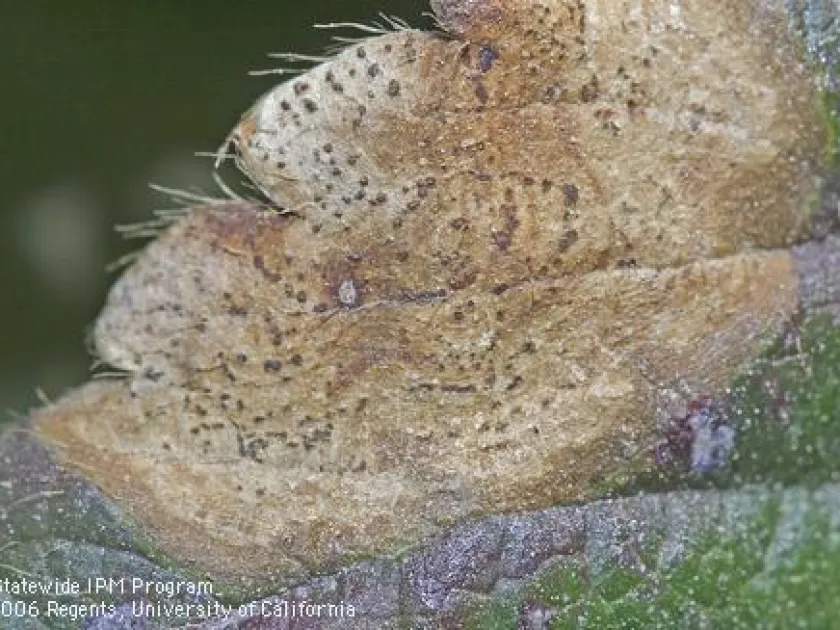
Paragnomonia leaf spot on strawberries initially appears as small reddish-brown spots on the leaf blades. Over time, these spots expand in size, often becoming irregular in shape.
Affected tissue frequently merges, covering a large portion of the leaf. The center of these spots typically turns light gray or white, while a dark border remains at the periphery.
Upon closer inspection, particularly on the underside of the leaf, tiny black fruiting bodies of the fungus can be observed. In advanced stages, the infected leaf tissue may become brittle and break off, creating ragged holes.
While the disease primarily targets older leaves, it can spread to young growth and stipules under favorable environmental conditions. This infection significantly compromises the leaf's photosynthetic ability.
The overall appearance of the strawberry plant suffers, with premature yellowing and leaf necrosis. Left unmanaged, the plant loses vigor and its overall fruit-bearing capacity is severely diminished.
Pathogen
The causal agent of this disease is the fungus Paragnomonia fragariae (formerly known as Gnomonia fragariae). It is a specialized pathogen belonging to the Ascomycota phylum.
The fungus overwinters in infected plant debris, fallen leaves, and soil, existing as mycelium or specialized fruiting bodies called perithecia. During spring, these structures release spores that initiate new infections.
Spore dissemination occurs primarily through wind currents, rain splash, or irrigation water. Once spores land on healthy strawberry foliage, they germinate in the presence of moisture and invade the tissue.
The life cycle of the fungus is closely tied to climatic conditions and the maintenance of the berry plantation. It is a highly specialized parasite that has adapted to thrive on host plants of the Fragaria genus.
The pathogen's ability to remain dormant within plant tissues allows it to persist in gardens for extended periods, making early detection a significant challenge for growers.
Conditions for development
The development of Paragnomonia leaf spot is highly dependent on prolonged periods of high humidity and frequent rainfall. Wet weather conditions create the ideal environment for fungal spore germination.
Moderate temperatures are generally optimal for the pathogen's growth and spread. Cool, damp conditions in spring and early summer often trigger the most severe disease outbreaks.
Poor agricultural practices, such as overcrowding the plants, prevent proper air circulation. This lack of airflow keeps foliage wet for longer periods, which is crucial for the infection process.
Poor soil aeration and persistent waterlogging can weaken the strawberry plant's immune response. Plants that are stressed by poor conditions become much more susceptible to the fungal invasion.
Failing to clear away old, diseased foliage after the harvest creates a reservoir for the pathogen. These remnants serve as the primary source of inoculum for the subsequent growing season.
Why it matters
The primary damage caused by this disease is the premature senescence and death of the foliage. This loss limits the plant's ability to store carbohydrates, which are essential for overall health.
Weakened plants show reduced winter hardiness and are more prone to freeze damage. Over time, this leads to a decrease in the longevity and overall productivity of the strawberry beds.
The reduction in photosynthetic efficiency impacts berry quality and size. Fruit yield often declines, and the berries may lack the desired flavor and marketability required for a successful harvest.
The infection places a heavy metabolic burden on the root system, as the plant attempts to repair damaged leaf tissues. This resource redirection hinders new runner and flower bud production.
The economic impact can be significant, as the disease spreads rapidly across plantations. Without intervention, entire beds can become severely infested within a single growing cycle.
Protection
Preventative measures are the cornerstone of managing this disease. Proper site selection, adequate plant spacing, and moisture management are critical for maintaining healthy strawberry plants.
Meticulous removal and destruction of infected leaves after the harvest is essential. This practice significantly reduces the overwintering inoculum source for the next season.
Choosing resistant strawberry cultivars is highly recommended to minimize reliance on chemical intervention. Modern breeding programs continuously work to improve resistance to leaf spot diseases.
In cases of severe infestation, fungicide treatments may be necessary. Using copper-based compounds or systemic fungicides registered for berry crops can help suppress the fungal population.
- Sanitary pruning and cleanup.
- Balanced irrigation practices.
- Potassium-rich fertilization.
- Management of insect vectors.
- Regular monitoring of leaf health.
Discussion
No discussions yet — be the first.