
Description
Symptoms
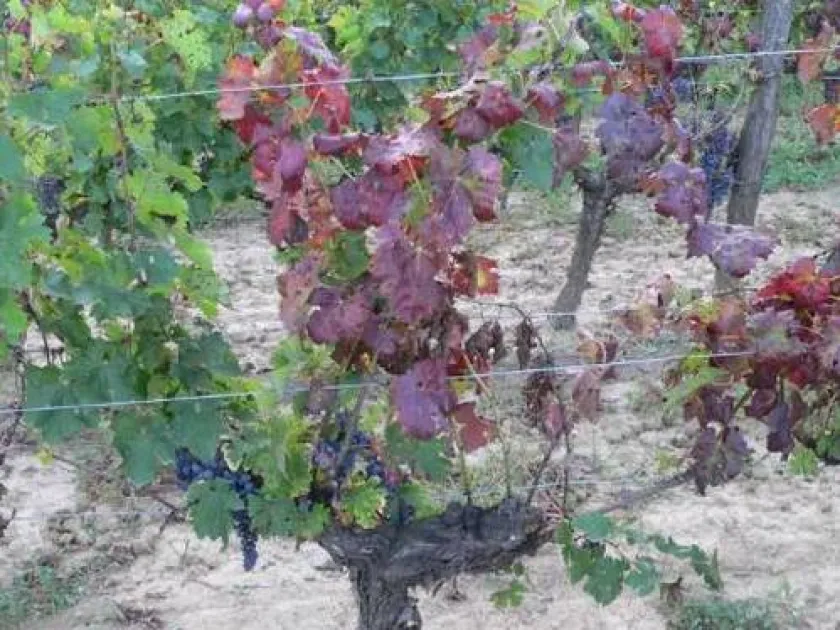
The main symptom of the disease is a specific yellowing of the leaves, which often starts from the edges and gradually covers the entire leaf blade. Tissues between the veins lose their color, become brittle, and eventually develop necrotic areas.
By mid-summer, affected plants exhibit downward curling of the leaves, giving the bush a characteristic "Palatinate" appearance. Leaf coloration can vary from light yellow to intense orange or red, depending on the grapevine variety.
Shoots show uneven wood maturation, making the vines vulnerable to winter frosts. Often, there is dieback of shoot tips and stunted growth of the entire plant canopy.
Inflorescences on affected branches often dry out or drop before flowering, leading to a sharp decrease in berry count per cluster. The remaining berries develop slowly, often taste sour, and fail to reach required sugar levels.
The root system also undergoes degradation: weak development of young roots is noted, which hampers the nutrition of the entire plant. Over time, the bush becomes exhausted and dies.
Pathogen
The causative agent of the disease is a phytoplasma (Candidatus Phytoplasma vitis), which localizes in the sieve tubes of the plant's phloem. It is an intracellular parasite that blocks the normal flow of nutrients.
Phytoplasmas lack a cell wall, making them extremely sensitive to the environment outside the host or vector. They spread systemically throughout the vascular system of the grapevine.
The primary vector of the pathogen in nature is insects of the order Hemiptera, specifically leafhoppers. By feeding on the juices of an infected plant, they acquire the pathogen and transmit it to healthy bushes during subsequent feedings.
The incubation period within the plant can range from a few weeks to several months before the first visual symptoms appear.
Diagnosis of the pathogen requires laboratory methods, such as PCR (polymerase chain reaction), as it is extremely difficult to visually distinguish phytoplasmosis from other types of yellows.
Conditions for development
Disease development is favored by warm and humid weather during the period of mass emergence of leafhopper vectors. High temperatures stimulate the active reproduction of insects and their movement between bushes.
The presence of weeds in rows and along the perimeter of the vineyard creates ideal reservoirs for the overwintering and reproduction of disease vectors. Lack of weed control significantly increases the risk of an epidemic.
Dense grapevine plantings with poor canopy ventilation promote a microclimate favorable for leafhoppers settling on leaves. In such conditions, insects move more easily from one plant to another.
A source of primary infection is often wild or diseased vines located near commercial plantings. Using infected planting material during the establishment of a vineyard guarantees the spread of the disease.
Untimely pruning and the presence of open wounds on the wood can facilitate the spread of infection through mechanical contact, although the main route of transmission remains via insects.
Why it matters
The harmfulness of Palatinate grapevine yellows lies in the gradual death of bushes, leading to premature vineyard clearing. Yields in affected areas fall to critical levels.
The quality of wine products drops sharply due to the inability of berries to accumulate necessary sugar levels and the accumulation of undesirable acids. Diseased bushes become economically unviable.
The infection is systemic, so complete recovery of the plant in late stages is impossible. The disease gradually drains the vine's strength, making it susceptible to other fungal and bacterial infestations.
The spread of the disease in a region limits the export of planting material and necessitates quarantine measures. This causes significant losses for nursery operations.
Economic damage includes the cost of replacing bushes, expenses for vector control, and loss of revenue from harvests over several years.
Protection
The main preventive method is the use of certified healthy planting material that has been tested for phytoplasmas. Establishing vineyards from verified seedlings is the best protection.
Strict control of leafhopper vector populations must be maintained through insecticide treatments during periods of their maximum activity. Monitoring pest populations allows for timely application of protection measures.
An important measure is the regular removal and destruction of heavily infected bushes (grubbing). Leaving infected plants in the field is unacceptable as they serve as a source of infection for neighboring bushes.
Maintaining vineyard cleanliness includes mowing weeds, which can serve as intermediate hosts for vectors or the pathogen. Agronomic maintenance should be aimed at creating conditions unfavorable for pest reproduction.
- Use of systemic insecticides.
- Weed destruction in rows.
- Regular vineyard inspection (phytosanitary monitoring).
- Quarantine measures when importing material.
Pathogens and affected parts
Affects crops · 1
Discussion
No discussions yet — be the first.