
Paecilomycosis
Paecilomyces variotii
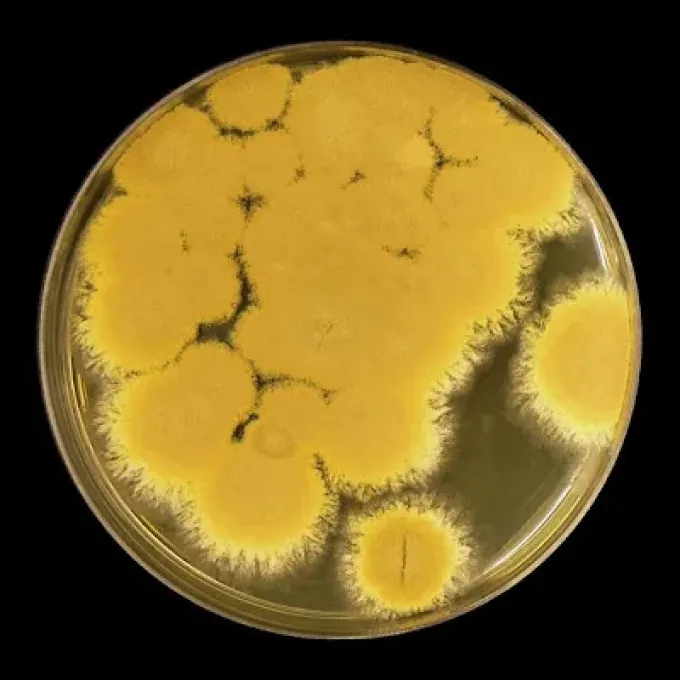
Description
Symptoms
Symptoms often include the development of a distinct moldy growth on the affected plant parts, ranging from off-white to yellowish-brown or olive-green in color.
Seedlings may exhibit stunted growth, discoloration of the primary root, and soft rot symptoms, which often lead to pre-emergence or post-emergence damping-off.
On adult plants, the infection manifests as necrotic spots or lesions that quickly turn into mushy, decaying areas, often spreading to encompass entire leaves, stems, or fruits.
Root system damage is a common diagnostic indicator, characterized by browning of the root hairs and, in advanced stages, the total decay of the root architecture.
In stored produce, the infection appears as localized soft spots that rapidly expand, often accompanied by the characteristic spore-bearing structures of the fungus.
Pathogen
The disease is caused by Paecilomyces variotii, a filamentous fungus belonging to the class Ascomycota. It is a highly versatile organism capable of thriving in diverse ecological niches.
This fungus is known for its remarkable metabolic plasticity, allowing it to act as a saprotroph on decaying organic matter and as an opportunistic pathogen on weakened plant tissues.
The pathogen reproduces via conidia, which are easily dispersed by air currents, irrigation water, and the movement of agricultural machinery throughout the field.
Due to its rapid growth rate, P. variotii can quickly colonize substrates, especially under conditions where the host plant's natural defenses are compromised by environmental stress.
It remains highly resilient in the soil and on crop debris, serving as a long-term reservoir for potential infections in subsequent planting cycles if not managed properly.
Conditions for development
The proliferation of Paecilomyces variotii is primarily favored by high ambient humidity and soil moisture levels, which are essential for spore germination.
While the fungus shows peak activity between 25 and 35 degrees Celsius, it remains surprisingly active even at lower temperature regimes, contributing to its widespread occurrence.
Poor field management, such as high plant density or insufficient air circulation in greenhouses, creates stagnant air zones that are highly conducive to the spread of the pathogen.
Host plants experiencing environmental stressors, such as waterlogging, nutrient imbalance, or physical trauma from pests, become significantly more susceptible to infection.
The accumulation of unmanaged crop residues provides the fungus with a continuous food source and a stable environment to survive between growing seasons.
Why it matters
The primary economic impact is the reduction of seedling emergence rates, leading to uneven crop stands and the necessity for costly reseeding operations.
In commercial agriculture, the pathogen causes severe post-harvest losses by inducing rapid decay in fruits and vegetables, rendering them unsuitable for market distribution.
The fungus can cause significant damage to protected crops in greenhouses, where it can become established in substrates and necessitate total soil or media replacement.
By attacking the root system, P. variotii disrupts the water and nutrient uptake mechanisms of the plant, resulting in reduced yield and compromised fruit quality.
Long-term infestation can lead to overall depletion of soil health, making it difficult to maintain viable agricultural production without the use of intensive management practices.
Protection
Effective management begins with the use of high-quality, disease-free seed treated with appropriate fungicides to protect seedlings during the critical early stages of development.
Implementing a diverse crop rotation system is crucial for breaking the pathogen's life cycle and reducing the density of fungal propagules in the soil over time.
Good agricultural practices, such as optimizing irrigation schedules and ensuring adequate drainage, are essential to prevent the waterlogged conditions that favor fungal growth.
Regular sanitation, including the thorough removal and destruction of crop residues, helps eliminate the primary source of the inoculum before the next season starts.
Integrated disease management, incorporating the use of biological control agents and resistant cultivars, provides a sustainable approach to suppressing the population of P. variotii.
Discussion
No discussions yet — be the first.