
Paecilomycosis
Paecilomyces spinulosum
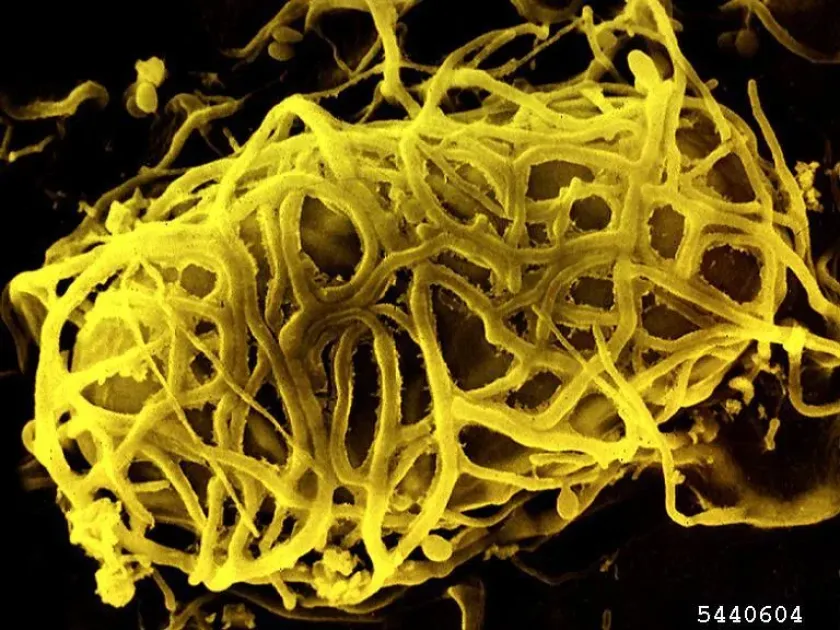
Description
Symptoms
The initial signs of infection include darkening and softening of the root collar. Young plants wilt rapidly, lose turgor, and eventually die due to the total destruction of their root systems.
A specific creamy or whitish fungal growth often appears on the affected areas. This accumulation of mycelium spreads quickly under high-humidity conditions in the environment.
Infected plants show significant growth retardation compared to healthy specimens. Leaves turn pale green or yellowish and dry out prematurely, starting from the lower levels.
If an infected plant is pulled from the soil, it becomes evident that fine lateral roots have died off. The main root may appear slimy and emit a distinct musty odor.
Microscopic examination of the affected tissues reveals characteristic spindle-shaped phialides typical of the Paecilomyces genus, which allows for reliable diagnosis in laboratory settings.
Pathogen
The causative agent of this disease is the soil-borne microscopic fungus Paecilomyces spinulosum, which belongs to the Deuteromycetes group. This pathogen is characterized by significant ecological flexibility.
Biologically, the fungus is a saprotroph, but it can exhibit parasitic traits under specific conditions, attacking weakened plant tissues. It spreads actively through conidia, which are disseminated by wind, water, or agricultural tools.
The life cycle of the pathogen is closely tied to the decomposition of organic matter in the soil. It can persist for long periods in the form of mycelium or resting spores, waiting for favorable conditions to infect vulnerable hosts.
Its high enzymatic activity allows the fungus to effectively degrade plant roots and cell walls. This creates the necessary conditions for rapid colonization of the crop's root system.
The fungus is considered a facultative parasite, particularly dangerous for young seedlings. Its development is often triggered by a decrease in the plant's overall immune defense mechanisms.
Conditions for development
Optimal conditions for pathogen development include high soil moisture and moderate temperatures. The fungus shows its most active growth within the range of 22 to 26 degrees Celsius.
Excessive soil moisture, leading to oxygen deficiency, provokes the activation of fungal mycelium. Constant humidity or over-irrigation in greenhouses also promotes rapid spread of the infection.
The presence of large amounts of fresh plant debris in the soil acts as a strong factor for infection accumulation. The fungus uses this debris as a base for its primary growth and reproduction.
Increased soil acidity creates a favorable microclimate for root colonization by the pathogen. In soils with a neutral or alkaline reaction, this fungus becomes a much less aggressive competitor.
The presence of any mechanical root damage caused by soil pests drastically increases the likelihood of infection. Damaged tissues release compounds that attract the pathogen's spores.
Why it matters
Paecilomycosis causes significant damage through mass seedling loss. In nurseries and greenhouse operations, this leads to substantial economic losses and the inability to achieve planned yields.
Infection of the root system leads to the disruption of water and mineral uptake. This reduces the crop's resistance to other environmental stressors and diseases acting simultaneously.
The persistence of the fungus in the soil complicates the cultivation of susceptible crops in the same area for several years. This necessitates expensive soil fumigation or chemical treatment.
For vegetable and root crops, the pathogen is dangerous because it can cause decay in stored produce. This reduces shelf life and the overall market quality of the harvest.
In epiphytotic years, crop losses can reach critical levels, forcing farmers to conduct full replacement of the topsoil or implement intensive chemical control programs.
Protection
Primary focus is placed on agrotechnical measures, particularly crop rotation. Alternating crops with different soil requirements helps to break the pathogen's development cycle.
Liming the soil is recommended to correct pH levels. Neutralizing acidity is an effective tool for suppressing the vitality of many soil-borne pathogens.
Disinfecting seed material is a crucial stage. Using modern fungicidal seed treatments ensures protection during the early development stages, when the plant is most vulnerable.
The use of biological products containing antagonistic fungi, such as Trichoderma spp., allows for effective control of the pathogen population without relying solely on heavy chemistry.
- Regular ventilation of greenhouses to reduce humidity.
- Removal of all plant debris from the field after harvest.
- Application of balanced fertilizers to strengthen plant immunity.
- Monitoring of soil pests and timely control measures.
Discussion
No discussions yet — be the first.