
Pachyphlodes citrina
Pachyphlodes citrina
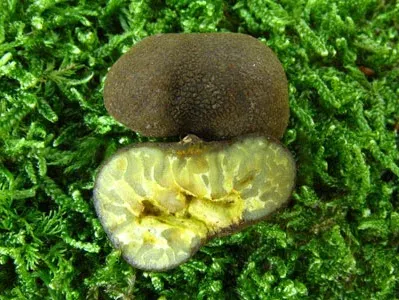
Description
Symptoms
The most distinctive sign of Pachyphlodes citrina infection is the appearance of bright yellow or lemon-colored patches near the root collar of the plant stem. Over time, these patches form a visible, dusty fungal layer.
Infected plants quickly lose turgor and exhibit signs of wilting even if soil moisture levels are adequate. This is caused by the disruption of the root system and the subsequent blockage of vascular tissues by fungal growth.
Close inspection reveals that the stem tissue at the soil interface becomes soft and discolored. In advanced stages of the disease, the root structure often undergoes decay, leading to the plant easily snapping off at the base.
Foliar symptoms include progressive yellowing and chlorosis, starting from the lower leaves and eventually moving upwards as the plant loses its ability to transport nutrients and water from the root zone.
A foul, musty odor is often associated with the breakdown of infected tissues, which serves as a secondary indicator for field agronomists to identify the presence of the pathogen before large-scale damage occurs.
Pathogen
The causative agent of the disease is the ascomycete fungus Pachyphlodes citrina. This pathogen is primarily soil-borne, capable of surviving for long periods in crop residues and organic matter within the soil profile.
The fungus follows a specific life cycle, producing spores that are highly resistant to environmental stressors. Once conditions become favorable, these spores germinate and begin to colonize the root systems of host plants.
The biological nature of Pachyphlodes citrina involves the production of enzymes that degrade plant cell walls, allowing the fungal hyphae to penetrate deeper into the plant tissues, leading to systemic infection.
Dissemination of the pathogen occurs mainly through water runoff, contaminated tools, or the movement of infested soil particles. This makes it a persistent challenge in both commercial greenhouses and open-field agriculture.
Current research classifies this fungus as a facultative parasite, which means it can survive as a saprophyte on dead matter while waiting for a suitable living host to infect when stress factors weaken the plant's defenses.
Conditions for development
The development of Pachyphlodes citrina is highly dependent on high soil moisture levels. Waterlogging and poor drainage create the ideal conditions for the rapid multiplication of fungal hyphae.
Temperature plays a crucial role, with the pathogen showing maximum growth activity within the range of 15°C to 22°C. These temperatures are common during the spring and autumn growing seasons, increasing the risk of infection.
Soil structure, specifically compaction, significantly promotes the spread of the fungus. Compaction reduces oxygen levels at the root zone, weakening the plant and creating an environment where the fungus can easily dominate.
Agricultural practices such as mono-cropping or insufficient sanitation of machinery are key factors that allow the fungal inoculum levels to build up to dangerous levels over several growing cycles.
High levels of raw organic matter in the soil, combined with neutral or slightly acidic pH, tend to favor the colonization phase of this pathogen, making it particularly troublesome in nutrient-rich but poorly managed soils.
Why it matters
The economic harm caused by Pachyphlodes citrina is substantial, primarily due to high plant mortality during the early development stages, leading to significant thinning of crop stands.
In mature plants, the disease limits productivity by preventing the efficient uptake of essential micro and macronutrients, resulting in stunted growth and drastically reduced harvest yields.
For vegetable and ornamental crops, the presence of the pathogen severely degrades quality. Fruits or flowers may become unsalable due to the rapid onset of rot during post-harvest storage and transport.
The pathogen is highly contagious within a specific microclimate. If left unchecked, it can spread rapidly across a field or greenhouse, resulting in the total loss of all susceptible crops in the area.
Long-term consequences involve soil infestation, which restricts the choice of future crops and necessitates intensive soil remediation or the use of expensive specialized chemical treatments for subsequent years.
Protection
A rigorous crop rotation schedule is the most effective way to manage Pachyphlodes citrina. By introducing non-host species, the pathogen’s life cycle is broken, reducing the soil inoculum over time.
Improving soil aeration and drainage is paramount. Implementing raised beds or subsurface tiling can prevent moisture stagnation, thereby making the environment less hospitable to the fungal growth.
Chemical control involving systemic fungicides applied as seed treatments or soil drenches can provide a window of protection during the most vulnerable early growth phases of the crop.
Biocontrol agents, specifically formulations containing Trichoderma species, have shown promise in outcompeting the pathogen for space and nutrients in the soil, offering an eco-friendly management option.
- Promptly remove and destroy infected plant debris to minimize inoculum.
- Regularly disinfect tools and equipment to prevent cross-contamination.
- Avoid over-irrigation to maintain optimal root zone oxygen levels.
- Test soil for pathogen presence before planting sensitive high-value crops.
Discussion
No discussions yet — be the first.