
Oudemansiella
Oudemansiella
Description
Symptoms
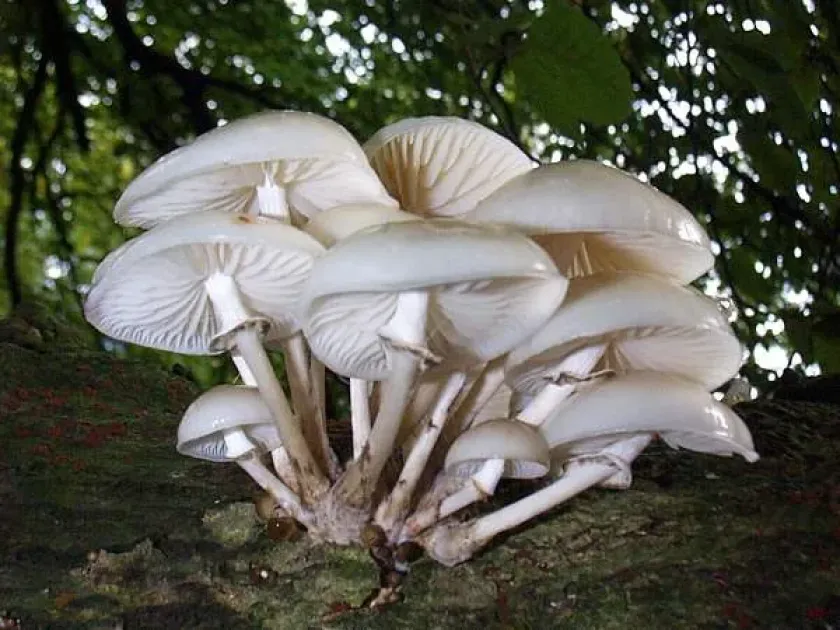
The most visible symptom of Oudemansiella infection is the presence of its fruiting bodies, which appear on the trunks or stumps of infested trees.
Inside the wood, the fungus causes a white rot, making the tissues appear pale, fibrous, and significantly less dense than healthy wood.
Over time, the wood loses its structural integrity, often leading to the formation of cavities or hollow spaces within the heartwood of the tree.
Infected trees may exhibit signs of decline, such as premature leaf yellowing or stunted growth, due to the damage to their internal conductive tissues.
Externally, localized swelling or depressions on the bark can indicate that the fungal mycelium has colonized the underlying sapwood.
Pathogen
The genus Oudemansiella belongs to the Physalacriaceae family and includes several species of fungi known for causing wood decay in trees.
These fungi act primarily as saprotrophs, decomposing dead organic matter, but can also colonize weakened or stressed living trees as opportunistic pathogens.
The pathogen reproduces via basidiospores that are dispersed by air currents, landing on wounds or exposed wood surfaces to initiate new infections.
The mycelium of the fungus penetrates deep into the wood, secreting enzymes that break down lignin, which results in the characteristic white rot appearance.
Oudemansiella is characterized by the production of distinct, often slimy, mushroom-like fruiting bodies that emerge from the bark or wood of infected trees.
Conditions for development
High humidity and moderate temperatures provide optimal conditions for the growth of mycelium and the production of fungal spores.
Mechanical injuries, such as broken branches, frost cracks, or pruning wounds, serve as the primary entry points for the fungus to establish itself.
Dense, poorly ventilated forest stands or crowded garden areas where moisture remains trapped are more susceptible to colonization by this fungus.
Stressed trees, weakened by drought, nutrient deficiencies, or other environmental factors, are less capable of resisting fungal invasion.
The reproductive cycle is most active during periods of high precipitation, usually occurring towards the end of the growing season.
Why it matters
The fungus causes severe damage by destroying the structural fibers of the wood, which renders the timber unusable for structural purposes.
Infected trees pose a safety risk in urban environments because the weakened wood can lead to sudden branch breakage or whole-tree failure during storms.
The pathogen gradually depletes the tree's resources, leading to reduced vigor and, in many cases, the eventual death of the affected tree.
The decay process accelerates the breakdown of the tree, which can lead to significant ecological shifts in a forest ecosystem if left unchecked.
Gardeners and orchard owners face productivity losses as the health and lifespan of the trees are severely compromised by the ongoing rot.
Protection
Effective management begins with strict sanitation practices, including the removal and disposal of infected or severely decayed trees.
Proper pruning techniques are essential to minimize large wounds, and all cut surfaces should be treated with protective sealants or fungicides.
Improving tree vitality through appropriate watering and fertilization programs helps trees build natural defenses against fungal infections.
Visible fruiting bodies should be physically removed and destroyed before they release spores to limit the spread of the pathogen.
In high-risk areas, regular inspections by a certified arborist can help detect early signs of fungal decay before major structural damage occurs.
Discussion
No discussions yet — be the first.