
Pine Ophiostoma
Ophiostoma serpens
Description
Symptoms
The most distinctive internal sign of the infection is the appearance of dark blue, gray, or black streaks and patches within the sapwood, visible when the wood is cut or the bark is removed.
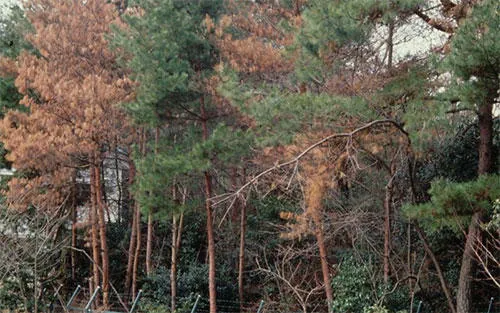
External symptoms often manifest as foliage discoloration. The needles may turn yellow or reddish-brown and begin to drop prematurely as the tree's vascular system is blocked.
The presence of entry holes created by wood-boring insects on the bark is a clear indication that the tree has been compromised and likely inoculated with the fungus.
Crown dieback is a common late-stage symptom, reflecting the tree's inability to transport water and nutrients to the upper branches due to extensive colonization of the stem.
In highly humid environments, small fruiting bodies of the fungus may appear on the surface of the bark, particularly around the areas damaged by insects.
Pathogen
The causal agent of the disease is the ascomycete fungus Ophiostoma serpens. It is a specialized pathogen that primarily targets coniferous trees, especially the Scots pine species.
This fungus is well-known as a primary cause of "blue stain," as its mycelium colonizes the sapwood, causing a characteristic dark discoloration that penetrates deep into the timber.
The biology of the pathogen is inextricably linked to bark beetles and other wood-boring insects. These insects serve as the primary vectors, carrying fungal spores into the tree tissue during their boring activity.
Ophiostoma serpens reproduces through both sexual and asexual cycles, which allows the fungus to survive under diverse environmental conditions and remain persistent in forest ecosystems.
It feeds primarily on the starch and other stored nutrients within the parenchyma cells of the wood, effectively starving the host tree of its energy reserves.
Conditions for development
The development of the disease is heavily dependent on the stress levels of the host tree. Drought, frost damage, or overcrowding can significantly weaken a tree's natural defenses.
Warm and humid weather conditions are ideal for the rapid germination of spores and the subsequent spread of mycelium through the woody tissues.
The presence of insect vectors is the most critical factor for transmission. Without the activity of bark beetles, the chances of the fungus penetrating the bark of a healthy tree are significantly lower.
Mechanical damage to the trunk caused by harvesting equipment, wind, or wildlife provides direct access for the fungus to establish its colony in the wood.
Dense, monoculture forest stands provide perfect conditions for the rapid spread of both the insect vectors and the associated fungal pathogens.
Why it matters
The primary economic impact of Ophiostoma serpens is the severe degradation of timber quality. The blue stain defect significantly reduces the market value of wood products.
The fungus accelerates the decline and death of pine trees, leading to substantial losses in forest productivity and requiring expensive salvage logging operations.
By weakening the host, the pathogen facilitates the colonization by other secondary pests, creating a feedback loop that leads to massive tree mortality.
Once the sapwood is stained, the condition is irreversible, making it impossible to use the timber for premium applications such as construction or high-end furniture.
Widespread outbreaks can disrupt forest management plans, forcing early harvesting and complicating the efforts to maintain a stable, healthy forest age structure.
Protection
Strict forest hygiene is the cornerstone of control. Removing and disposing of fallen, damaged, or infested wood promptly helps to break the life cycle of the insect vectors.
Implementing a comprehensive monitoring program for bark beetle populations is essential for early detection and prevention of major disease outbreaks.
The use of pheromone traps can help manage the populations of insect vectors, thereby reducing the probability of fungal spores being introduced into healthy trees.
When conducting silvicultural activities, every effort should be made to avoid mechanical injuries to healthy trees, as these act as infection points for the fungus.
Encouraging tree species diversity in new plantations increases the overall resilience of the forest and mitigates the risk of rapid pathogen transmission across the stand.
Discussion
No discussions yet — be the first.