
Ophiostoma wood staining
Ophiostoma pluriannulatum
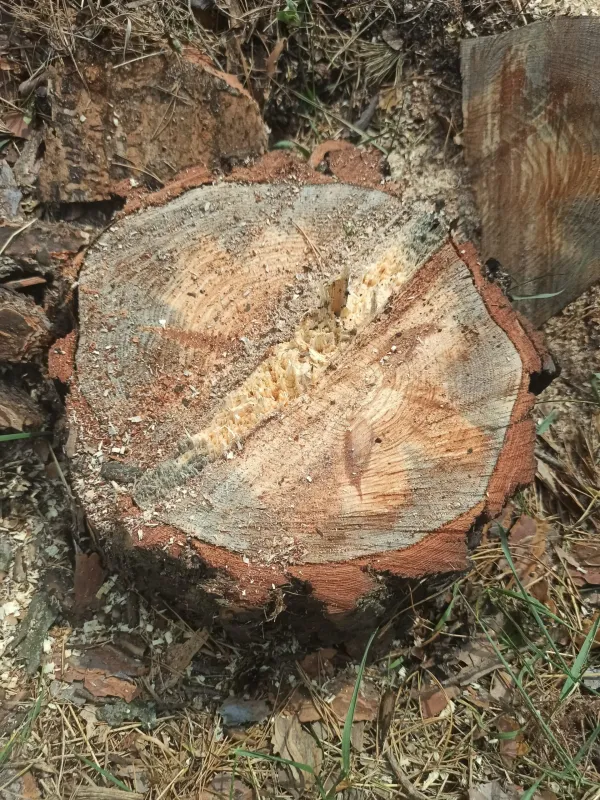
Description
Symptoms
The most characteristic symptom is the development of dark, blue-grey or black discolorations on the surface and cross-sections of the wood.
This staining often manifests in wedge-shaped patterns or radial streaks that correspond to the movement of the fungal mycelium through the wood rays.
External signs include the presence of boring dust or exit holes made by bark beetles, which typically serve as the entry points for the infection.
Affected wood often loses its natural luster and becomes visually unattractive, which significantly impacts its industrial value.
Unlike wood-rotting fungi, this pathogen does not immediately decompose the cellulose or lignin, but it severely degrades the quality of the timber.
Pathogen
The causative agent of this disease is the ascomycete fungus Ophiostoma pluriannulatum, which is widely recognized in forest pathology for causing sapstain.
This fungus primarily colonizes the sapwood of various tree species, utilizing available nutrients within the wood cells to fuel its growth.
It is biologically classified as a sapstain fungus, distinguished by its ability to penetrate deep into the woody tissues while interacting with insect vectors.
The fungus produces spores that are efficiently transported by bark beetles and other wood-boring insects as they move between trees.
Its life cycle involves the formation of specialized fruiting structures, which allow the pathogen to persist and spread within forest ecosystems.
Conditions for development
High levels of moisture in the wood are essential for the rapid growth and colonization of Ophiostoma pluriannulatum.
Warm temperatures are highly conducive to fungal germination and the spread of mycelium throughout the vascular systems of the tree.
The presence of insect galleries acts as the primary gateway, providing the fungus with access to the susceptible inner sapwood layers.
Stressed trees, particularly those weakened by drought, overcrowding, or pollution, exhibit lower resistance to fungal invasion.
Improper storage of freshly cut timber, especially under stagnant air conditions, provides a perfect environment for the development of sapstain.
Why it matters
The primary economic impact is the degradation of timber quality, rendering it unsuitable for high-grade carpentry or architectural finishes.
Stained wood frequently faces rejection in international trade due to strict phytosanitary regulations regarding fungal diseases.
The presence of the fungus increases the permeability of the wood, which can lead to subsequent colonization by more aggressive decay-causing fungi.
In forest stands, the disease can contribute to the decline of tree vigor, eventually predisposing them to complete mortality.
Management costs increase significantly due to the necessity of constant monitoring and the implementation of sanitation measures in harvesting sites.
Protection
Effective management begins with rapid processing and removal of harvested timber from the forest to minimize the period of vulnerability.
Maintaining proper hygiene in forest storage areas by removing dead or dying trees reduces the available substrate for the fungus.
Applying fungicidal treatments to the ends of logs and freshly cut surfaces can block the entry points for spores.
Integrated Pest Management (IPM) focusing on controlling bark beetle populations is critical for preventing the spread of the pathogen.
Improving the drying conditions of lumber through adequate stacking and airflow is an essential step in preventing post-harvest staining.
Discussion
No discussions yet — be the first.