
Ophiostoma megalobrunneum
Ophiostoma megalobrunneum
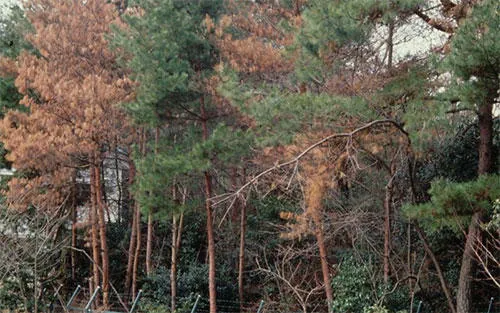
Description
Symptoms
The primary symptom is the rapid yellowing or reddening of the needles, which eventually leads to the death of the entire crown of the tree.
Upon removing the bark, one can observe dark, wedge-shaped staining deep within the sapwood, which is a hallmark of this fungal infection.
The presence of entry holes made by wood-boring insects on the bark is a key diagnostic sign that often coincides with initial fungal colonization.
Infected wood displays a marbled or streaked appearance when viewed in cross-section, caused by the localized accumulation of pigmented fungal structures.
Severe infestations lead to a total blockage of the xylem vessels, rendering the tree incapable of water transport and causing terminal wilting.
Pathogen
The disease is caused by the ascomycete fungus Ophiostoma megalobrunneum, which is specialized in infecting the conductive tissues of coniferous trees.
This pathogen has a symbiotic relationship with bark beetles, which act as vectors, transporting fungal spores from tree to tree during their colonization process.
Once inside the tree, the fungal mycelium penetrates the sapwood and phloem, spreading rapidly through the galleries constructed by the beetles.
The fungus produces pigmented hyphae that result in characteristic blue, gray, or brown discoloration within the wood, commonly referred to as "blue stain."
Reproduction occurs primarily through conidia formation, allowing the fungus to maintain high levels of inoculum within the infested tree tissues.
Conditions for development
Development is favored by tree stress caused by drought, high temperatures, or physical damage, which lowers the natural defense mechanisms of conifers.
High relative humidity and moderate temperatures provide ideal microclimatic conditions for the rapid germination and growth of fungal spores.
Large populations of bark beetles create a massive infection pressure, as each individual insect carries a significant load of fungal spores.
Poorly managed forest stands with high tree density and accumulated logging debris provide a perfect environment for the life cycle of the pathogen.
Lack of proper stand ventilation and limited airflow increase the duration of moisture retention, further promoting fungal colonization.
Why it matters
The main impact is the degradation of timber quality, as the blue stain significantly reduces the market value of wood products.
Infected wood becomes structurally compromised in aesthetic terms, although mechanical strength may remain intact for some time, its utility is limited.
The disease contributes to large-scale dieback of conifer forests, requiring extensive sanitation efforts and causing economic losses for the logging industry.
By killing trees weakened by other stressors, the pathogen accelerates the progression of forest mortality in affected areas.
In nurseries, this disease can cause significant seedling mortality, negatively impacting reforestation efforts and biodiversity conservation.
Protection
Effective management requires maintaining high forest hygiene by promptly identifying and removing infested trees to prevent the spread of spores.
Implementing pheromone traps for monitoring and reducing bark beetle populations is critical to breaking the vector cycle of the disease.
Rapid processing and removal of harvested timber from forest sites are essential to minimize the breeding habitat for insect vectors.
For ornamental conifers, maintaining tree vigor through irrigation and preventing bark injuries is the best preventative measure against infection.
- Regular forest health surveys.
- Application of targeted insecticides in high-risk areas.
- Enhancing tree resilience with appropriate soil fertilization.
Discussion
No discussions yet — be the first.