
Ophiostoma canker of walnut
Ophiostoma juglandis
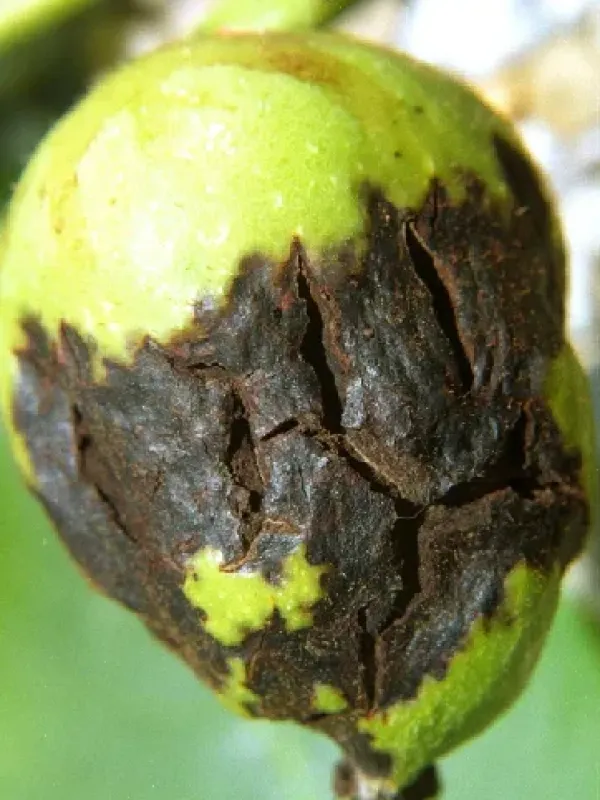
Description
Symptoms
Early symptoms include the sudden wilting of leaves and branches. These affected areas often display chlorosis, leading to premature leaf drop.
Cross-sections of infected branches reveal distinct dark discoloration in the xylem. This vascular streaking is a hallmark of the fungal obstruction.
Cracking of the bark and the development of localized cankers or necrotic lesions occur as the disease advances on the main trunk or scaffold branches.
Dieback of the canopy is a common late-stage symptom, where upper branches dry out and become brittle, eventually leading to the death of the entire tree.
Under humid conditions, the fungus may produce small fruiting structures or mycelial mats in bark crevices, further spreading the pathogen.
Pathogen
The disease is caused by the fungus Ophiostoma juglandis, which is classified as an ascomycete. It primarily attacks the vascular system of walnut trees.
The pathogen typically invades the host through bark wounds, pruning cuts, or galleries created by wood-boring beetles, which act as primary vectors.
Once inside, the fungal mycelium colonizes the xylem, obstructing the flow of water and essential nutrients throughout the tree's vascular structure.
The fungus is capable of surviving for extended periods within woody tissues, maintaining an infectious presence even in dormant trees.
Biological studies indicate that the fungus utilizes specialized structures to persist in adverse environmental conditions, ensuring its long-term survival in the orchard ecosystem.
Conditions for development
High humidity and moderate temperatures significantly enhance the germination and spread of fungal spores throughout the walnut orchard.
Mechanical damage to the bark, whether from environmental factors or improper pruning, serves as a major entry point for the pathogen.
Water-stressed or nutrient-deficient trees are significantly more susceptible to infection compared to those receiving optimal care and fertilization.
The activity of bark beetles and other wood-boring insects is strongly correlated with the spread of Ophiostoma juglandis, as they facilitate deeper inoculation.
Poor orchard sanitation, specifically the accumulation of pruning debris, creates an ideal environment for the fungus to persist and re-infect healthy trees.
Why it matters
The disease poses a serious threat to walnut production, often resulting in the total decline and mortality of infected trees over several seasons.
Systemic colonization restricts nutrient transport, causing severe stunting and a drastic reduction in nut yield and quality.
The tree becomes progressively weaker, which often leads to secondary infections by opportunistic pathogens, complicating the overall recovery process.
Economically, the presence of the disease necessitates significant labor and costs for tree removal, wood disposal, and the loss of orchard productivity.
The difficulty of systemic treatment once the fungus is established means that prevention and early detection are critical for the economic viability of the orchard.
Protection
Strict sanitation is the cornerstone of control. All pruning tools should be disinfected between trees, and all cuts must be protected with appropriate wound sealants.
Promptly removing and burning infected wood is essential to reduce the inoculum load and prevent the fungus from spreading to healthy neighbors.
Implementing a comprehensive pest management program to control wood-boring insects is vital for preventing the initial entry of the fungal pathogen.
Maintaining vigorous plant health through balanced soil fertility and appropriate irrigation helps the tree develop stronger natural resistance to vascular pathogens.
Regular orchard monitoring for early symptoms allows for the quick identification of infected areas, enabling localized intervention before the disease becomes systemic.
Discussion
No discussions yet — be the first.