
Walnut anthracnose
Ophiognomonia leptostyla
Description
Symptoms
Initial symptoms include the appearance of small, circular or irregular reddish-brown spots on leaves. These spots gradually expand and turn dark brown to black, often with a yellow halo around them.
Tiny black acervuli, which are the fruiting bodies of the fungus, appear as pimple-like structures on the underside of the leaf spots. These release masses of conidia under humid conditions.
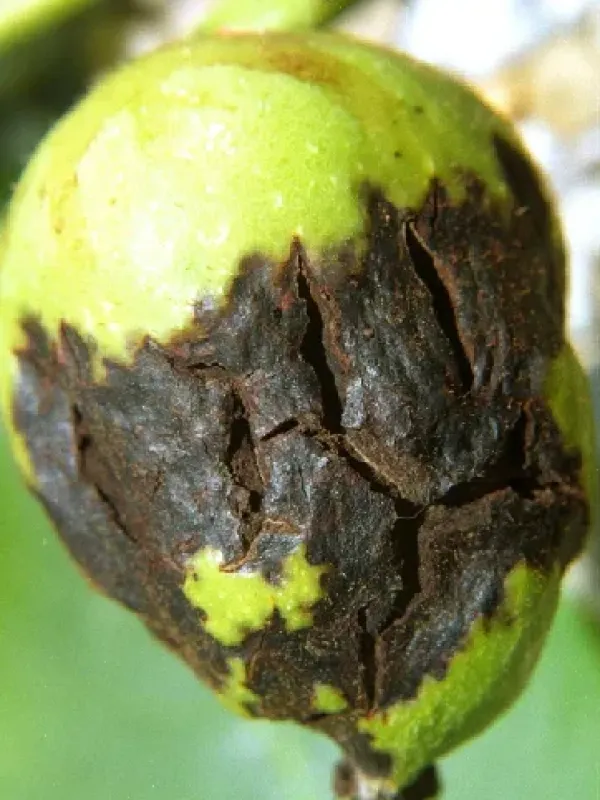
The disease frequently attacks the nuts, causing sunken, dark, necrotic lesions on the husk. This can cause the nuts to shrivel or decay, significantly reducing the quality of the kernels.
Severe infections lead to premature defoliation, which can leave trees bare by mid-summer, severely stressing the tree and hindering its ability to prepare for dormancy.
Young shoots may show elongated, depressed lesions, which can eventually girdle the twig, causing dieback of the terminal parts of the branch.
Pathogen
Walnut anthracnose is a fungal disease caused by Ophiognomonia leptostyla, with its asexual (anamorphic) stage known as Marssonina juglandis. This pathogen specifically targets trees within the Juglandaceae family.
The fungus survives the winter primarily in fallen leaves and infected twigs as perithecia. During spring, when temperatures rise and humidity is high, the fungus releases ascospores that initiate primary infections on new shoots and leaves.
During the growing season, the disease spreads through conidia, which are splashed by rain or wind-dispersed to healthy plant tissues, leading to recurring cycles of infection.
The mycelium penetrates the leaf tissue, destroying chlorophyll and causing localized necrosis. Over time, the fungus can become systemic in highly susceptible cultivars, affecting woody parts as well.
Because the pathogen can persist in debris for several years, it remains a constant threat to walnut orchards unless rigorous sanitation practices are implemented.
Conditions for development
Walnut anthracnose thrives in environments with high humidity and frequent rainfall. Rainy springs are particularly critical, as moisture is essential for spore germination and movement.
Optimal temperatures for the development of the fungus range between 18°C and 25°C. High humidity following rain creates the perfect conditions for a rapid epidemic.
Orchards with poor air circulation, often due to high planting density or lack of pruning, are at a much higher risk of severe infestation due to prolonged leaf wetness.
Accumulated organic debris under the trees serves as a major reservoir for the fungus. If leaves are not cleared, the disease pressure increases exponentially each year.
Trees weakened by drought, poor nutrition, or other pests become more susceptible to anthracnose, as they lack the physiological vigor to mount an effective defense.
Why it matters
The economic impact is significant, as severe infections can reduce nut yield by up to 50% through direct damage and physiological exhaustion of the tree.
Premature leaf drop leads to poor photosynthesis, which results in reduced carbohydrate storage. This makes the tree less productive in the subsequent growing season.
Kernels of infected nuts are often shriveled, discolored, or bitter, rendering them unsuitable for market. The damage to the husk also makes them susceptible to secondary pests.
Trees affected by chronic anthracnose have reduced winter hardiness. The lack of energy reserves means buds and young shoots are more likely to suffer from cold injury during winter.
Long-term infestation leads to stunted tree growth and can eventually result in the decline and mortality of trees that are not treated with appropriate fungicides.
Protection
Sanitation is the cornerstone of control. Removing and destroying fallen leaves and diseased twigs after harvest significantly reduces the overwintering population of the fungus.
Pruning to open the canopy improves air circulation and sunlight penetration, which helps keep foliage dry and inhibits fungal growth.
Copper-based fungicides applied at the bud break stage and again after flowering provide a strong protective barrier against initial infections.
During wet growing seasons, supplemental applications of systemic fungicides may be required to protect leaves and developing nuts from secondary infection cycles.
- Planting resistant or tolerant cultivars where possible.
- Balanced nutrition to maintain overall tree health.
- Regular monitoring of orchards during the spring season.
- Proper removal and disposal of all diseased plant material.
Discussion
No discussions yet — be the first.