
Walnut canker
Ophiognomonia clavigignenti-juglandacearum
Description
Symptoms
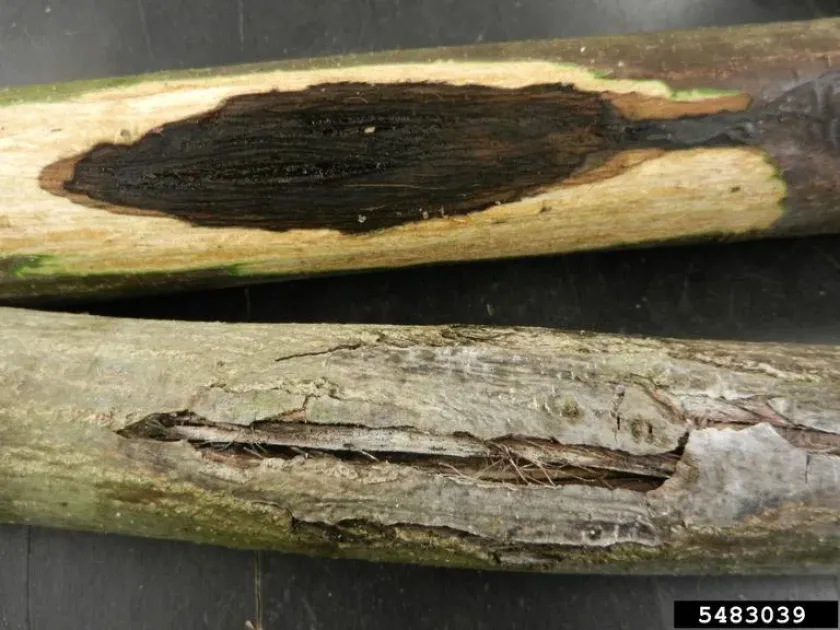
The initial signs include small, slightly sunken areas on the bark of twigs or the main trunk. These spots gradually develop into deep, open cankers as the bark dies and cracks along the edges.
A distinct feature is the bleeding of dark exudate from the cankers during periods of high humidity. As the disease progresses, the wood underneath the canker darkens and exhibits necrosis.
When a canker develops around the entire circumference of a branch or trunk, it causes girdling. This leads to the rapid wilting and dieback of everything located above the point of infection.
Small black fruiting bodies appear on the surface of the infected bark towards the end of the growing season, which are responsible for the further spread of fungal spores.
Leaves on infected branches often show signs of chlorosis, curling, and premature abscission. This defoliation is a clear indicator that the tree's health is severely compromised.
Pathogen
The causal agent of this disease is the fungus Ophiognomonia clavigignenti-juglandacearum. This pathogen specifically targets trees within the Juglandaceae family, invading plant tissues through physical wounds or leaf scar sites.
The fungus acts as a necrotrophic parasite, colonizing the cambium layer and inner bark of stems and branches. Its lifecycle involves the production of perithecia, which allow the pathogen to survive for extended periods on fallen leaves and necrotic bark.
Classified as a canker disease, it triggers a strong localized reaction in the host, leading to the destruction of the vascular system within the infected areas. The fungus secretes toxins that facilitate its spread through the bark.
Unlike many minor pathogens, this fungus can infect trees of all ages. It poses a significant threat to young plantations and mature, otherwise healthy trees, significantly reducing the lifespan of the host.
Its biological cycle is intricately linked to humidity levels, with the fungus showing increased virulence during periods of high moisture and conducive temperature ranges.
Conditions for development
High relative humidity and moderate temperatures are the most critical factors favoring the spread and infection process of the walnut canker fungus.
Rain splash and wind are the primary vectors for transporting spores from infected trees to fresh wounds on nearby healthy trees, facilitating rapid dissemination.
Mechanical injuries are essential for the initiation of the infection. Wounds caused by winter frost, pruning, insect activity, or machinery provide easy entry points for the pathogen.
Dense orchard layouts with poor air circulation create stagnant, humid microclimates that enable the fungal spores to germinate and infect bark tissues more effectively.
Stressed trees, whether due to drought, nutritional deficiencies, or over-cropping, show lower resistance to Ophiognomonia clavigignenti-juglandacearum compared to healthy, well-maintained specimens.
Why it matters
Walnut canker is considered a devastating disease that can lead to the death of the entire tree if left untreated, causing significant economic losses in nut production.
The structural integrity of the tree is severely compromised, making branches prone to breaking under the weight of fruits or during strong winds.
By disrupting the nutrient and water flow, the disease leads to a gradual decline in tree vigor, resulting in smaller, lower-quality nuts and reduced overall yield.
The presence of an active canker in the orchard creates a continuous source of inoculum, endangering neighboring trees and complicating the management of the plantation.
In forestry, this pathogen can lead to widespread mortality of walnut species, negatively impacting ecosystem services and biodiversity within the affected areas.
Protection
Sanitation is the most important control measure. All infected branches must be pruned well below the visible canker, into healthy tissue, and removed from the site to prevent spread.
Disinfection of pruning tools is mandatory. Tools should be sterilized using alcohol or a bleach solution after every cut on an infected tree to prevent mechanical transmission.
Prevention involves protecting trunks from environmental stresses, such as sunscald and frost, using whitewashing or protective wraps to maintain bark health.
Maintaining optimal tree vigor through balanced fertilization and adequate irrigation helps the tree develop natural defenses against pathogen entry.
- Apply copper-based fungicides to pruning wounds to seal them against infection.
- Monitor the orchard regularly for early symptoms to act before the canker girdles the tree.
- Select resistant walnut cultivars for new plantings where possible.
- Ensure adequate spacing between trees to improve airflow and reduce humidity around the trunks.
Discussion
No discussions yet — be the first.