
Blueberry leaf spot
Ophiodothella vaccinii
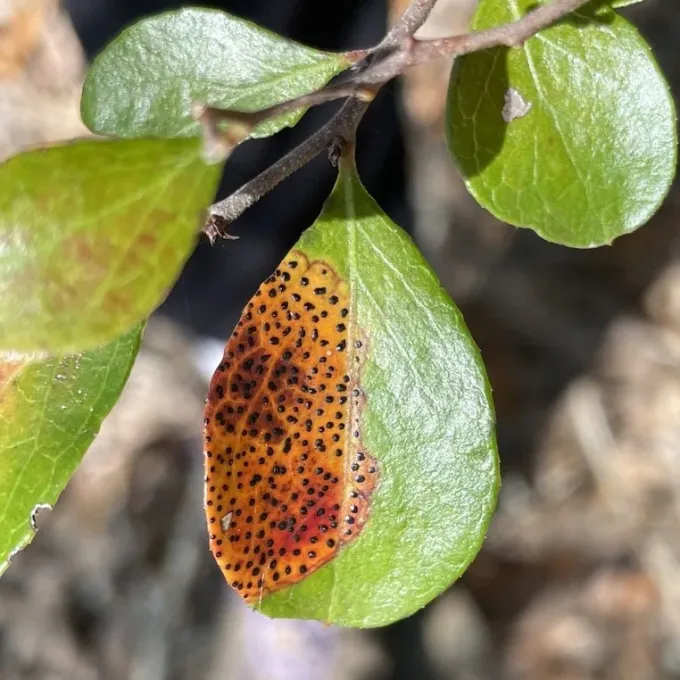
Description
Symptoms
Symptoms of the disease initially appear as small, brownish spots on the leaves. These spots gradually enlarge and turn black, often showing a clear distinction between the infected tissue and the healthy leaf.
A hallmark sign of the infection is the development of tiny, black, pimple-like structures on the surface of the spots. These are the reproductive fruiting bodies of the fungus, often visible on both sides of the leaf.
Infected leaves often turn yellow, curl along the edges, and wither prematurely. Extensive spotting causes the leaf tissue to become brittle, resulting in large necrotic sections across the foliage.
The disease frequently leads to significant defoliation before the end of the growing season. This premature loss of leaves significantly impairs the aesthetic and physiological state of the blueberry bush.
- small brown-to-black lesions;
- prominent black sporulation spots;
- premature leaf yellowing and drop;
- leaf curling and necrotic edges;
- overall decline in plant vigor.
Pathogen
The causal agent of this disease is the fungus Ophiodothella vaccinii. This specific pathogen belongs to the Ascomycota group and specializes in infecting plants of the Ericaceae family, particularly blueberries.
The fungus functions as an obligate parasite, completing its life cycle within the host plant tissues. It is highly adapted to the specific environments where blueberries are cultivated.
The pathogen overwinters in the form of dormant mycelium or fruiting bodies on fallen leaves. As temperatures rise in the spring, it produces spores that facilitate the infection of new, healthy growth.
The infection process is rapid under suitable moisture conditions. Once the spores germinate on the leaf surface, the fungal mycelium penetrates the epidermal layers to extract nutrients.
The biology of Ophiodothella vaccinii poses a continuous threat to commercial berry production. Without proper sanitation, the pathogen can persist on the site for many years.
Conditions for development
High humidity and consistent rainfall are the primary drivers of disease spread. Prolonged periods of dampness on the leaves provide the necessary conditions for spore germination and colonization.
The fungus thrives in moderate temperature ranges, typically between 15°C and 22°C. These temperatures coincide with the most active period of vegetative growth for blueberry plants.
Poor air circulation, often resulting from dense planting or lack of pruning, keeps the foliage wet for longer periods. This microclimate is highly favorable for the development of fungal pathogens.
The presence of old, infected leaf litter on the ground is the primary source of spring inoculum. If not cleared, these residues allow the disease to return year after year with greater intensity.
Sites with poor drainage or stagnant air are particularly susceptible. Any condition that prevents the leaves from drying quickly after dew or rain increases the risk of infection.
Why it matters
The primary damage is caused by the reduction of photosynthetic capacity. By destroying leaf area, the fungus limits the plant's ability to produce energy, impacting fruit size and quality.
Defoliation late in the season prevents the plant from accumulating enough carbohydrates for winter dormancy. This makes the bushes more susceptible to cold injury and frost damage.
Infected plants show reduced vigor and lower yields in the following seasons. If the infection is left uncontrolled, it weakens the bush to the point where it may stop producing viable fruit.
Long-term infestation can lead to the death of individual branches or even the entire plant. This necessitates expensive replacements and remedial horticultural interventions for the entire plantation.
In agricultural settings, this disease significantly increases production costs due to the need for frequent fungicide applications and extra labor for sanitation measures.
Protection
Sanitation is the cornerstone of control. Removing and destroying all infected leaf litter during the autumn is crucial to breaking the disease cycle and reducing the initial spore load.
Proper plant spacing is essential for good air movement. Regular pruning helps to open up the canopy, allowing foliage to dry faster and reducing the overall moisture stress on the plant.
Fungicide treatments, particularly those containing copper or systemic agents, should be applied preventatively or at the very first sign of spotting. Effective coverage of all leaf surfaces is required.
Implementing drip irrigation is highly recommended to avoid wetting the foliage. By delivering water directly to the root zone, you eliminate the wet surfaces that fungi require to spread.
Maintain optimal soil health through proper nutrient management. A well-fertilized, acid-loving plant is generally more resilient to disease pressure and can recover more efficiently from environmental stress.
Discussion
No discussions yet — be the first.