
Ophiocordyceps truncata
Ophiocordyceps truncata
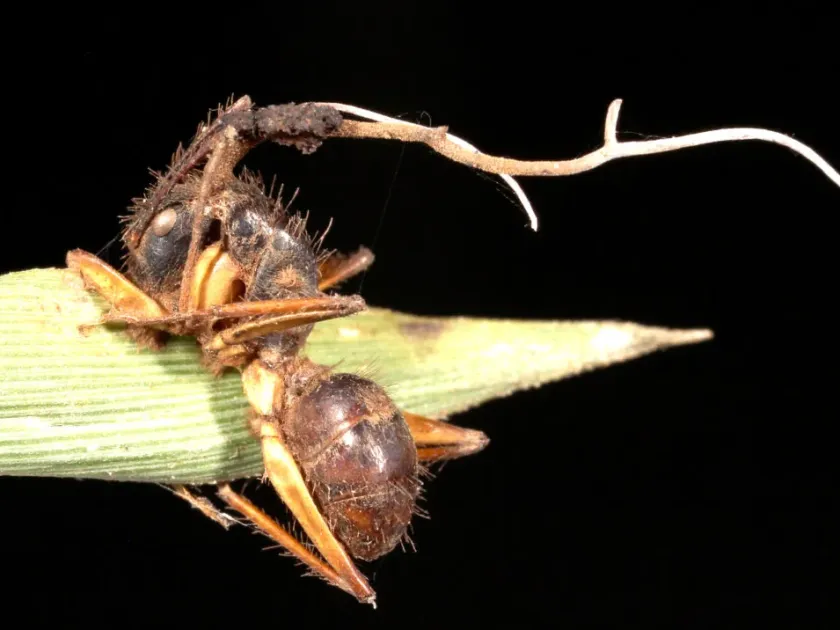
Description
Symptoms
The primary symptom of infection is the presence of mummified insect corpses attached to plants or the soil surface. The host is often found in a rigid, fixed position, indicating the fungus has manipulated its behavior.
Close inspection reveals the development of truncated stromata emerging from the host's head or intersegmental joints. This specific morphology is a key diagnostic feature for identifying this species in the field.
The tissues of the infected insect become hardened and leathery, often displaying a color change compared to healthy individuals. This structural change is a hallmark of the fungal colonization process.
In high-density insect populations, clusters of infected individuals may be observed. These localized outbreaks demonstrate the fungus's capacity to spread rapidly under favorable environmental conditions.
Visible mycelial growth, often appearing as a thin, colored coating around the fungal stroma, confirms that the host is actively sporulating and that the fungus is ready to disperse into the environment.
Pathogen
Ophiocordyceps truncata is a specialized entomopathogenic fungus belonging to the Hypocreales order. In agronomy, it is recognized not as a plant pathogen, but as a key biological agent capable of regulating insect populations in various ecosystems.
The fungus is an obligate parasite, completing its complex life cycle within the host's body. Spores adhere to the insect's cuticle, germinate using specific enzymes, and penetrate the host to access its internal nutrient-rich tissues.
Once inside, the fungal mycelium colonizes the host, systematically dismantling organs and tissues. This eventually leads to the death of the insect, which is a necessary step for the fungus to continue its reproductive cycle.
The biological strategy of this species involves the emergence of specialized reproductive structures, known as stromata, from the deceased host. These structures release conidia, facilitating the spread of the infection to new host individuals.
This fungus is highly adapted to soil conditions, allowing it to remain viable during adverse environmental periods. This resilience ensures its presence in the agroecosystem across different seasons.
Conditions for development
Successful development of this fungus is strictly dependent on high relative humidity, generally requiring levels above 75-80%. Moisture is essential for spore germination and effective host penetration.
The optimal temperature range for mycelial growth and development is between 18 and 25 degrees Celsius. Extreme temperatures outside this range significantly hamper the fungus's metabolic activity.
Dew and leaf surface moisture act as facilitators for infection, as water droplets help spores anchor onto the insect's body. This makes morning conditions critical for the start of an epizootic event.
High host population density is a major factor in the rapid spread of the pathogen. Close physical proximity between insects increases the frequency of contact with fungal spores.
Agrotechnical practices that modulate humidity, such as canopy management and irrigation scheduling, can indirectly influence the activity of this fungus in the field or greenhouse.
Why it matters
In agricultural practice, Ophiocordyceps truncata does not pose a direct threat to crop health. It does not produce phytotoxins or cause structural damage to plant tissues, leaves, or roots.
The fungus is considered beneficial rather than harmful, as it serves as a natural regulator of insect pests. By reducing the number of harmful insects, it contributes to natural pest management.
Potential concerns regarding non-target species, such as pollinators, are generally mitigated by the fungus's high host specificity. It tends to evolve alongside specific pest species rather than attacking indiscriminately.
There is no economic harm caused by this fungus to crop yields or quality. It does not lead to rot, spotting, or any degradation of the harvested agricultural produce.
The ecological benefit of having this pathogen in an agroecosystem is significant, as it can reduce the need for synthetic chemical insecticides, supporting more sustainable farming practices.
Protection
No specific control measures are required for this fungus in standard agricultural settings, as it is an essential component of the natural biological diversity that aids in pest regulation.
If suppressing entomopathogenic activity is necessary in controlled environments like greenhouses, ventilation should be used to maintain lower humidity levels, which effectively inhibits the fungus.
Avoid the indiscriminate use of broad-spectrum fungicides, as these chemicals can harm beneficial entomopathogenic fungi, potentially leading to pest outbreaks due to the loss of natural control.
Integrated Pest Management (IPM) programs prioritize the preservation of such natural enemies. Encouraging their presence is a proactive strategy for long-term ecological balance on the farm.
Monitoring the prevalence of this fungus provides valuable data on the state of pest populations, helping farmers decide whether additional intervention is truly needed or if natural regulation is sufficient.
Discussion
No discussions yet — be the first.