
Ophiocordyceps robertsii
Ophiocordyceps robertsii
Description
Symptoms
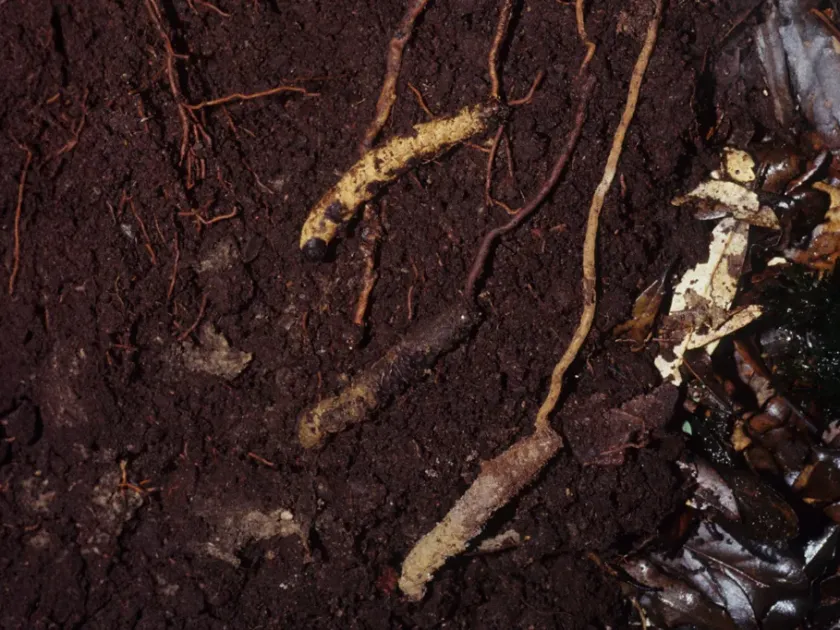
The primary external sign of the fungus's presence is the characteristic fruiting body that grows out of the head of a deceased, subterranean insect.
This fruiting body is a thin, elongated structure known as a stroma, which grows towards the soil surface to ensure spore dispersal.
The infected caterpillar becomes completely mummified and takes on a hard consistency, allowing the fungus to preserve the integrity of the host organism for an extended period.
When excavating soil in areas populated by infected insects, one can find fused organisms consisting of the insect remains and the fungal stroma.
Externally, the infected individual looks like a dry twig protruding from the soil, making it difficult to distinguish from plant debris without careful inspection.
Pathogen
Ophiocordyceps robertsii is a specialized entomopathogenic fungus belonging to the Ophiocordycipitaceae family. This organism is not a classical plant pathogen that infects crop tissues.
Unlike phytopathogens, this fungus leads a parasitic lifestyle, exclusively infecting insect larvae, particularly the ghost moth larvae Wiseana cervinata, which inhabit the soil layer.
Biologically, this fungal species is specialized for a narrow range of hosts, making it a highly interesting subject for study in the context of biological pest control.
The life cycle of the fungus involves infecting the insect host through spores that penetrate the cuticle and begin developing inside the host's body.
Gradually, the mycelium replaces the insect's internal organs entirely while maintaining the external shape of the body, which is a key morphological feature of the species.
Conditions for development
The development of this fungus requires specific conditions of high humidity and moderate soil temperatures, typical of the regions where certain ferns grow.
The fungus actively spreads through soil layers where high densities of insect host larvae ensure successful contact between spores and potential victims.
The soil temperature must remain stable to ensure spore germination and successful colonization of the insect organism before adverse conditions occur.
The presence of organic matter and a specific soil pH level also play a role in maintaining the viability of fungal spores in the environment.
The microclimate of the plant rhizosphere, where larvae often reside, creates an ideal incubator for the development of Ophiocordyceps robertsii.
Why it matters
Although the fungus does not damage crops directly, it has a significant impact on the ecological balance by reducing the populations of specific insect pests.
In the natural environment, it serves as a natural regulator of caterpillar populations, which indirectly protects the root systems of herbaceous plants from damage.
For agriculture, the impact of the fungus is generally positive, as it limits the feeding activity of soil-dwelling phytophages.
There is no harm associated with this fungus as a plant disease, as it lacks phytopathogenic properties and does not affect cultivated plants or their yields.
Therefore, this species is viewed more as a beneficial entomophagous organism rather than a threat to crop production.
Protection
Special protection measures against this fungus are not necessary, as it is a beneficial component of soil biota.
In agronomic practice, there is no need to use fungicides to eradicate Ophiocordyceps robertsii, as this would disrupt natural biological pest regulation.
On the contrary, maintaining a healthy soil environment contributes to supporting the activity of such entomopathogenic organisms.
The use of broad-spectrum insecticides may inadvertently suppress beneficial fungal populations, undermining the natural suppressiveness of the soil.
The optimal strategy is the use of conservative agrotechnical methods that allow for the preservation of soil microbial biodiversity and their natural ecological functions.
Discussion
No discussions yet — be the first.