
Vascular streak dieback
Oncobasidium
Description
Symptoms
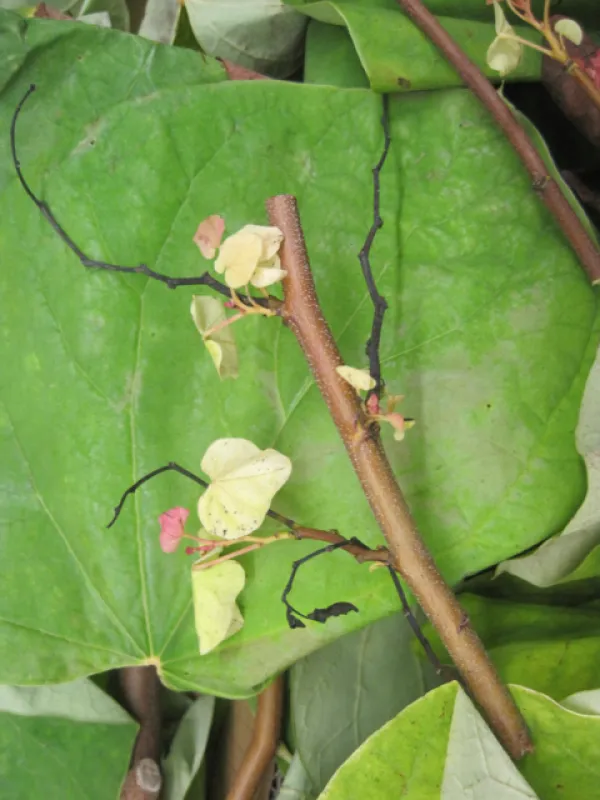
The most diagnostic symptom of VSD is the presence of three distinct brown spots or streaks on the leaf scar area. As the disease progresses, these develop into localized necrotic lesions.
Leaves on affected branches typically yellow and drop prematurely, often starting from the middle of the branch and moving toward the tip, leaving the branch naked.
Cross-sections of diseased stems reveal dark brown streaking within the wood. This discoloration corresponds directly to the area colonized by the fungal mycelium.
The dieback of branches usually occurs in a progressive manner from the younger twigs downwards. The entire canopy of an infected tree may eventually become thin and sparsely foliated.
Young cocoa seedlings are particularly vulnerable, and if infected, they often fail to survive or develop into stunted, non-productive trees.
Pathogen
Vascular streak dieback (VSD) is caused by the basidiomycete fungus Oncobasidium theobromae. This pathogen specifically targets the vascular system, colonizing the xylem of cocoa trees.
The fungus develops mycelia within the xylem vessels, causing physical obstructions that restrict the transport of water and nutrients throughout the tree's branches.
It is classified as a basidiomycete, and its reproduction involves the production of basidiospores that are released into the atmosphere, primarily during humid and overcast conditions.
The host range is primarily limited to Theobroma cacao. The disease is highly prevalent in Southeast Asia and parts of the Pacific, posing a significant challenge to cocoa production.
Understanding the biology of O. theobromae is challenging as it is an obligate parasite that does not grow well on artificial media, limiting standard laboratory research.
Conditions for development
High relative humidity is the most critical environmental factor for the development of VSD. The fungus requires moisture to successfully release its spores into the air.
Extended periods of rainfall or cloud cover create an environment where spores remain viable and can infect new hosts. Nighttime humidity peaks are particularly important for the disease cycle.
Poor ventilation within a cocoa plantation, often caused by improper spacing or dense shade trees, traps moisture and significantly increases the rate of disease transmission.
Temperature fluctuations that lead to condensation on leaf surfaces are conducive to the spread of O. theobromae, facilitating the entry of spores into young tissues.
New plantings located near older, heavily infected trees are at high risk of rapid infection, as spores can travel significant distances via wind currents.
Why it matters
Vascular streak dieback is highly destructive, capable of killing young cocoa trees within a few years of infection. It leads to substantial economic losses for cocoa farmers.
In mature trees, the disease causes severe defoliation and dieback, which drastically reduces the photosynthetic capacity and, consequently, the fruit yield.
VSD has been a major limiting factor for cocoa expansion in endemic areas. Its presence often dictates which varieties can be successfully grown in specific environments.
The infection forces farmers to incur high costs associated with sanitation, frequent pruning, and the replacement of dead or dying trees within the plantation.
In addition to direct losses, the disease weakens trees, making them more susceptible to secondary attacks by pests such as bark borers or other fungal pathogens.
Protection
Effective management begins with strict sanitation, involving the regular pruning and destruction of infected branches. All pruning tools must be sanitized to prevent spore transmission.
The use of resistant or tolerant cocoa varieties is the most sustainable approach to controlling VSD. Breeding programs focus on identifying genetic resistance within existing germplasm.
Proper plantation management, including adequate spacing and canopy thinning, helps reduce humidity levels, making the environment less favorable for the fungus.
Early detection through frequent field monitoring allows for the removal of infected parts before the pathogen reaches the main trunk, which could kill the entire tree.
Establishing buffer zones and avoiding the introduction of non-certified planting material from infected regions are essential quarantine measures to limit the spread of the pathogen.
Discussion
No discussions yet — be the first.