
Powdery mildew of poinsettia
Oidium poinsettiae
Description
Symptoms
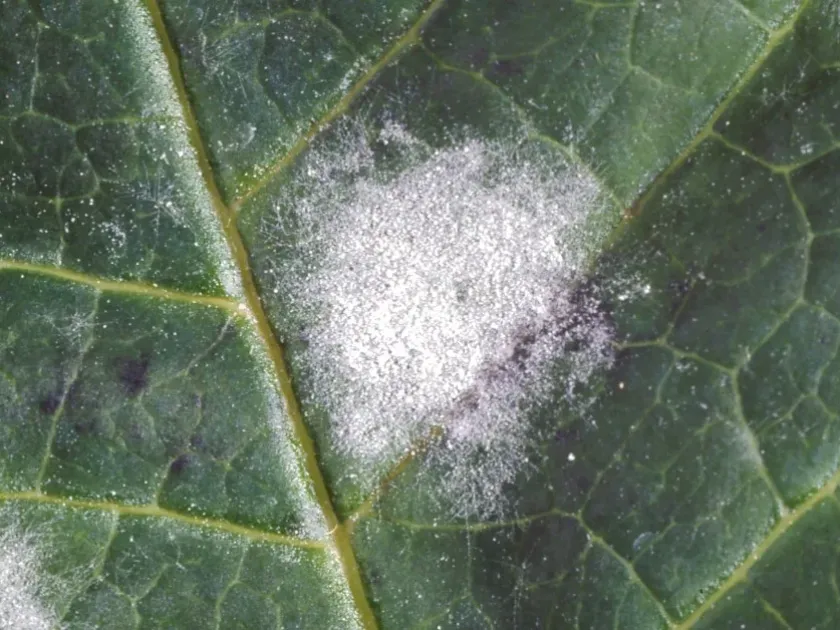
The primary symptom of this disease is the appearance of white, powdery, dust-like spots on the surface of the leaves.
Over time, these spots expand into dense, white patches covering leaves, stems, and the characteristic colored bracts of the poinsettia.
Infected leaves may eventually turn yellow, curl at the edges, and wither, leading to significant foliage loss and plant stress.
The powdery substance is actually a mass of mycelium and fungal spores, which can be easily brushed off but quickly reappears.
Severe infestations often result in stunted growth and the deformation of new shoots, making the plant visually unappealing.
Pathogen
The pathogen responsible for this condition is the fungus Oidium poinsettiae, an obligate parasite that specifically targets poinsettias.
As an obligate parasite, the fungus depends entirely on the living tissues of the host plant to obtain its nutrition and survive.
The fungus produces asexual spores called conidia, which are easily disseminated by wind currents throughout the growing area.
The mycelium grows superficially, attaching to the plant surface and inserting specialized structures called haustoria into the plant cells.
This species is highly adapted to the host environment, allowing it to complete its life cycle rapidly under favorable conditions.
Conditions for development
The disease thrives in warm temperatures, typically between 18 and 24 degrees Celsius, which supports the rapid production of spores.
High relative humidity levels, particularly in enclosed spaces with poor airflow, create an ideal environment for spore germination.
Densely packed plants in greenhouse settings prevent proper air circulation, allowing the fungus to spread quickly from one plant to another.
Periods of lower light intensity during winter months can weaken the plant's natural defenses, making it more susceptible to infection.
Fluctuating temperatures and moisture levels can also act as stressors, promoting the development and spread of the mildew.
Why it matters
The most immediate harm is the destruction of the plant's aesthetic value, which is critical for commercial poinsettia production.
The infection interferes with photosynthesis, leading to reduced energy production and stunted overall development of the plant.
Premature leaf drop causes the plant to become sparse and lose its commercial shape, leading to economic losses for growers.
The pathogen siphons off vital plant resources, which can weaken the poinsettia and make it susceptible to secondary pathogens.
If left unmanaged, the powdery mildew can quickly become an epidemic, threatening the entire stock within a nursery or garden.
Protection
Effective control starts with cultural practices, such as increasing spacing between plants to improve airflow and reduce humidity.
It is essential to prune and destroy any infected foliage immediately to reduce the source of fungal spores in the environment.
Chemical control involves the timely application of fungicides, such as systemic products that can penetrate the plant tissue.
- Maintain good sanitation practices by cleaning tools and pots regularly.
- Monitor the crop frequently for early warning signs of white spots.
- Apply fungicides preventively during periods of high humidity or low light.
Rotating different types of fungicides is recommended to manage the development of resistance within the fungal population.
Discussion
No discussions yet — be the first.