
Powdery mildew
Oidium erysiphoides
Description
Symptoms
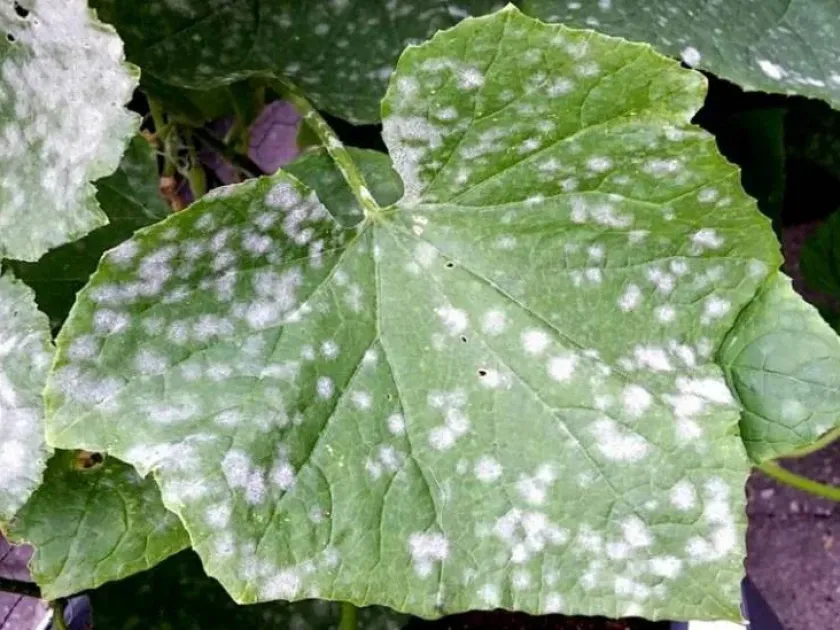
The hallmark symptom is the appearance of white, dusty, powder-like spots on leaves, stems, flowers, and fruits, which may gradually coalesce into larger patches.
As the infection matures, tiny black pinhead-sized structures known as cleistothecia appear within the white felt, indicating the fungal maturation process.
Infected leaves often exhibit chlorosis, curling, and distortion, eventually leading to senescence and premature leaf drop, which significantly weakens the plant.
Fruits affected by powdery mildew may develop skin cracks or russeting, which severely impacts their marketability and shelf life in storage.
Terminal shoots may become stunted and fail to develop properly, significantly affecting the growth and overall vitality of the infested host.
Pathogen
Powdery mildew is caused by a group of obligate biotrophic fungi belonging to the order Erysiphales, with Oidium erysiphoides being one of the primary species affecting various crops.
These pathogens live predominantly on the surface of plant tissues, using specialized structures called haustoria to penetrate cells and extract essential nutrients from the host.
The disease is classified as a superficial mycosis, as the most visible signs are the white or grayish mycelial mats covering the aerial parts of the infected plants.
The life cycle involves rapid asexual reproduction through the production of conidia, which are easily dispersed by wind currents to infect neighboring healthy tissues.
Survival through adverse conditions occurs via dormant structures like cleistothecia or persistent mycelium found on plant debris or perennial host tissues.
Conditions for development
Powdery mildew thrives in conditions characterized by moderate temperatures, typically between 18 and 25 degrees Celsius, combined with high relative humidity.
Poor ventilation and overcrowded planting density create a stagnant microclimate that is highly conducive to the germination and spread of fungal spores.
High nitrogen levels in the soil encourage rapid production of succulent, tender tissues that are highly vulnerable to fungal penetration.
Lack of sufficient sunlight weakens the natural defense mechanisms of the plant, making it significantly more susceptible to Oidium erysiphoides infestation.
Unlike many other fungal diseases, powdery mildew does not always require free water on leaf surfaces, making it a persistent issue even in relatively dry regions.
Why it matters
The primary damage caused by powdery mildew is the depletion of the host plant's energy reserves, which are diverted to support the fungal colony.
Photosynthesis rates drop drastically due to the loss of functional leaf surface area, leading to decreased vigor and reduced harvest quantity.
Economic losses are compounded by the decline in aesthetic quality and nutritional value of fresh produce, making it unacceptable for retail sale.
Chronic infections in perennial plants lead to severe physiological stress, increased susceptibility to other pathogens, and reduced cold hardiness.
In severe epidemics, the disease can cause total crop failure, necessitating expensive remedial actions and long-term changes to management practices.
Protection
Effective management begins with robust cultural practices, including the removal and destruction of crop residues that serve as overwintering sites for the fungus.
Selecting and planting genetically resistant cultivars is considered the most efficient and sustainable strategy for preventing powdery mildew outbreaks.
When chemical intervention is necessary, fungicides such as triazoles, strobilurins, or sulfur-based formulations should be applied during the early stages of the disease.
Proper canopy management, including timely pruning and spacing, ensures better airflow and sunlight penetration, which helps to naturally suppress fungal growth.
Regular scouting and monitoring programs are essential to detect early symptoms, allowing for localized treatments that prevent widespread field contamination.
Discussion
No discussions yet — be the first.