
Powdery mildew of poppy
Oidiopsis papaveris
Description
Symptoms
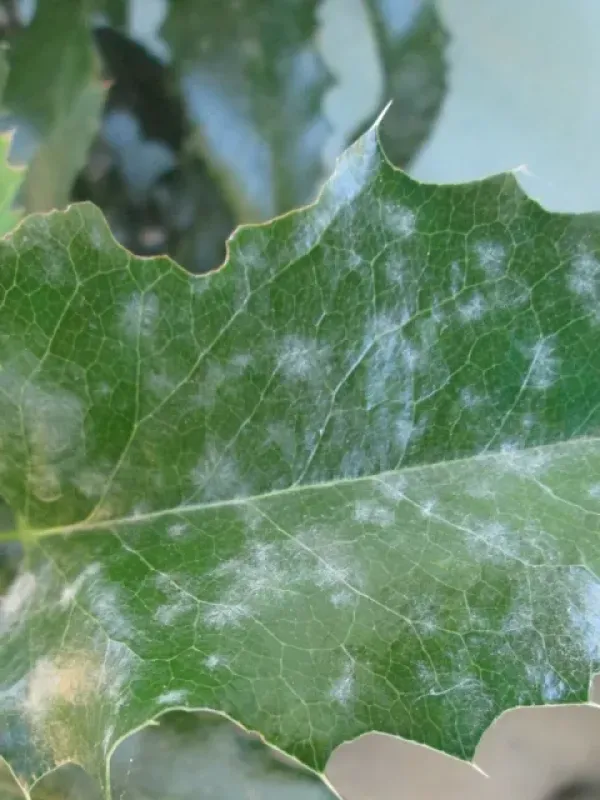
The first symptoms appear as small chlorotic spots on the upper side of the leaves. In these spot areas, a characteristic white or grayish powdery growth forms on the underside of the leaf blade.
As the disease progresses, the growth becomes denser, covering significant leaf areas. The plant tissues at the infection sites begin to yellow, dry out, and die prematurely.
The infection affects not only the leaf canopy but also stems and poppy flower stalks. In cases of severe infection, buds may deform, and the development of capsules is slowed down.
A critical sign is tissue necrosis, which leads to general weakening of the poppy plants. The plants appear stunted, lagging significantly in growth and development.
Under field conditions, infection foci often appear in a patchy distribution, gradually expanding and merging together when weather conditions are favorable for the pathogen.
Pathogen
The causal agent of powdery mildew of poppy is the fungal pathogen Oidiopsis papaveris (often associated with Leveillula taurica). This is an obligate parasite belonging to the Ascomycota group that parasitizes the living tissues of plants.
The mycelium of the pathogen develops both on the surface of the leaves and inside the plant tissues. The endophytic nature of the mycelial growth complicates early diagnosis and makes controlling it more difficult compared to superficial types of powdery mildew.
The fungus reproduces via conidia, which are wind-dispersed over significant distances, ensuring rapid infection of new areas in the field. The pathogen typically overwinters on crop residues, in the soil, or on perennial weed hosts.
High specialization is characteristic of this pathogen. It primarily affects cultivated poppy species (Papaver somniferum) and certain wild-growing relatives.
The life cycle of the fungus is closely linked to the climatic conditions of the growing season, making field monitoring a mandatory practice to prevent epiphytotics.
Conditions for development
Moderate temperatures ranging from 20 to 25 degrees Celsius promote the development of Oidiopsis papaveris. The fungus is extremely sensitive to drastic fluctuations in temperature and humidity, but moderate air humidity is ideal for conidial germination.
Heavy rains can wash conidia off the leaves, slightly suppressing the infection, while dry and hot weather following a wet period facilitates the mass dispersal of spores.
A significant factor in the spread is high planting density, which prevents proper aeration. Insufficient air circulation creates a microclimate with high humidity within the crop canopy.
Poor agricultural practices, such as failure to control weeds in a timely manner, create favorable conditions for the accumulation of primary inoculum in close proximity to the crop.
Plant stress due to mineral nutrient deficiencies or pest pressure also increases the susceptibility of poppies to powdery mildew infection.
Why it matters
The damage caused by powdery mildew involves a drastic reduction in the photosynthetic leaf surface area. This disrupts photosynthesis processes and leads to a critical decrease in crop yield.
The disease negatively impacts the quality parameters of the product. Poppy seeds from infected plants are often shriveled, underdeveloped, and exhibit low germination vigor.
Infected plants become less resistant to other pathogens and environmental stressors, which can lead to the loss of a significant portion of the harvest if the disease spreads widely.
Economic losses consist of the costs of purchasing and applying fungicides, as well as direct losses in the commercial weight of the seeds or raw materials, depending on the crop's end-use.
During an epidemic outbreak of the pathogen, yield losses can range from 20% to 50% or more, making disease control an economically justified necessity.
Protection
The foundation of protection is strict adherence to crop rotation. It is not recommended to return poppy crops to the same field sooner than every 3 to 4 years to break the pathogen's life cycle in the soil.
An effective preventive method is proper soil cultivation and the deep incorporation of crop residues. Eliminating weeds that may serve as hosts for the fungus significantly reduces the risk of primary infection.
The application of fungicides remains the main control measure during the growing season. It is recommended to use products based on sulfur compounds, triazoles, or strobilurins upon the first signs of the disease.
It is important to rotate products with different active ingredients to prevent the development of resistance in the pathogen. Spraying should be performed before the disease reaches a mass scale.
- Adherence to optimal sowing rates.
- Application of balanced fertilizers (avoiding excess nitrogen).
- Use of healthy seed material.
Discussion
No discussions yet — be the first.