
Odontella mobiliensis
Odontella mobiliensis
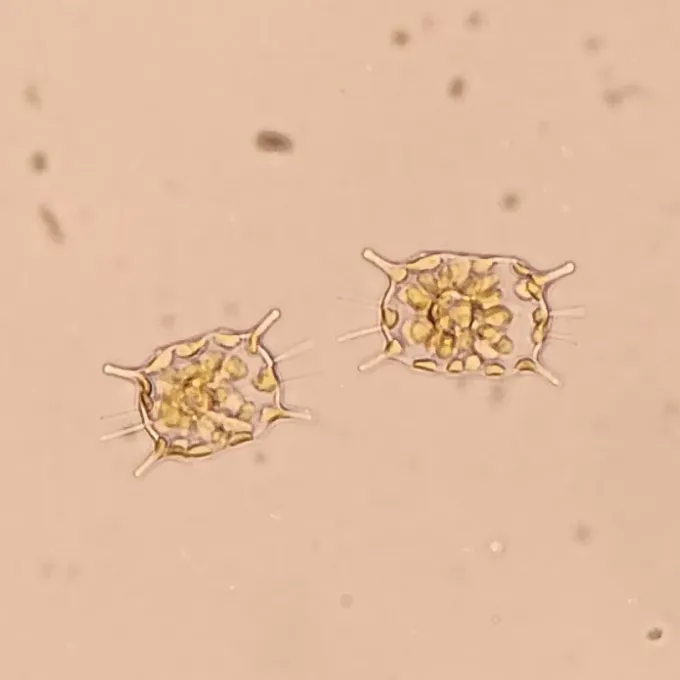
Description
Pathogen
Odontella mobiliensis is a well-known species of marine centric diatoms belonging to the family Biddulphiaceae, characterized by its colonial chain structure.
In aquatic environments, while it is a natural component of phytoplankton, its uncontrolled proliferation can negatively affect commercial aquaculture systems.
The organism is identified by its distinct cell walls (frustules) made of silica, which are connected by organic processes forming characteristic chains.
This species functions primarily through photosynthesis, utilizing the surface water layer to maximize its growth potential.
Understanding its life cycle is crucial for water quality management and maintaining the biological balance within sensitive aquatic environments.
Conditions for development
The development of Odontella mobiliensis is strongly driven by high levels of nutrient concentrations, particularly nitrates and phosphates in the water column.
Warmer temperatures and increased light intensity during spring and summer months create the ideal conditions for population spikes.
Low turbulence in the water body allows these diatoms to congregate, leading to visible blooms that can cover significant surface areas.
Environmental conditions such as stagnant water and the influx of organic runoff from surrounding agricultural land can exacerbate the bloom effect.
The rapid uptake of nutrients allows this species to outcompete other phytoplankton, dominating the aquatic ecosystem during favorable conditions.
Why it matters
The primary concern with Odontella mobiliensis blooms is the massive depletion of dissolved oxygen during periods of decay.
High densities of these cells can cause clogging of the gills in farmed fish, leading to significant respiratory stress and potential mortality.
The release of metabolic waste products during excessive growth cycles can alter the water pH and overall chemical composition.
These blooms reduce the efficiency of aquaculture infrastructure by creating mechanical obstacles for filtration and water circulation systems.
Economic losses are inevitable when large blooms compromise the survival and growth rates of sensitive aquatic species in commercial settings.
Protection
Management strategies focus primarily on monitoring nutrient levels and implementing strict filtration protocols in closed-loop systems.
Reducing the inflow of agricultural fertilizers into nearby water sources is a key preventative measure to limit bloom precursors.
Regular aeration of the water is necessary to compensate for oxygen loss during unexpected algal outbreaks.
Adjusting feeding schedules to reduce waste organic matter prevents the nutrient loading that fuels diatom rapid division.
Using specific biological controls or adjusting the water turnover rate can help mitigate the impact of excessive O. mobiliensis growth.
Discussion
No discussions yet — be the first.