
Octospora humosa
Octospora humosa
Description
Symptoms
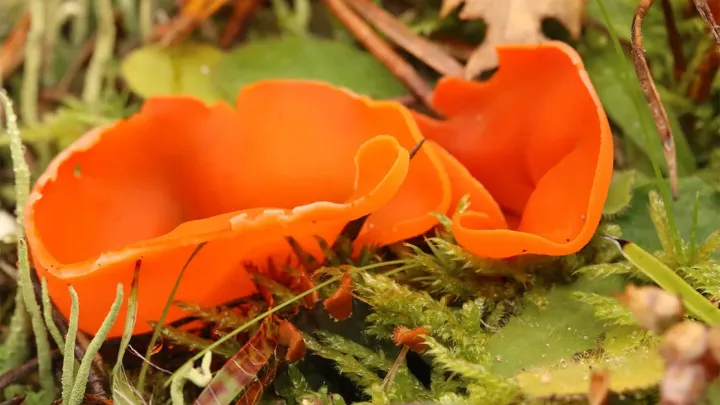
The most diagnostic sign of an Octospora humosa infestation is the appearance of bright orange, disc-shaped apothecia (2–10 mm in diameter) on the surface of moss cushions.
Infected moss tissues typically exhibit signs of discoloration, shifting from a vibrant green to a dull brown or necrotic state. Over time, these areas die back, leaving bare patches that lack structural integrity.
The fungus actively degrades the moss structure, leading to a thinning of the moss carpet. The infection typically progresses in a radial pattern, creating expanding circles of diseased tissue.
Microscopic examination often reveals a network of mycelium spreading through the moss gametophytes. This mycelium is responsible for the systemic weakening and eventual decay of the affected moss colony.
Early identification of the fruiting bodies is crucial for management. Unlike senescence caused by environmental stress, the presence of these distinctive fungal cups is a clear indication of a biotic pathogen.
Pathogen
Octospora humosa is an ascomycete fungus and a specialized pathogen that targets various species of bryophytes. It functions as an obligate parasite, deriving its nutrients directly from the living cells of mosses.
The fungus is characterized by the production of conspicuous, cup-shaped fruiting bodies known as apothecia. These structures are typically orange to brownish in color and emerge directly from the infected moss tissue.
Reproduction occurs through the release of spores, which are disseminated by wind, rain splashes, or contact. Once a spore lands on a suitable moss host, it germinates, and the mycelium penetrates the host tissue to initiate the infection cycle.
The pathogen is highly specific to mosses and does not pose a threat to vascular plants. However, in environments where mosses are cultivated, its presence can be highly destructive to the aesthetic and biological integrity of the moss carpet.
Research confirms that Octospora humosa is a strictly bryophilous organism, meaning it requires living moss tissue to complete its life cycle and maintain its population within an ecosystem.
Conditions for development
High moisture levels are the primary driver for Octospora humosa development. The fungus thrives in humid, shaded environments where the microclimate remains constantly moist for extended periods.
Moderate temperatures, typical of autumn or cool spring weather, provide the ideal conditions for the development of apothecia. Extreme heat and intense UV exposure can inhibit the growth of these fruiting bodies.
The presence of organic matter, such as decomposing plant debris or a humus-rich substrate, can support the survival of the fungal mycelium. This organic component is critical for the pathogen's establishment.
Poor airflow within dense moss colonies contributes to a stagnant microclimate, which significantly increases the risk of an outbreak. Good ventilation is essential to keep the surface dry and unfavorable for spore germination.
The infection often spreads rapidly in nurseries or garden settings where irrigation practices maintain consistently damp conditions, allowing spores to move easily across the surface of the moss.
Why it matters
The damage caused by this fungus is primarily aesthetic, which is particularly significant for landscaping, moss gardening, and specialized plant production nurseries.
Infestation leads to the disintegration of the moss carpet, which reduces its ability to serve as a ground cover and increases the likelihood of weed encroachment into the bare spots.
In nursery settings, a severe infection can result in the loss of entire batches of moss, causing significant economic losses. The fungus is highly contagious and can quickly infect adjacent healthy populations.
Long-term colonization by the fungus degrades the soil-moss interface, potentially affecting the moisture retention properties of the site. The decay process can also attract secondary pests or pathogens.
Failure to implement control measures allows the fungus to propagate, leading to an increasing loss of moss biomass over successive growing seasons.
Protection
- Improve air circulation by pruning surrounding vegetation to reduce humidity around the moss.
- Physically remove and destroy infected moss segments as soon as apothecia are spotted.
- Modify irrigation practices to avoid prolonged periods of surface saturation.
- Use fungicides suitable for bryophytes in controlled settings to suppress fungal growth.
- Practice strict quarantine measures for new moss materials to prevent the introduction of the pathogen into healthy colonies.
Discussion
No discussions yet — be the first.