
Cotton phoma blight
Nothophoma gossypiicola
Description
Symptoms
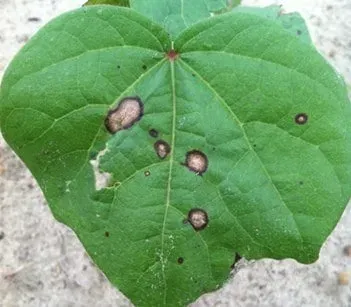
Cotton phoma blight typically manifests as circular lesions on the foliage, which initially appear as small brown spots on the leaf surface.
As the disease progresses, these spots expand, often developing a pale grey or tan center with a distinct, dark brown margin that indicates active fungal tissue damage.
Small, black, speck-like structures called pycnidia appear within the centers of the lesions, representing the fungal fruiting bodies responsible for spore production.
Severe infections lead to chlorosis and premature senescence of the leaves, resulting in significant leaf drop which reduces the plant's photosynthetic capacity.
Lesions can also appear on stems and floral buds, leading to depressed cankers that may weaken the plant structure and cause stunted growth.
Pathogen
The causative agent of this disease is the fungus Nothophoma gossypiicola, a pathogen capable of infecting various tissues of the cotton plant.
The pathogen survives in crop debris left in the soil, using it as a reservoir to persist through the winter until the next planting season begins.
Transmission occurs through the dispersal of pycnidiospores, which are easily transported by water splashing during heavy rain or wind gusts.
Upon landing on host tissue, the spores germinate and penetrate the epidermis, establishing a mycelial network that degrades host cellular components.
The fungus is highly adapted to the host, successfully completing its life cycle by producing new generations of spores on infected plant surfaces.
Conditions for development
High humidity and consistent rainfall are the primary environmental drivers that trigger the rapid development and spread of cotton phoma blight.
Moderate temperatures during the growing season are ideal for the pathogen to thrive and establish new infection sites on the cotton plants.
Dense crop canopies that limit air circulation create a microclimate with stagnant, moist air, which significantly elevates the risk of widespread infection.
Frequent fog or dew that persists into the daylight hours provides the necessary moisture for spores to germinate and colonize the host plants.
Stressed or nutrient-deficient plants are significantly more susceptible to infection, as their natural defensive mechanisms are often compromised.
Why it matters
The primary economic impact of phoma blight is the reduction in vegetative growth, which directly limits the plant's ability to produce cotton bolls.
Premature leaf loss disrupts nutrient translocation to the bolls, resulting in reduced lint weight and inferior fiber quality for the textile industry.
In cases of severe infestation, the pathogen may cause boll rot, rendering the affected portions of the harvest completely unusable.
Yield losses due to this disease can be substantial, particularly in regions with high humidity levels during the peak development stages of the crop.
Infected fields require increased management costs, including labor and chemical inputs, to mitigate the spread and salvage the remaining harvest.
Protection
Effective management begins with strict adherence to crop rotation, which prevents the build-up of the pathogen in the soil over consecutive seasons.
- Prompt removal and deep plowing of crop residues to bury and decompose potential sources of inoculum.
- Selection and planting of high-quality, resistant, or tolerant cotton varieties to minimize susceptibility.
- Optimal plant spacing to ensure adequate sunlight penetration and airflow, reducing humidity in the canopy.
- Application of approved foliar fungicides during early disease stages to suppress mycelial growth and spore dispersal.
- Balanced fertilization and integrated pest management to keep the cotton plants healthy and robust against opportunistic fungi.
Discussion
No discussions yet — be the first.