
Nostoc ellipsosporum
Nostoc ellipsosporum
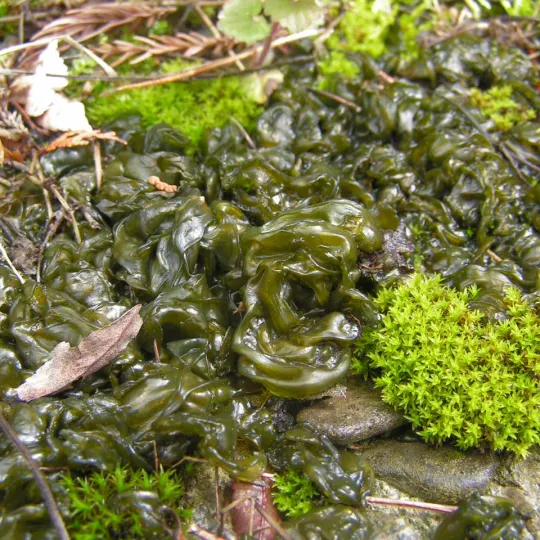
Description
Symptoms
The primary visual indicator is the appearance of gelatinous, jelly-like masses on the soil surface, appearing in various shades of green, brown, or olive-black.
As the soil dries, these colonies transform into rigid, brittle crusts that tightly adhere to the ground and the base of plant stems, hindering surface aeration.
Plants affected by these colonies often show signs of chlorosis, particularly in the lower foliage, due to restricted access to oxygen and light in the root zone.
An unpleasant, musty odor is frequently associated with large patches of these colonies, indicating organic matter decomposition processes beneath the microbial layer.
In greenhouses, these slimy patches can extend to irrigation lines and structures, creating a breeding ground for other pests and reducing the aesthetic quality of crops.
Pathogen
Nostoc ellipsosporum is a type of colonial cyanobacterium, which belongs to photosynthetic prokaryotes. In the field of agronomy, it is often identified as a soil-dwelling microorganism that can become problematic for intensive crop production.
This organism is capable of forming dense, slimy colonies that spread over the surface of moist soil or growing substrates. Although not a parasitic pathogen in the traditional sense, its presence creates an unfavorable environment for crop development.
Reproduction occurs through the fragmentation of colonies or the production of specialized resting cells known as akinetes. These structures allow the bacterium to survive under adverse environmental conditions for extended periods.
A key biological feature is the presence of heterocysts, which allow the cyanobacteria to fix atmospheric nitrogen. This adaptation enables them to thrive on nutrient-poor surfaces where other organisms struggle to compete.
Classified within the class Cyanophyceae, these organisms lack complex tissues. Their growth is strictly superficial, yet they can cover large areas of soil, causing significant management challenges for farmers.
Conditions for development
Excessive soil moisture is the primary driver for the expansion of Nostoc ellipsosporum, often caused by poor irrigation management or drainage issues.
Temperatures between 18 and 25 degrees Celsius are optimal for the rapid growth and biomass accumulation of these cyanobacterial colonies.
Exposure to direct sunlight stimulates photosynthetic activity, which significantly accelerates the colonization of exposed soil surfaces in open fields.
Poor soil aeration and lack of surface tillage contribute to water stagnation, creating the perfect microhabitat for these bacteria to thrive and spread.
Disturbed soil structure and unbalanced mineral fertilization can also promote the proliferation of Nostoc ellipsosporum over other soil microorganisms.
Why it matters
The crust formed by the colonies acts as a physical barrier, effectively blocking oxygen exchange between the soil and the atmosphere, which induces root hypoxia.
Excreted metabolites from the cyanobacteria can interfere with the activity of beneficial rhizospheric microbes, potentially reducing overall soil fertility.
Water infiltration into the soil is hampered by the dense colonial layer, leading to uneven moisture distribution and plant stress under fluctuating irrigation regimes.
Seedlings and young plants are particularly vulnerable, as the slimy layer promotes stem rot and increases susceptibility to secondary fungal infections like damping-off.
The competition for surface space and available nutrients limits the development of young crops, ultimately leading to yield losses and reduced uniformity across the field.
Protection
The most effective management strategy is to optimize irrigation schedules, ensuring that the soil surface has sufficient time to dry out between watering sessions.
Regular mechanical cultivation and hoeing of the topsoil are essential to break up the colonial crust and improve the overall aeration of the root zone.
Improving field and greenhouse drainage systems is crucial to prevent water stagnation, which is the primary prerequisite for cyanobacterial growth.
Adjusting soil pH through liming to reach a slightly alkaline range can help suppress the growth of Nostoc ellipsosporum, as the organism prefers neutral to slightly acidic conditions.
In cases of severe infestation, removing the top layer of contaminated soil or using copper-based disinfectants on affected surfaces can successfully mitigate further spread.
Discussion
No discussions yet — be the first.