
Neozygites
Neozygites
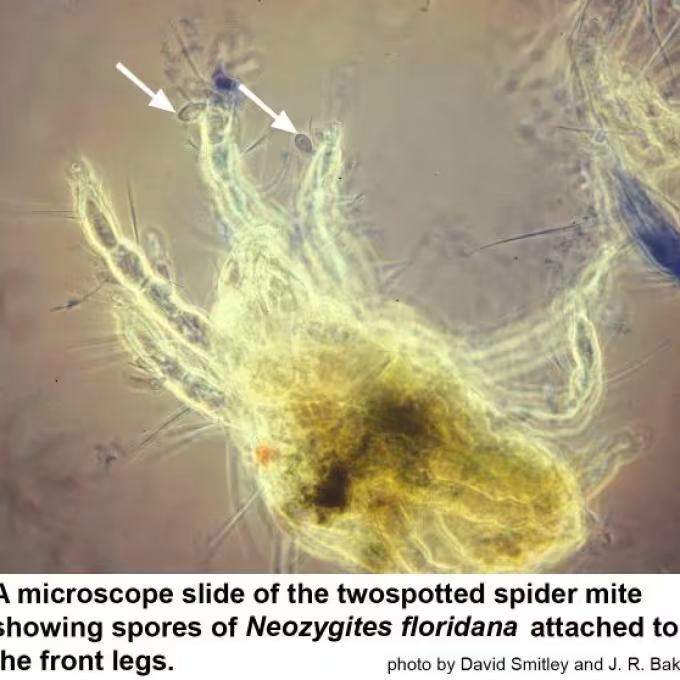
Description
Symptoms
The first signs of infection include a noticeable reduction in the mite's feeding activity and lethargy. Mites become increasingly immobile as the fungal infection progresses throughout their body.
Under magnification, infected mites often exhibit a change in body opacity or internal structure. In the advanced stages, the internal organs are replaced by fungal hyphae.
A major symptom of a widespread Neozygites outbreak is the rapid decline of a spider mite population on the underside of leaves, where mites typically congregate.
Dead mites may remain attached to the leaf surface, and under high humidity, a delicate, whitish layer of fungal growth may appear on the carcass.
Unlike chemical poisoning, where knockdown is often immediate and uniform, Neozygites activity creates patches of mortality that expand outward as the spores spread.
Pathogen
Neozygites is a genus of entomopathogenic fungi within the order Entomophthorales. These fungi are specialized obligate parasites that primarily target spider mites (Tetranychidae), acting as natural enemies in agricultural ecosystems.
The infection process begins when fungal spores (conidia) land on the mite's cuticle. The fungus secretes specific enzymes to dissolve the chitinous exoskeleton, allowing the hyphae to penetrate the body cavity.
Once inside, the fungus exploits the mite's hemolymph, absorbing nutrients and rapidly colonizing the internal tissues. This causes physiological dysfunction and the eventual death of the host.
The fungal life cycle concludes with the production of new spores on the surface of the dead mite. These spores are disseminated by wind or physical contact, facilitating the rapid spread of the infection within the mite colony.
Due to its high specificity and efficacy, Neozygites is considered a critical component of biological control, capable of triggering epizootics that significantly reduce spider mite density.
Conditions for development
The development of Neozygites epizootics is highly dependent on microclimatic conditions, with relative humidity being the most critical factor. High humidity levels (often above 80%) are essential for spore germination.
Temperature plays a secondary but vital role. Moderate temperatures, generally ranging from 18°C to 25°C, are optimal for the fungus to complete its reproductive cycle within the host.
High population density of the spider mite host is necessary for the fungus to spread effectively. The more frequently mites come into contact, the higher the rate of horizontal transmission.
The presence of dew or film water on the leaf surface provides the necessary moisture for the conidia to activate, significantly increasing the infection rate in the crop canopy.
Environmental stability, such as that found in dense foliage or greenhouses with regulated humidity, provides the best conditions for the fungus to persist and regulate mite populations.
Why it matters
Neozygites is not harmful to crops; it is a beneficial organism. It does not cause plant disease and does not feed on plant tissues, making it a safe and natural ally for farmers.
Its impact is exclusively directed toward suppressing populations of spider mites, which are major pests for soybeans, vegetables, ornamentals, and various fruit crops.
By causing natural mortality, this fungus helps decrease the need for chemical acaricides, promoting a healthier and more balanced agricultural environment.
The only limitation of its "harm" (to pests) is that its effectiveness is weather-dependent, meaning it cannot always provide 100% control during periods of drought or low humidity.
Ultimately, Neozygites serves as a cost-free biological service that helps mitigate the damage caused by mite infestations in commercial agriculture.
Protection
Because Neozygites is a beneficial fungal pathogen, the goal for farmers is to preserve its presence rather than eliminate it. Strategies focus on creating an environment where the fungus can thrive.
Management should include the judicious use of pesticides. Broad-spectrum fungicides, in particular, may inadvertently inhibit the development of these beneficial entomopathogenic fungi.
Monitoring mite populations for signs of fungal mortality can help farmers make informed decisions about whether or not to apply chemical sprays, potentially saving costs.
Agricultural practices that maintain moderate humidity in the canopy are generally favorable for both the crops and the fungal biocontrol agents.
- Avoiding chemical interference when natural epizootics are observed in the field.
- Integrating scouting methods to identify the presence of Neozygites before deciding on acaricide applications.
Discussion
No discussions yet — be the first.