
Neosetophoma samarorum
Neosetophoma samarorum
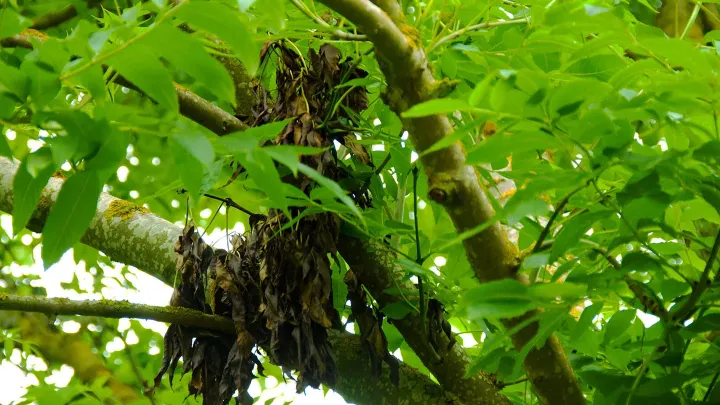
Description
Symptoms
The most visible sign of infection is the development of necrotic lesions on the samaras (ash keys), which eventually turn dark brown or black.
Tiny black spots, representing the pycnidia of the fungus, can be observed clustered on the infected tissue under a magnifying lens.
Infected seeds often show signs of shriveling, discoloration, and internal decay, leading to a complete loss of viability.
Premature abscission is common, with heavily infected samaras falling to the ground long before the natural seed dispersal period.
- Necrotic spots on ash samaras;
- Visible black pycnidia;
- Deformed and shriveled seeds;
- Premature fruit drop;
- Reduced germination rate.
Pathogen
The disease is caused by the fungus Neosetophoma samarorum. It is a specialized pathogen that primarily targets the reproductive structures of ash trees.
The fungus produces pycnidia, which are small reproductive structures that release vast amounts of conidia, facilitating rapid spread within the forest canopy.
This pathogen is capable of overwintering in fallen fruit and infected debris, allowing it to remain active in the environment for several seasons.
The biology of Neosetophoma samarorum is closely synchronized with the development cycle of ash samaras, making it a persistent threat to seed crops.
Effective identification of this pathogen is primarily conducted through microscopic evaluation of the pycnidia found on the surface of the infected seed coats.
Conditions for development
High relative humidity and persistent rain during the fruit ripening phase provide the optimal conditions for spore germination and colonization.
Moderate temperatures ranging from 18 to 25 degrees Celsius significantly accelerate the spread of Neosetophoma samarorum.
Dense, unmanaged forest stands with poor airflow and high moisture levels are particularly susceptible to severe outbreaks of the disease.
A high accumulation of infected plant debris on the forest floor acts as a significant reservoir for the pathogen to re-infect trees the following year.
Stressed trees, weakened by environmental factors or insect attacks, are often more susceptible to colonization by this fungal pathogen.
Why it matters
The primary damage is the destruction of seed embryos, which makes the affected samaras useless for nursery production and natural regeneration.
This fungus causes significant economic losses in forest nurseries by drastically reducing the percentage of viable seedlings obtained from a batch of seeds.
Increased operational costs arise from the need for rigorous seed sorting and the application of chemical treatments to salvage healthy lots.
The disease impedes forest restoration efforts by limiting the availability of high-quality, healthy seeds for large-scale planting projects.
Persistent presence of the fungus in a stand can degrade the overall health of the tree population by continuously attacking the reproductive output.
Protection
Mechanical removal and disposal of infected plant material from the forest floor are essential practices to reduce the annual inoculum load.
Rigorous seed inspection and mechanical sorting in nurseries help to separate infected samaras from healthy ones before sowing.
Fungicidal seed treatments can effectively protect young seeds from infection during the vulnerable germination phase in nursery beds.
Maintaining proper spacing in nurseries promotes better airflow, which helps to keep the foliage and fruit dry and less prone to fungal development.
Long-term management involves monitoring the disease prevalence and implementing selective harvesting to avoid collecting seeds from heavily infected trees.
Discussion
No discussions yet — be the first.