
Neopestalotiopsis foedans
Neopestalotiopsis foedans
Description
Symptoms
The primary symptom includes the development of irregularly shaped spots on leaves, which gradually expand and become necrotic. The center of these spots often turns greyish-brown, surrounded by a distinct dark margin.
As the disease progresses, tiny black fruiting bodies become visible on the surface of the lesions. These are the acervuli, which appear as small pinpricks and represent the site of active spore production.
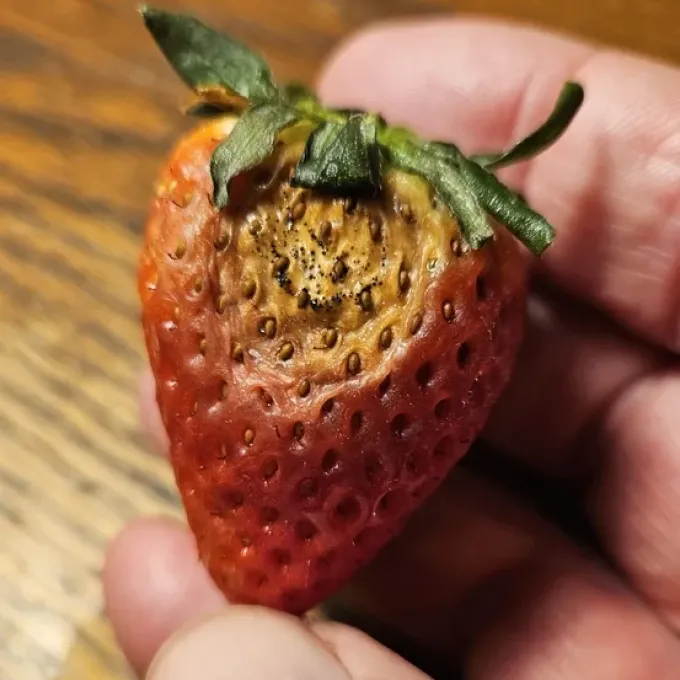
In fruits, the infection typically manifests as a soft, rapidly spreading rot. Affected fruits become mushy and may eventually shrivel or become mummified, severely impacting post-harvest shelf life.
Stem cankers may also occur, leading to the collapse of vascular tissues. This results in wilting, dieback, and eventually the death of the affected plant branch or the entire plant.
Under humid conditions, a whitish or greyish powdery mycelium may become visible on the surface of affected tissue, indicating mass spore production that leads to secondary infections.
Pathogen
The fungus Neopestalotiopsis foedans is a serious phytopathogenic agent belonging to the family Amphisphaeriaceae. It is known to cause severe necrosis and fruit rot in various agricultural crops and ornamentals.
The pathogen reproduces via conidia, which are formed within small, dark structures called acervuli. These spores are typically multi-celled and possess characteristic appendages that enable them to disperse easily via water splashes or air currents.
The life cycle of the pathogen involves both parasitic and saprophytic phases. It can persist in soil and debris for extended periods, allowing it to re-emerge whenever the environmental conditions become favourable for infection.
As a flexible opportunist, the fungus can infect plants through wounds, natural openings like stomata, or even direct penetration of the cuticle, depending on the host plant's susceptibility.
Taxonomically, it is closely related to other species of the genus Neopestalotiopsis, which have recently emerged as significant threats in global agriculture, particularly in greenhouse-grown crops.
Conditions for development
Development of the disease is highly dependent on high relative humidity, which is essential for spore germination and colonization of host tissues. Extended periods of moisture are the most critical risk factor.
Optimal temperatures for the growth of Neopestalotiopsis foedans generally fall within the moderate range (20°C to 28°C). These conditions are common during the spring and early summer growing seasons.
Poor ventilation within greenhouses creates an ideal microclimate for the pathogen. Stagnant air and high humidity provide the perfect environment for the rapid spread of conidia from one plant to another.
Mechanical damage to plants, whether from pruning, insect feeding, or environmental stress, serves as an entry point for the pathogen, significantly increasing the likelihood of infection.
Crowded planting schemes hinder airflow and keep foliage wet for longer periods, which dramatically increases the incidence of the disease compared to well-spaced crops.
Why it matters
The economic impact of this pathogen is primarily observed through the reduction of crop yield and quality. Infected leaves provide less energy for growth, leading to smaller, less vigorous plants.
Marketable yield is severely affected as the rot damages the produce, rendering it unsellable. This is particularly devastating for high-value horticultural crops meant for fresh consumption.
Nursery operations often face significant losses when the pathogen attacks young seedlings, potentially wiping out entire batches of propagules if strict sanitation is not maintained.
Increased costs associated with fungicide applications and the labor required for sanitation significantly erode the profitability of affected agricultural operations.
The persistence of the pathogen in the soil means that the disease can become endemic in a field, forcing farmers to adopt costly long-term rotation or soil sterilization strategies.
Protection
Effective management begins with strict hygiene and sanitation. Removing and destroying all infected plant material is crucial to breaking the disease cycle and reducing spore load.
Pruning tools must be disinfected regularly, especially when moving between different plant blocks, to prevent the mechanical transmission of fungal spores.
- Use of disease-free, certified seeds and plant propagation material.
- Improvement of greenhouse ventilation to ensure rapid drying of foliage after irrigation.
- Deployment of systemic fungicides chosen based on regional resistance monitoring.
Biological control agents, such as certain strains of Bacillus or Trichoderma, can be integrated into management programs to suppress the pathogen without heavy chemical reliance.
Balanced plant nutrition, particularly avoiding excessive nitrogen and ensuring sufficient potassium, can strengthen plant cell walls and improve natural resistance to the pathogen.
Discussion
No discussions yet — be the first.