
Neonectria obtusispora
Neonectria obtusispora
Description
Symptoms
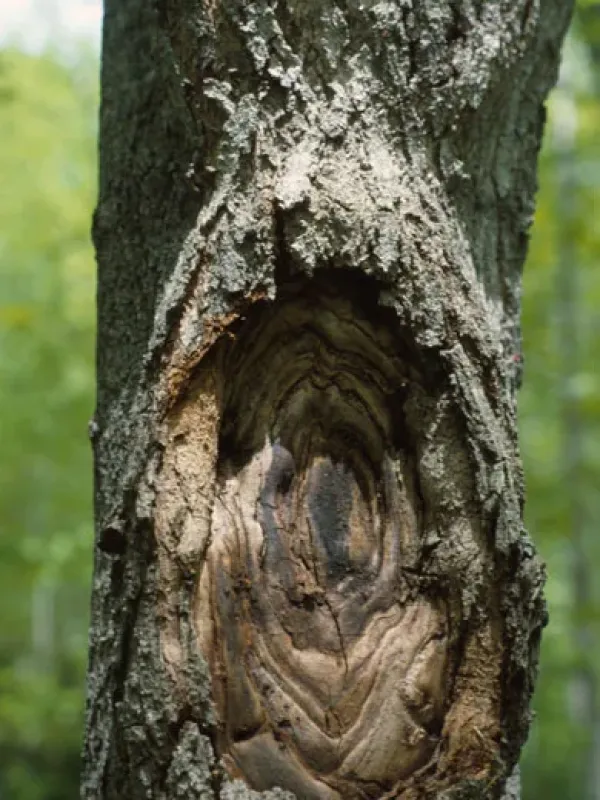
Initial symptoms include the appearance of localized, sunken lesions on the bark of trunks or branches, which may expand over time as the infection progresses.
Bark in the infected area becomes brittle and eventually cracks, revealing the underlying woody tissue, which often becomes discolored due to fungal activity.
Bright red or orange perithecia may be observed in clusters on the surface of dead bark, particularly during periods of high humidity or rainfall.
Leaves on infected branches often show symptoms of wilting, premature yellowing, or early leaf drop, indicating an obstruction in the plant's vascular system.
In cases of severe infection, girdling of the branch or trunk occurs, leading to the dieback of all plant parts located distally to the point of infection.
Pathogen
Neonectria obtusispora is an ascomycete fungus known to act as a pathogen affecting the bark and wood of various woody plants, leading to necrotic lesions.
The fungus colonizes the inner bark and cambium layers, disrupting the flow of water and nutrients, which ultimately weakens the host plant's physiological processes.
It propagates through the formation of perithecia, small fruit bodies that emerge on dead or dying bark, releasing spores that serve as primary inoculum for new infections.
This pathogen is considered a facultative parasite, often taking advantage of environmental stress or physical injuries to penetrate the tree's defensive barriers.
The fungus is known to persist within affected tissues for long periods, allowing it to survive adverse environmental conditions until favorable development factors return.
Conditions for development
The development and spread of Neonectria obtusispora are highly favored by wet and humid conditions, which facilitate spore dispersal via rain splash and wind.
Physical trauma, such as frost cracks, pruning wounds, or damage caused by hail, provides critical entry points for the pathogen to establish itself in the host.
Dense planting schemes that reduce airflow and increase humidity within the canopy create ideal microclimates for the rapid spread of fungal spores.
Trees experiencing physiological stress, such as nutrient deficiencies, improper irrigation, or poor soil conditions, are significantly more susceptible to successful colonization.
Mild to moderate temperatures during the spring and autumn months support active mycelial growth, increasing the infection rate across the orchard.
Why it matters
The infection leads to substantial reduction in tree vigor and overall productivity, negatively impacting the yield and quality of harvested produce.
Long-term colonization by the fungus can lead to the structural failure of major branches, increasing the risk of breakage during storms or due to fruit load.
Severe trunk necrosis can eventually kill the tree, necessitating costly removal and replanting efforts to maintain the viability of the orchard or landscape.
The presence of necrotic tissue makes trees more susceptible to other secondary infections and pest infestations, complicating the management of the orchard.
Financial losses occur due to both reduced harvest and the high cost of implementing intensive control measures and sanitation protocols.
Protection
Effective management begins with rigorous sanitation, including the pruning and removal of all symptomatic branches, which should be destroyed by burning.
All pruning tools must be disinfected between trees to prevent the mechanical transmission of fungal spores from infected to healthy individuals.
Application of copper-based fungicides during the dormant season is a standard preventive measure to protect bark surfaces and suppress spore germination.
Maintaining tree health through proper fertilization and irrigation helps improve the plant's natural resistance and ability to compartmentalize infections.
- Regular monitoring for early symptoms of bark cracking.
- Prompt sealing of pruning cuts with appropriate wound dressings.
- Whitewashing trunks to protect against sunscald and bark splitting.
Discussion
No discussions yet — be the first.