
Neonectria neomacrospora
Neonectria neomacrospora
Description
Symptoms
The earliest signs of Neonectria neomacrospora infection include discolored, sunken areas on the bark. These spots often develop into visible cracks or cankers as the fungus consumes the underlying tissues.
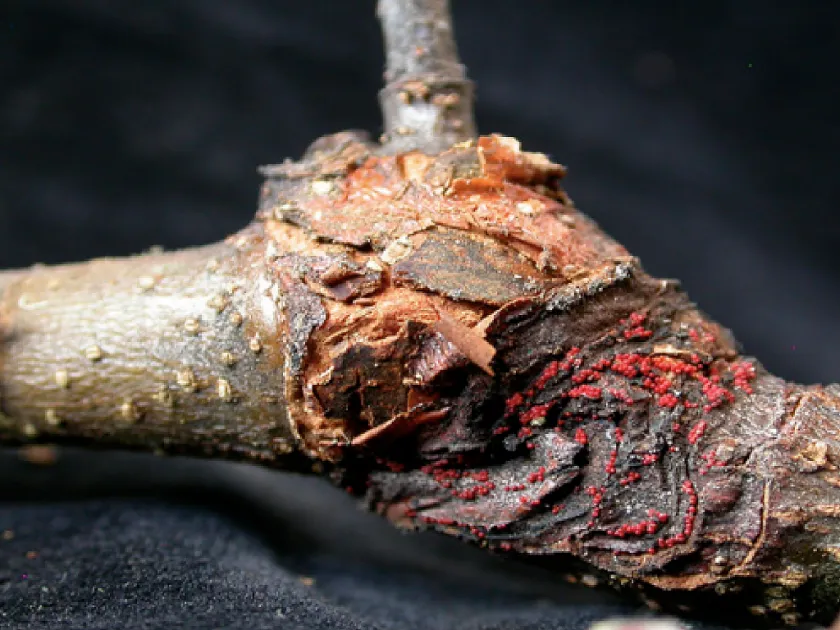
Bright orange or red sporodochia appear on the affected bark, which are highly visible during wet weather. As the disease matures, these fruiting structures darken to a deep brown or black color.
Needles on infected branches show signs of chlorosis, followed by wilting and premature shedding. This is a direct consequence of the fungus blocking the flow of water and nutrients through the vascular tissue.
On larger branches and stems, the bark may exhibit heavy resin flow as the tree attempts to defend itself against the invasion. The underlying wood often shows distinct browning or necrosis at the site of the infection.
Severe infestations lead to top dieback and the loss of foliage, significantly compromising the structural integrity and aesthetic value of the tree.
Pathogen
Neonectria neomacrospora is an ascomycete fungus that acts as a serious pathogen, causing necrotic bark diseases in various conifer species, most notably in fir (Abies) and spruce (Picea). It is a major threat to forest plantations and ornamental conifer gardens.
The fungus produces asexual conidia and sexual ascospores, allowing it to complete its lifecycle and spread efficiently. The presence of tiny, bright orange to red fruiting bodies on the bark surface is a hallmark of this pathogen's reproduction phase.
The fungus infects the bark and cambium, disrupting the tree's vascular system. By invading the inner tissues, it causes localized cell death, which eventually leads to the formation of cankers that can girdle branches or even the main trunk.
It acts both as a primary pathogen, capable of attacking healthy tissues under favorable conditions, and as an opportunistic one, targeting trees already stressed by environmental factors or insect attacks.
Spore dispersal is facilitated by wind and rainwater splash, ensuring that the fungus can quickly colonize neighboring trees within a stand or nursery environment.
Conditions for development
High humidity and moisture are the primary drivers of Neonectria neomacrospora activity. Extended periods of rain, fog, and dew provide the necessary surface moisture for spore germination and colonization.
The fungus thrives in moderate temperature ranges, typically between +10°C and +20°C. These conditions are most common in spring and autumn, which are peak periods for disease progression.
Mechanical injuries, including those from hail, wind damage, or pruning, serve as primary infection points. Any break in the bark provides easy access for fungal spores to colonize the host.
Dense planting configurations create poor airflow, leading to high humidity levels within the crown. Such environments allow the fungus to persist and spread with minimal environmental resistance.
Trees weakened by drought, poor soil nutrition, or previous pest damage are significantly more susceptible to infection, making them the first targets for the pathogen in a grove.
Why it matters
The harm caused by this pathogen is significant, as it leads to the gradual decline and eventual death of branches or the entire host tree. In nursery settings, it can cause high mortality rates among young stock.
Infection compromises the vascular system, resulting in stunted growth and a general decline in the tree's health. The tree becomes increasingly fragile, making it prone to secondary invasions by bark beetles and wood-boring insects.
The aesthetic impact on landscape trees and Christmas tree plantations is severe, as the visual symptoms of dieback and cankering render the trees unsellable and unattractive.
In mature forests, the infection can lead to timber devaluation due to stem rot and deformation, resulting in long-term economic losses for forest management.
Total removal of heavily infected trees is often necessary to protect surrounding healthy specimens, which involves significant labor and logistical costs.
Protection
Sanitation is the most effective management strategy. Infected branches and trees should be pruned or removed promptly to eliminate the sources of inoculum within the area.
Tool hygiene is critical; all pruning equipment must be disinfected between trees to prevent the mechanical transmission of spores from infected to healthy plant tissues.
Chemical control involving copper-based fungicides can be used as a preventative measure, particularly when trees are known to be vulnerable following extreme weather events or structural damage.
Improving general tree vigor through proper fertilization, adequate watering, and optimal spacing can increase the host's natural resistance, limiting the impact of the disease.
- Regular inspection for early signs of bark discoloration.
- Removal and disposal (preferably burning) of dead and infected wood.
- Application of fungicidal pastes to pruning wounds to seal them.
- Thinning of crowns to improve ventilation and reduce humidity.
Discussion
No discussions yet — be the first.