
Neonectria leaf spot of ivy
Neonectria hederae
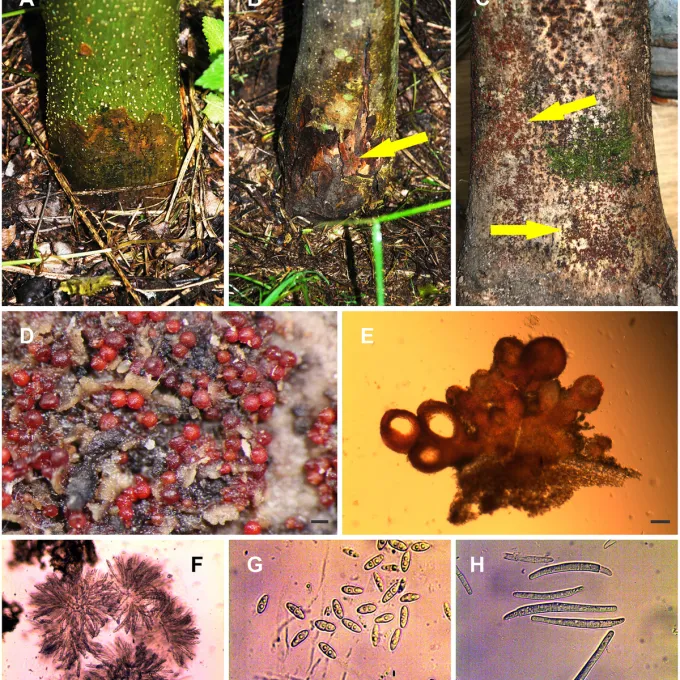
Description
Symptoms
Initial symptoms of the disease appear as small chlorotic spots on the leaves, which gradually darken to develop into brown or dark necrotic lesions.
These spots tend to expand, often showing a distinct yellowish halo. Under high humidity, a fine, sometimes almost invisible fungal spore layer may develop on the surface of the lesions.
On the stems, the fungus manifests as depressed, dark-colored cankers. As these cankers grow, the bark cracks, leading to the wilting and eventual death of individual branches or entire vines.
Premature leaf drop is a hallmark of progressive infection. Starting from the lower sections of the plant, the foliage turns yellow and falls off, causing the ivy to lose its dense, decorative appearance.
- Darkening and necrosis of stem tips.
- Formation of sunken cankers on woody stems.
- Widespread chlorosis and leaf abscission.
- Stunted growth and deformation of new shoots.
Pathogen
The causal agent of this disease is the ascomycete fungus Neonectria hederae. This pathogen is known to specifically target evergreen species within the Araliaceae family, primarily attacking English ivy (Hedera helix).
Belonging to the Hypocreales order, the fungus completes its life cycle by producing perithecia containing ascospores, which are the primary units responsible for spreading the infection to healthy tissues.
The pathogen is highly resilient and can persist in soil and infected plant debris for extended periods. It penetrates the plant through the epidermis, disrupting metabolic functions and cell integrity.
Transmission occurs primarily through water splash during irrigation or rainfall, as well as via contaminated pruning tools. Movement of spores by wind or physical contact also facilitates its spread.
As an organism adapted to temperate climates, it thrives in a wide range of environmental conditions, making it a persistent threat in nurseries, residential gardens, and public green spaces.
Conditions for development
High relative humidity and poor soil drainage are the primary environmental factors that promote the rapid development and spread of this fungal disease.
Temperatures between +15°C and +22°C (59°F–72°F) provide an optimal range for spore germination and mycelial growth, coinciding with typical spring and autumn weather.
Inadequate airflow within densely packed plantings creates a microclimate that prevents foliage from drying quickly, facilitating the infection of new, healthy leaves and stems.
Physical injuries to the plant tissues, caused by pests, mechanical damage during gardening, or harsh environmental conditions, create entry points for the pathogen.
Low light levels and poor overall plant vigor, resulting from nutritional imbalances, increase susceptibility, making the ivy more vulnerable to severe colonization by the fungus.
Why it matters
Neonectria hederae causes significant damage to the aesthetic appeal of ivy, which is a major concern when used in landscape design and vertical greening projects.
Severe infestations in nursery settings can lead to the total loss of inventory, resulting in substantial financial setbacks for growers and plant retailers.
Because the disease often progresses hidden within the woody parts of the plant, it may go unnoticed until irreversible damage has occurred, complicating management efforts.
Infected plants serve as permanent sources of inoculum that can easily spread the disease to neighboring plants, endangering the health of an entire garden collection.
The continuous effort and chemical interventions required to mitigate the disease increase maintenance costs and the overall complexity of ivy cultivation.
Protection
Good cultural practices, including proper irrigation techniques that avoid wetting the foliage and ensuring adequate space between plants to improve airflow, are essential preventions.
Strict sanitation measures are crucial; all infected leaves and dead branches must be pruned promptly and destroyed to reduce the primary source of fungal spores in the garden.
The application of systemic fungicides, particularly those containing copper or other approved fungicidal active ingredients, can help suppress the spread within infected tissues.
Sterilizing gardening tools with alcohol or appropriate disinfectants after every use is vital to prevent the mechanical transmission of the pathogen between plants.
Choosing healthy, disease-free nursery stock and maintaining optimal site conditions are the most effective strategies for long-term protection against the establishment of this pathogen.
Discussion
No discussions yet — be the first.