
Neonectria root rot
Neonectria austroradicicola
Description
Symptoms
The first outward symptoms include general plant decline, such as chlorotic foliage, stunted growth, and premature leaf drop. Affected plants often appear drought-stressed even when the soil moisture is adequate.
Internal examination of the root system reveals characteristic browning and necrosis of the roots. Infected tissues appear soft, water-soaked, and often emit a distinct, musty odor typical of rot.
White to grayish or brownish mycelial growth may be visible on the surface of the roots or at the root collar, particularly in humid conditions.
Progression of the disease leads to the cracking and sloughing off of the bark at the root collar, which disrupts the cambium and eventually causes the plant to wither and die.
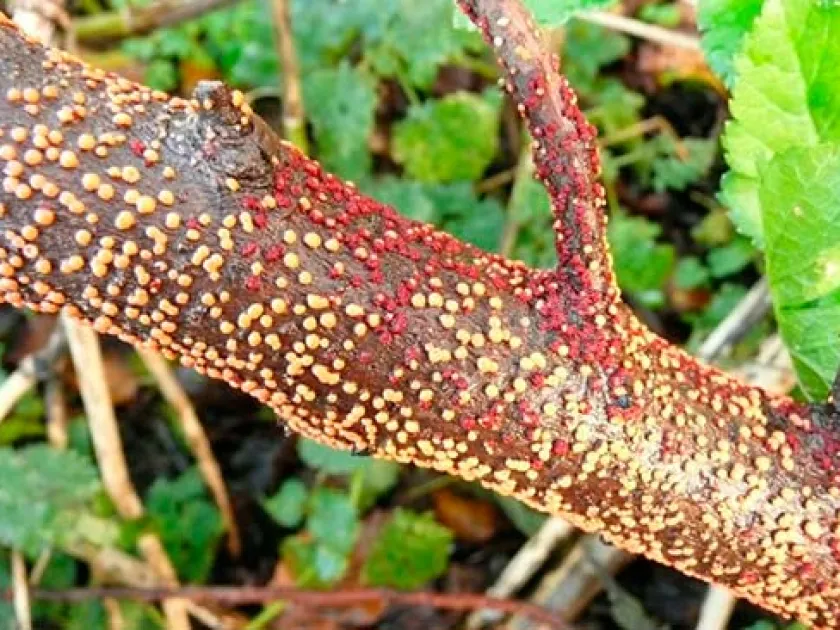
In highly humid environments, small reddish or brownish fruiting bodies known as perithecia may develop on the surface of the infected tissues, indicating active spore production.
Pathogen
The causative agent of the disease is the fungus Neonectria austroradicicola, which belongs to the class Ascomycota. This pathogen specializes in infecting the root systems of various woody and agricultural plants.
The fungus exists primarily in the soil, surviving as mycelium or resistant structures within plant debris. It possesses both asexual and sexual reproductive stages, which enhances its ability to spread and persist in the environment.
While the pathogen can thrive as a saprotroph on decaying organic matter, it quickly transitions to a parasitic mode of life when it encounters susceptible host plants with compromised root integrity.
Spore dissemination occurs mainly through soil moisture, runoff during heavy rainfall, and physical transfer via contaminated farming tools or equipment.
A key biological feature of this species is its ability to suppress host plant defenses, allowing it to colonize healthy tissue more effectively under specific environmental conditions.
Conditions for development
The development of Neonectria austroradicicola is strongly favored by waterlogged soil and poor drainage, which create hypoxic conditions that weaken the plant's root system.
The disease is most prevalent in heavy clay soils that retain moisture for long periods, providing a perfect substrate for fungal mycelium to flourish.
Moderate temperatures are optimal for the growth of the pathogen, while sudden environmental shifts that cause physiological stress to the host further accelerate the infection process.
Damage to the roots caused by soil pests, such as nematodes or insect larvae, provides entry points that make it much easier for the fungus to penetrate the host's defenses.
The use of infected nursery stock or contaminated tools is the primary driver for introducing the pathogen into previously clean agricultural or landscape areas.
Why it matters
The primary damage results from the destruction of fine feeder roots, which prevents the uptake of essential water and nutrients, leading to physiological collapse.
Severe infections can cause the complete death of trees or crops, leading to significant economic losses in nurseries and commercial orchards.
Even if the plant survives, its overall vigor is severely compromised, resulting in reduced yields, poor fruit quality, and increased susceptibility to secondary infections.
Infested sites remain hazardous for long periods because the fungus can survive in the soil for several years, making future planting of susceptible species risky.
Secondary infections often exacerbate the damage, leading to a synergistic effect that rapidly degrades the health of the entire plant community in an affected area.
Protection
The foundation of effective management is good agricultural practice, specifically ensuring proper soil drainage and avoiding over-irrigation of plantings.
It is critical to use only healthy, certified disease-free nursery stock to ensure that the pathogen is not introduced at the time of planting.
Sanitation is vital; all tools used for digging or pruning should be disinfected regularly to prevent the transfer of fungal spores between healthy and infected sites.
Immediate removal and destruction of infected plants, including the entire root ball and surrounding soil, is necessary to contain the pathogen and prevent further spread.
- Incorporate biological fungicides containing Trichoderma to improve soil health.
- Apply balanced fertilization to support root growth and improve natural plant resistance.
- Implement strict crop rotation strategies to minimize the buildup of soil-borne pathogens.
Discussion
No discussions yet — be the first.