
Neolentinus
Neolentinus
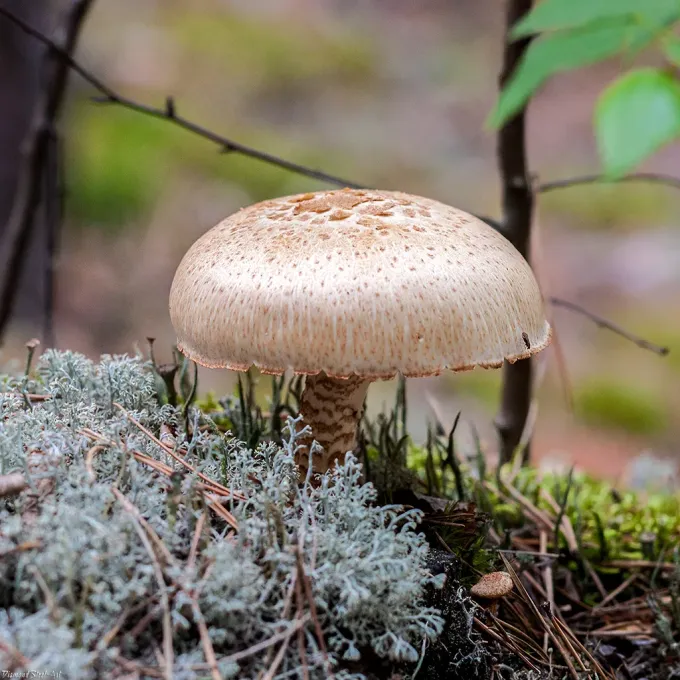
Description
Symptoms
The most visible indicator of an infection is the emergence of fruiting bodies. These are typically tough, scaly mushrooms often found on decaying stumps, fallen logs, or damaged structural timber.
Internally, the infected wood undergoes a significant change in color, shifting from its natural hue to a darker, brownish shade. This discoloration is often uniform and serves as a diagnostic feature of brown rot.
As the degradation progresses, the wood loses its structural integrity and begins to shrink. This results in the formation of deep longitudinal and transverse cracks, creating a cube-like fragment pattern known as cubical rot.
Under close inspection, one may find white, felt-like mycelial mats or cord-like structures called rhizomorphs. These fill the cracks and crevices within the decaying material, effectively transporting nutrients throughout the colony.
The infected wood eventually loses its mechanical strength, becoming brittle and prone to crumbling when pressure is applied. In advanced stages, the wood may become hollowed out, showing signs of severe internal structural collapse.
Pathogen
The genus Neolentinus, particularly the species Neolentinus lepideus, is a group of basidiomycete fungi known for their wood-degrading capabilities. These fungi are primary agents in the breakdown of structural polymers in wood.
While often functioning as saprotrophs on dead wood, they can act as opportunistic pathogens, colonizing weakened or damaged trees. Their ability to decompose cellulose makes them a significant threat to wooden infrastructures and forest health.
The pathogen utilizes an advanced enzymatic system to break down complex wood fibers. Unlike fungi causing white rot, Neolentinus specializes in attacking cellulose and hemicellulose, leaving the lignin component largely intact.
Biologically, the organism is highly resilient, capable of surviving in various environments ranging from dense forests to timber storage yards. Its mycelial network can penetrate deep into wooden substrates, ensuring long-term survival even under suboptimal conditions.
The life cycle involves the formation of distinctive gilled fruiting bodies (mushrooms) which are the primary vectors for spore dispersal. These spores are wind-borne and can remain dormant until they land on a suitable moist surface to initiate new infections.
Conditions for development
Development of Neolentinus is favored by moderate temperatures, typically ranging from +15°C to +25°C. The fungus thrives in stable environmental conditions but exhibits remarkable tolerance to fluctuating weather patterns.
Moisture is the most critical requirement for spore germination and mycelial expansion. A moisture content between 30% and 50% in the wood is ideal, which is commonly found in logs stored in humid forest conditions or poorly ventilated sheds.
Mechanical injuries to the wood surface, such as deep cracks, chainsaw cuts, or bruises, act as entry points for the pathogen. Once the fungal hyphae enter these protected areas, they can begin colonization safely.
Poor aeration in timber storage sites significantly exacerbates the risk of an outbreak. Stacking lumber without spacers creates damp, stagnant air pockets that provide a perfect environment for the fungus to multiply rapidly.
The organism is notably hardy, capable of surviving periods of drought by entering a dormant state. As soon as humidity levels rise, the fungus resumes growth, making it a persistent problem for those who do not maintain strict storage hygiene.
Why it matters
The primary harm is the destruction of wood as a usable resource. The loss of structural strength renders timber entirely unsuitable for construction, load-bearing applications, or furniture manufacturing.
Economic damage is substantial for the timber industry, as entire stockpiles of lumber can be ruined within a single season if moisture management protocols are neglected, leading to massive financial loss.
In forest ecosystems, Neolentinus contributes to the degradation of fallen wood and weakened trees, which can be an ecological process but often disrupts forest management goals by promoting the spread of decay.
The fungus is particularly dangerous for infrastructure assets like railway sleepers, utility poles, and bridge supports. Because decay often happens deep within the wood, structural failure can occur suddenly and without prior warning.
Ecological impacts include shifts in the local microbial community and nutrient cycling. A massive infestation can alter the soil composition and the decay rates of woody debris, ultimately affecting the nutrient balance of the surrounding forest area.
Protection
Effective prevention centers on sanitary management. Removing infected wood, debris, and stumps from the vicinity of lumber storage areas helps lower the overall spore load and reduces the risk of new outbreaks.
Proper timber storage is essential; keeping wood elevated off the ground on dry pallets and ensuring adequate ventilation between stacks helps keep moisture levels below the threshold required for fungal growth.
Chemical preservation is highly recommended for structural wood. Applying high-quality wood preservatives or fungicides creates a toxic barrier that inhibits the growth of mycelia and prevents initial colonization.
If an infection is detected early, mechanical removal of the affected sections may save the structure. However, in cases of severe decay, complete removal and destruction of the infected material via incineration are required.
Prioritizing the use of kiln-dried or thermally treated lumber is a powerful preventive strategy. High-temperature treatment effectively kills all fungal stages, ensuring that the material is pathogen-free before it enters service.
Discussion
No discussions yet — be the first.