
Neolecta
Neolecta
Description
Pathogen
The genus Neolecta represents a primitive group of Ascomycota fungi. These fungi are famous in the scientific community for their unique position on the tree of life, possessing features that link them to the earliest lineages of sac fungi.
It is essential to clarify that Neolecta is not a plant pathogen. It does not cause diseases in crops, vegetables, or ornamental plants. The organism operates as a saprotroph, feeding on decaying organic matter rather than infecting living plant tissues.
Because they are not parasitic, they do not produce symptoms such as necrosis, chlorosis, or wilting in agricultural species. Their presence is strictly tied to woodland environments where they function as organic matter recyclers.
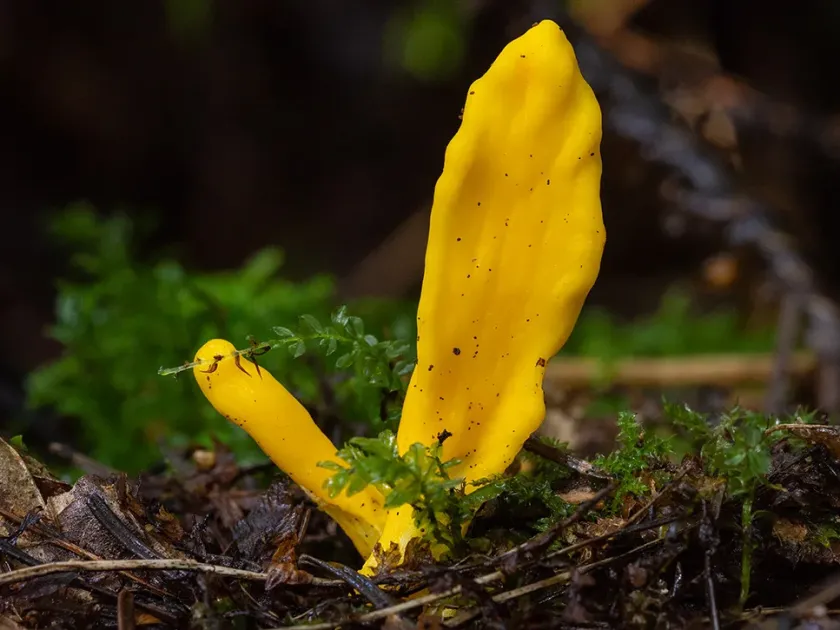
The morphology of these fungi often features bright yellow or orange club-shaped structures protruding from the soil or forest floor. These are the fruiting bodies, which are part of a complex underground mycelial network.
Agricultural professionals do not consider Neolecta a threat. In fact, their presence in a forest indicates a healthy, undisturbed soil system rather than a risk to plant health or farm production.
Conditions for development
The development of Neolecta requires highly specific environmental conditions usually found in old-growth or stable forest ecosystems. High levels of moisture and cool temperatures are crucial for the emergence of their fruiting bodies.
The fungi thrive in substrates rich in decomposing organic matter, particularly leaf litter and forest debris. Stable soil conditions, free from agricultural tillage or compaction, are necessary for the mycelium to remain active.
Environmental stability is a major factor in the distribution of this genus. They are sensitive to changes in soil chemistry and are typically absent from fields treated with fertilizers, fungicides, or herbicides.
Spore dispersal relies on natural mechanisms, including air movement and interaction with forest floor invertebrates. Because they require specialized habitats, they are not prone to spreading into cultivated fields.
Conservation of forest habitats is the only way to support the continued existence of Neolecta populations. Any human-induced disturbance to the forest floor usually leads to the rapid decline of these delicate fungal organisms.
Discussion
No discussions yet — be the first.